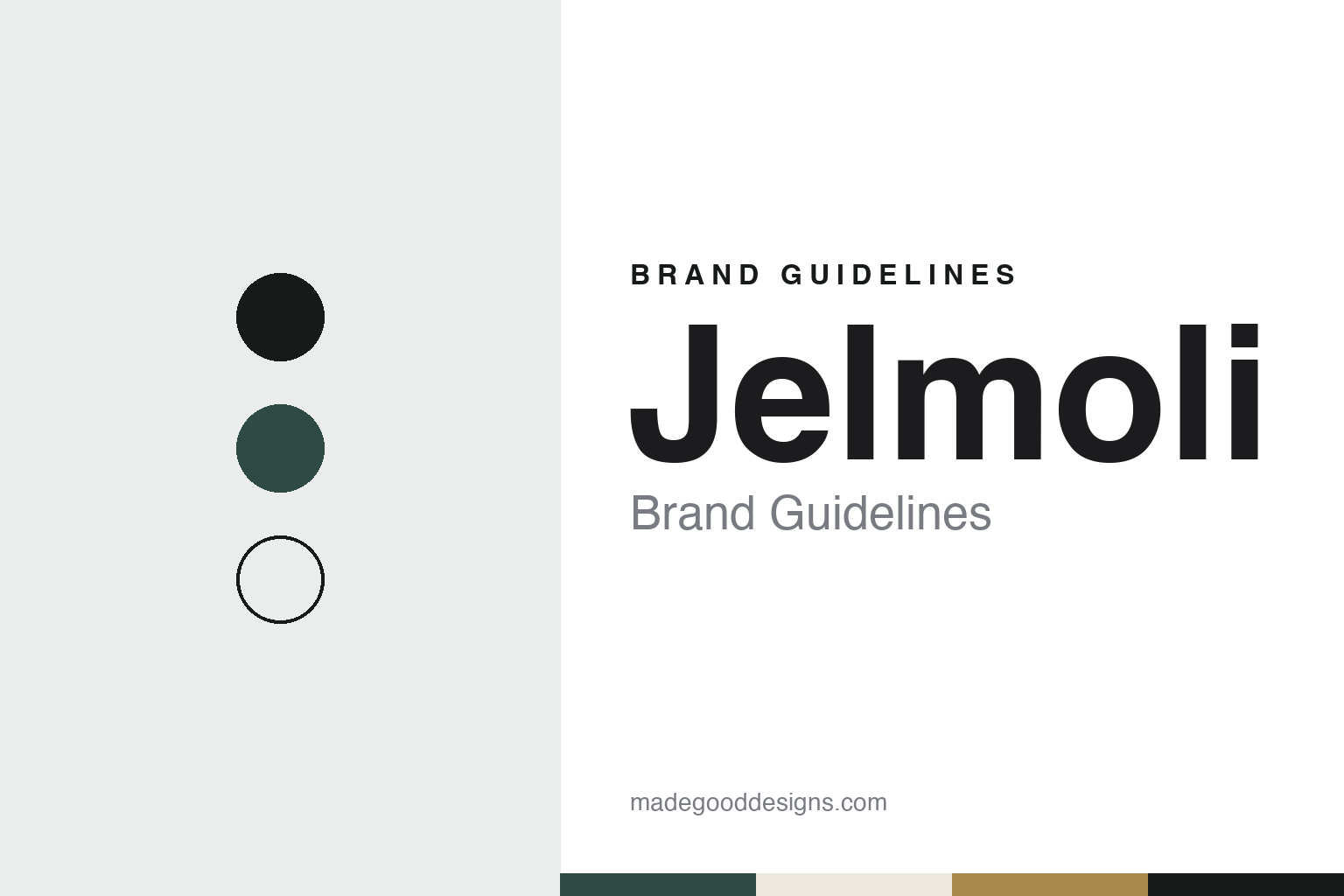
Jelmoli Brand Guidelines
Zurich’s glass palace department store, 1899 to 2025.
Aa
Two constants: a glass green, brass and limestone palette and a Belle Époque serif register. Abstract homage — not a Jelmoli sign, bag or mark; no logo is reproduced.
Johann Peter Jelmoli
A fashion-goods branch, fixed prices and mail order.
Jelmoli’s story begins in Zurich in 1833. The Historisches Lexikon der Schweiz (HLS), drawing on H. R. Schmid’s 1959 history of the firm, says Johann Peter Jelmoli, from Toceno in Piedmont, trained in the fashion-goods trading house of the Ciolina family in Mannheim, worked for the Franz Ciolina branch in Bern from 1832, and in 1833 settled in Zurich as head of the Gebr. Ciolina branch, trading on his own account. swissinfo.ch, carrying a Keystone-SDA report in February 2025, gives his birth name as Giovanni Pietro Guglielmoli and says he came to Zurich from Italy on behalf of a textile trading company and from then on called himself Jelmoli.
The business was built on price and reach. According to the HLS, Jelmoli set up a trade in inexpensive clothing and fashion goods sold at fixed prices, for country customers as well as townspeople, and in 1834 began selling by mail order, which the HLS calls a new form of retail. His son Franz expanded the firm, which was renamed Jelmoli & Comp. in 1849.
Two dates therefore run through the record. Keystone-SDA dates the start of the Jelmoli story to 1833, while SRF, reporting on the last day in 2025, described the closure as coming 125 years after Jelmoli’s founding.
Colour
The glass palace near the Bahnhofstrasse.
The building came half a century later. Construction of the department store on the site of the former Seidenhöfe began in 1887, and it opened in 1899 as the Jelmoli glass palace, Keystone-SDA reported in a 2024 report carried by blue News. That report says the store, which followed the example of the grands magasins of Paris, impressed the people of Zurich with shop windows on four floors, and that its fixed prices meant customers no longer had to haggle; blue News illustrated the report with a photograph of the glass palace taken in 1903. swissinfo.ch called it Zurich’s oldest department store in 2025.
Jelmoli grew beyond the one house. The same Keystone-SDA report says various conversions and extensions shaped the site, and that until the 1990s a chain of Jelmoli department stores operated in many Swiss cities. In the 1990s, it says, sales in the department-store business declined steadily during a consumer slump, and only the glass palace in Zurich remained of the Jelmoli stores. After several changes of ownership, Jelmoli has belonged to the real-estate company Swiss Prime Site (SPS) since 2009, according to the same report and swissinfo.ch.
In its later years the store was described as a luxury department store. When SRF’s main evening news reported the closure decision in February 2023, it called Jelmoli a Luxuswarenhaus, a luxury department store, and noted that Globus, a similarly positioned store, stood close by. A food department in the basement was among the last parts of the store to stay open in 2025, SRF reported.
SRF set out the pressures in its 2023 report. Jelmoli traded at an expensive address and was run by a company whose core business is earning returns from property, which meant high rents in a business whose sales had been falling; SRF also noted that Globus had spent heavily on rebuilding its nearby store.
Writing in July 2024, finews.ch discussed Jelmoli alongside Manor and Globus as the historic department stores of the Bahnhofstrasse, and noted that Manor had left its own house on the street several years earlier.
The online shop closed before the store did: SRF reported in February 2023 that Jelmoli’s online shop was to close that year.
Typography
How Swiss retailers present themselves.
Swiss retailers present themselves to a country with several official languages, and many of them publish the same name, shop sign and carrier bag across German-, French- and Italian-speaking regions. Manor, for example, runs its website in German, French and Italian under one name, and uses it for department stores, supermarkets and restaurants alike. Where a company publishes its own colours, logo or typeface, this guide says so; where it does not, the palette shown is an unofficial interpretation of our own.
The formats vary widely. This group of guides runs from city department stores with roots in Zurich, Bern and Lucerne to village shops, farm-and-garden stores, electronics and household-appliance chains, online shops and marketplaces, and menswear stores. Some trace their origins to the 19th century; the Historisches Lexikon der Schweiz, for instance, dates Jelmoli’s Zurich business to 1833.
Ownership is set out plainly in each guide. Some chains belong to cooperatives, some to founding families, and some to larger retail or property groups; a brand can also outlive its store, as Jelmoli’s name did when its owner, the property company Swiss Prime Site, closed the department store in February 2025. Acquisitions, closures and changes of owner are given with their dates and sources.
Each guide also notes the own brands, store formats and services a company names on its own pages, and what its corporate pages say about founders and owners, marked as the company’s own account. Independent dated sources, such as the Historisches Lexikon der Schweiz, SRF, swissinfo.ch and the Swiss business press, are named alongside them.
Aa
A high-contrast serif for a store that opened in 1899. (Specimen set in Fraunces, a serif STAND-IN; NOT the Jelmoli logo.)
Closure
The last day: 28 February 2025.
Swiss Prime Site decided in February 2023 to close the Jelmoli department store. SRF reported at the time that SPS had never regarded retail as its core business, that it had looked for a buyer without finding one; SPS gave changing consumer habits and the growth of online shopping as reasons. The closure, originally set for the end of 2024, was moved back by two months, swissinfo.ch reported.
The store closed at 7 p.m. on Friday, 28 February 2025, SRF reported. A clearance sale had run since the start of the year, and by the end only the ground floor and the basement food department were open; customers bought furniture, hangers, posters and even shop mannequins. SRF reported that the store had 850 employees and that, according to Jelmoli, most of them had found new jobs. Jelmoli no longer operates a department store. SRF filmed the last evening, and its report quoted a customer who said she had come to Jelmoli with her parents.
The building and the name took separate paths. In February 2023 an SPS spokesman told SRF that the Jelmoli name would stay with the company, possibly as the name of the building. In July 2024 SPS and Manor announced a long-term lease on about 13,000 square metres of retail space over three floors of the building, FashionUnited and finews.ch reported.
For a design guide, Jelmoli shows how a store’s name can outlast the business inside it: the founder’s adopted surname, the 1899 glass palace and the fixed-price idea are what the record keeps. Compare Manor, the department-store group that has leased part of the building, and Globus, its long-time neighbour in Zurich. For this guide we use a glass green, brass and limestone with a serif, an unofficial interpretation; no product or logo is reproduced.
Explore & save
Keep Jelmoli’s identity on hand — save it to a board in the Made Good inspiration library.
Jelmoli identity set
Pin the Jelmoli glass green, brass and limestone palette and the Belle Époque serif register to your own board.
Source & notes
Frequently Asked Questions
What font can I use to match the Jelmoli look?
This guide describes Jelmoli’s type as “A high-contrast serif for a store that opened in 1899”. Its type specimen is set in Fraunces from Google Fonts as a stand-in; Fraunces is not Jelmoli’s own lettering.
What colours are in the Jelmoli palette?
This guide’s Jelmoli palette is Glass green #2F4A45, Brass #A88A4F, Ink #161A19, Limestone #ECE8DF and Paper #F7F5F0. The tones are the guide’s own unofficial interpretation, not official Jelmoli hex codes.
When was Jelmoli founded?
Jelmoli was founded in 1833, in Zurich, Switzerland. Jelmoli is known for The glass palace department store, fixed prices, mail order.
Who founded Jelmoli?
Jelmoli was founded by Johann Peter Jelmoli in 1833. Jelmoli is known for The glass palace department store, fixed prices, mail order.