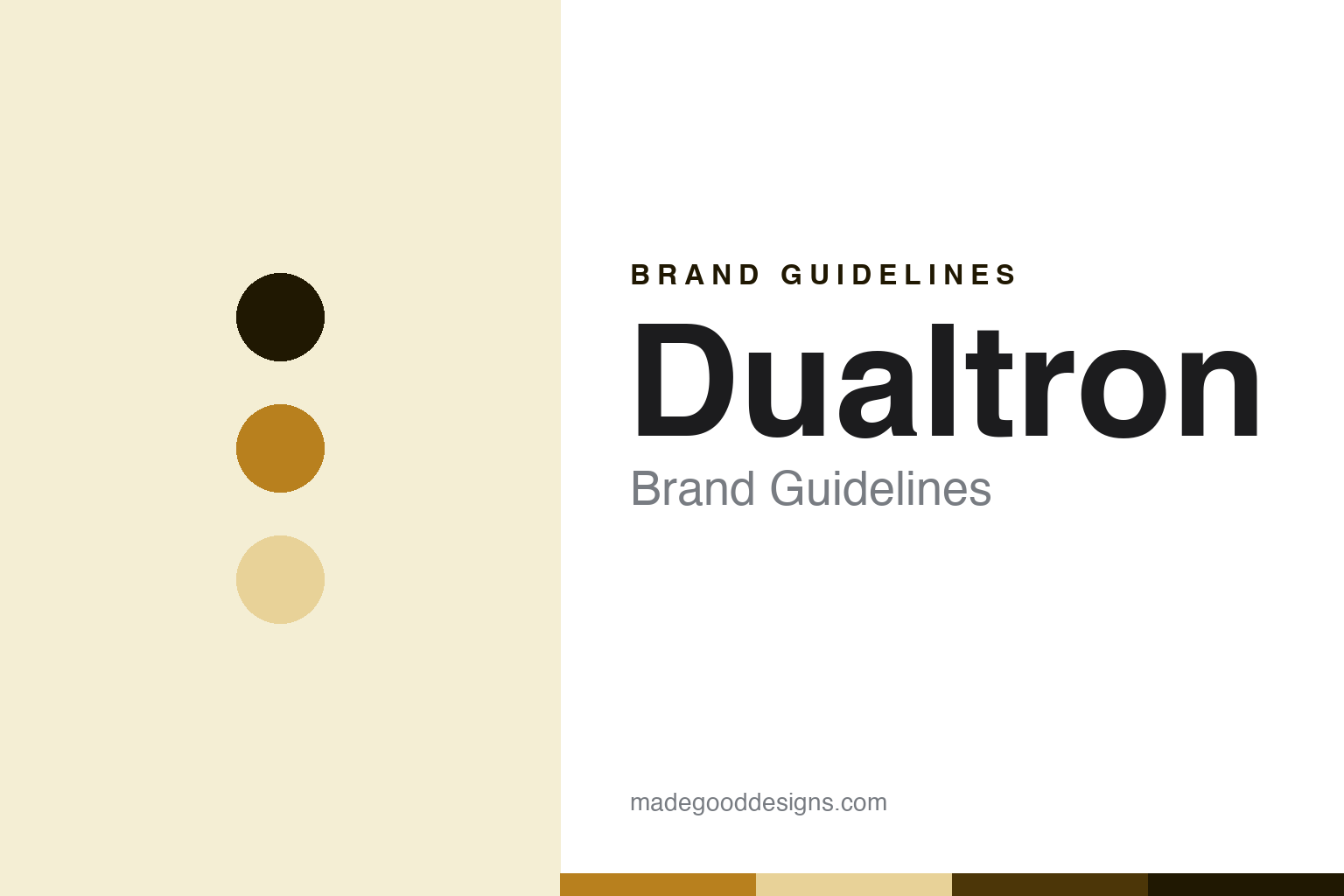
Jones Brand Guidelines
The 1971 carry bag, walking again.
Aa
Two constants: a waxed-tan palette and a minimalist-serif register. Abstract homage — not a Jones product or mark.
The 1971 carry bag, walking again
Jones is the 1971 Portland single-strap carry bag — revived in 2011 for the walking golfer.
Jones brings the round its minimalist carry bag — the Portland name from 1971, a simple single-strap bag for the golfer who walks, that lapsed and was revived for a new generation. Jones makes carry bags, and its answer to a round about everything else in the bag is the opposite of more: a light, single-strap bag with a retro shape, for walking the course. A bag, carried by hand.
Its identity is the 1971 carry bag, walking again. Jones’s minimalist shape, its 1971 origin and its 2011 revival are the story here. A bag, from Portland. The 1971 carry bag, walking again.
(Honest notes, so the story stays precise. Jones — the Jones Sports Company, at jonessportsco.com, where the old jonesgolfbags.com now redirects — makes minimalist single-strap carry and stand bags with a retro, walking-golfer aesthetic, such as The Original, the Trouper, the Rover stand bag and the Rider cart bag. It was founded in 1971 in Portland, Oregon, by George Jones — a taxi driver who began sewing bags in his basement and selling them from the trunk of his cab, not, as sometimes stated, a “Charlie Jones.” The brand lapsed and was revived in 2011 by Matt Lemman and Chris Carnahan, who are not the original Jones family, so we frame the revival, and its people, precisely. On where the bags are made — a theme of this round — the location is not documented, so we do not name a country or claim US-made. On ownership, it is independent and privately held, led by Lemman and Carnahan since 2011, with the founder’s name kept as a tribute. Its marks — Jones, The Original — are IP we describe but do not reproduce, and there is no official brand hex; these tones are an unofficial interpretation. This is design commentary and does not promote any product.)
Colour
Jones lives in a waxed tan. Click a swatch to copy the hex.
Jones’s identity is minimalist, heritage and revived — a waxed tan, an ink, a straw, a deep tobacco, and a paper. The palette leans waxed tan and straw: a warm, retro register that nods to waxed canvas and a walking-golfer aesthetic rather than a technical palette. It signals a minimalist heritage bag, walking again. The honest caveat: with no published brand hex, these values are an original, unofficial interpretation, not first-party colours.
The lesson is a waxed tan signals a minimalist, retro identity. Jones’s world is a minimalist, revived object. For designers, it is a reminder that a warm tan and a soft straw can carry an accessory brand — the tone of waxed canvas. Because these tones can fail as small text, keep type dark and let the colour live in the accents, palette and band. The takeaways: keep it simple; revive an old name honestly; do not claim a made-in you cannot document; and treat any single hex as unofficial.
Typography
The register is a minimalist serif — simple, retro, made.
Jones’s identity carries a simple, retro, made spirit — a minimalist bag, not a fashion. A minimalist serif captures the mood: plain, classic and a little nostalgic, the register of a single-strap bag for the walking golfer. Set in a waxed-tan palette, the minimalist serif feels simple and retro — exactly the personality Jones carries. It is a shape rather than a logo, mirroring waxed canvas. (Jones’s real wordmark is a thing we describe but do not reproduce, and the exact typeface is not ours to use.) Because it is not ours to use, the honest description is “a minimalist-serif spirit,” shown here in a stand-in. The type behaves like the bag: simple, retro and made.
Aa
A minimalist-serif spirit — simple and retro. (Specimen set in Cormorant Garamond, a minimalist-serif STAND-IN; NOT the Jones logo.)
Everything else in the bag
Jones stands for the 1971 carry bag, walking again.
Jones brings the round its minimalist carry bag. A waxed-tan palette, a minimalist serif and a single-strap bag make one thing — the 1971 carry bag, walking again — the whole identity: minimalist, heritage and revived. The 1971 origin is the differentiator, and the 2011 revival is the meaning. The point is a simple single-strap bag, born in a Portland basement, that lapsed and came back for the golfer who walks.
Put to work, the identity is a revival told straight, as design. A maker in this spirit would keep the bag simple, revive an old name honestly, and not claim a made-in it cannot document. A reader in this spirit would keep the facts right: it was founded in 1971 by George Jones, a taxi driver, in Portland — not a “Charlie Jones”; it was revived in 2011 by Matt Lemman and Chris Carnahan, who are not the original family; the making is undocumented; and it is independent, led by the revivers, with the founder’s name kept as a tribute. Jones sits in the round’s owner thread at the independent-revived end, a quiet counterpoint to the giants and the luxury group, and its minimalist single-strap shape is the opposite of the technical stand bags and premium cases elsewhere in the round. The honest editorial moves are to correct the founder to George Jones, to date the revival to 2011 and name the revivers, and to leave the making undocumented rather than guess. The lesson Jones teaches is that an old name can walk again, and honesty about the founder, the revival and the undocumented making keeps the revival credible.
For designers and brand-builders, Jones continues everything else in the bag: keep it simple — and revive a name honestly. The lessons: make one simple thing well; correct a misattributed founder; date a revival and name its people; do not claim a made-in you cannot document; and never reproduce a logo. It is also a reminder to stay precise: Jones is the 1971 Portland single-strap carry bag, revived in 2011 for the walking golfer — with the palette here an unofficial interpretation. Read that way, Jones is less a bag than a revival: a simple 1971 shape, brought back for a generation rediscovering walking golf. The lesson for a brand is that a minimalist heritage and an honest revival reinforce each other, and getting the founder and the revivers right keeps the heritage earned. Jones made the-1971-carry-bag-walking-again the identity — proof that a simple old name can walk again.
Explore & save
Keep Jones’s identity on hand — save it to a board in the Made Good inspiration library.
Jones identity set
Pin the waxed-tan palette and the minimalist-serif register to your own board.