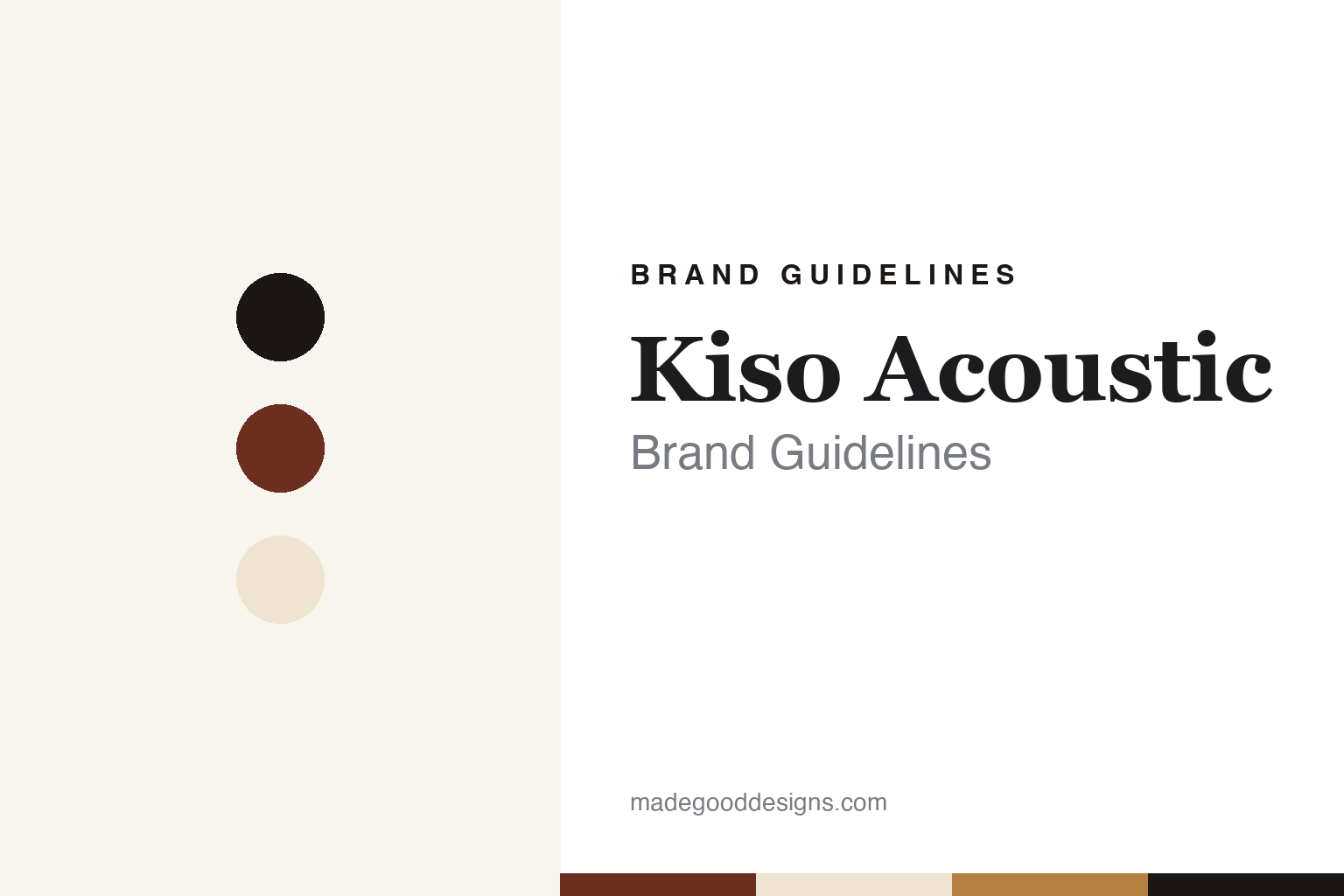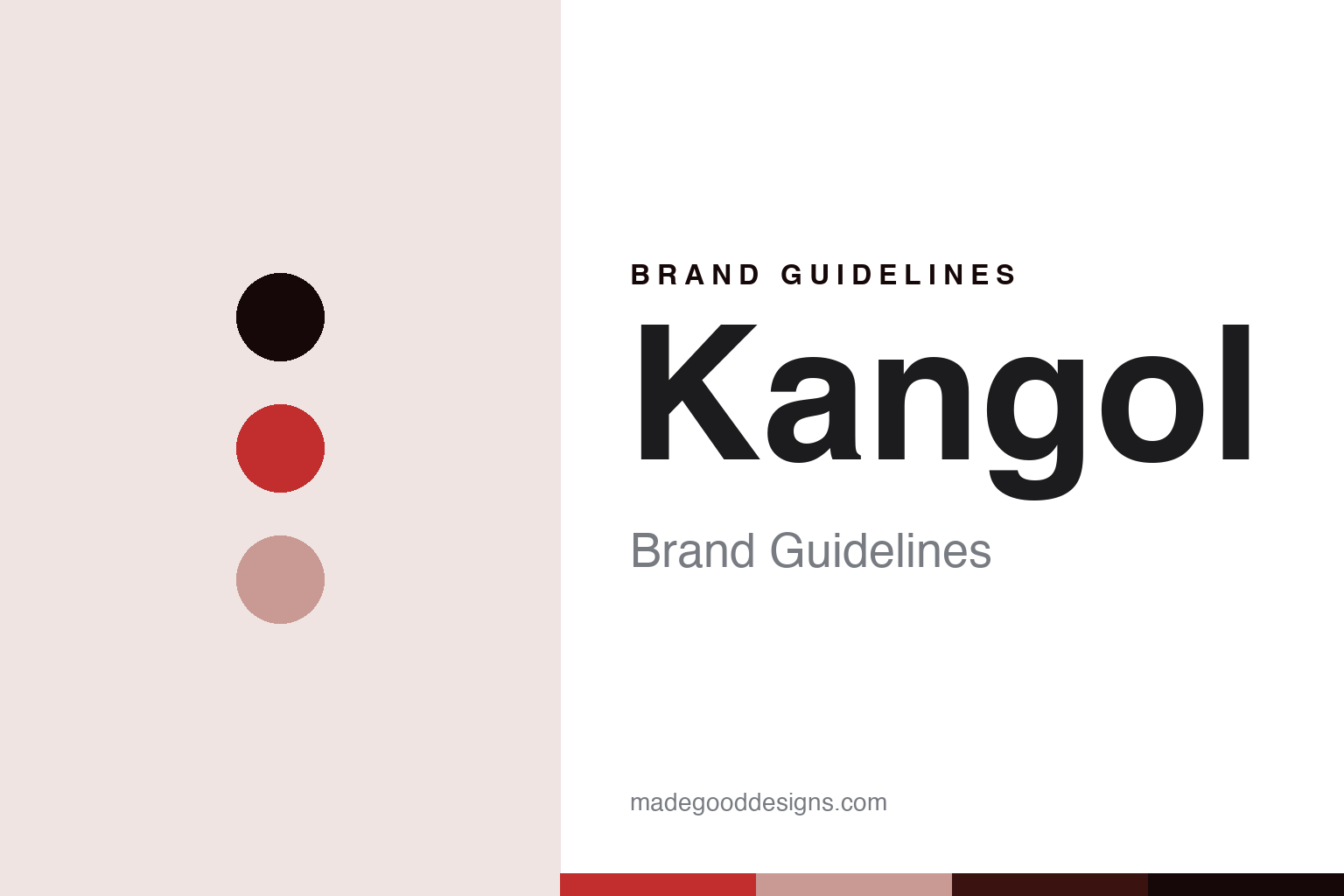
Kangol Brand Guidelines
The beret that went global.
Aa
Two constants: a scarlet palette and a streetwear-sans register. Abstract homage — not a Kangol cap, kangaroo or wordmark.
The British cap house
Kangol is the British-heritage cap and beret brand founded in Cumbria in 1938, a hip-hop icon, now made globally rather than in the UK.
Kangol is a lesson in how a name can outlive its origin. A British-heritage headwear brand, Kangol makes berets, its famous 504 cap and bucket hats — and became, improbably, a hip-hop icon. Its answer to how a hat becomes a name is culture: a British beret maker, adopted by American hip-hop, with a kangaroo on the badge. A very British name on a hat now made around the world.
Its identity is the British cap house, gone global. Kangol’s berets, its 504 cap, its bucket hats and its kangaroo badge are the work it is known for. A cap, British in name. A brand that belongs to a culture more than a country.
(Honest notes, so the story stays precise, because the name and the making have parted ways. Kangol was built by Jacques Spreiregen — a Polish-Jewish immigrant who began importing berets around 1918 — with manufacturing “born,” as the brand puts it, in Cleator, Cumbria, in 1938; it supplied British Army berets in the Second World War. But the Cleator factory closed in 2009, and Kangol is no longer UK-made: production moved to Eastern Europe and the United States, with imported product too, so we never imply British manufacture. Ownership is layered rather than simple: the American Bollman Hat Company has held the global licence and made the hats since 2002, while the brand and trademark sit on the British side (Frasers Group), with a US mark held by Kangol, LLC — so we say “British brand, globally made,” not “Bollman-owned.” The kangaroo badge was adopted in 1983, after American customers kept asking for “the kangaroo hat” — and no Kangol was ever made in Australia. Even the name is debated: the brand says it blends Knitting, Angora and wool, while other sources read it as silK-ANGora-wOOL, so we present both. Its huge role in 1980s and 90s hip-hop — worn by the era’s biggest names — is real. Its name and the kangaroo are its IP, described but never reproduced, and there is no official brand hex — these tones are an unofficial interpretation. This is design commentary and does not promote any product.)
Colour
Kangol lives in a scarlet palette. Click a swatch to copy the hex.
Kangol’s identity is bold, cultural and retro — a scarlet, an ink, a rose, a maroon, and a paper. The palette leans scarlet and rose: the register of a street-culture brand and a bold badge. It signals culture over craft. The honest caveat: with no published brand hex, these values are an original, unofficial interpretation, not first-party colours.
The lesson is a scarlet palette signals a street-culture, British-heritage identity. Kangol’s world is a bold, cultural, retro object. For designers, it is a reminder that a strong scarlet and a soft rose can carry a brand built on a badge and a culture — the red of a bold logo and the neutral of a knit cap. Because these tones can fail as small text, keep type dark and let the colour live in the accents, palette and band. The takeaways: own the culture; carry the badge; be honest about where it is made; and treat any single hex as unofficial.
Typography
The register is a streetwear sans — bold, plain, confident.
Kangol’s identity carries a bold, plain, confident spirit — a culture brand, not a traditional hatter. A streetwear sans captures the mood: even, strong and current, the register of a badge worn on the street. Set in a scarlet palette, the streetwear sans feels bold and confident — exactly the personality Kangol carries. It is cultural rather than heritage-stuffy, mirroring a cap in a music video. (Kangol’s real kangaroo and wordmark are things we describe but do not reproduce, and the exact typeface is not ours to use.) Because it is not ours to use, the honest description is “a streetwear-sans spirit,” shown here in a stand-in. The type behaves like the brand: bold, plain and confident.
Aa
A streetwear-sans spirit — bold and confident. (Specimen set in Space Grotesk, a streetwear-sans STAND-IN; NOT the Kangol wordmark or kangaroo.)
The name on the hat
Kangol stands for the name that outgrew its country.
Kangol is a lesson in how a name can belong to a culture, not a country. A scarlet palette, a streetwear sans and a badge make one thing — a British cap name that went global — the whole identity: bold, cultural and retro. The hip-hop adoption is the differentiator, and the badge is the meaning. The point is a British beret maker whose name, and whose kangaroo, became a street-culture icon far from Cumbria, and whose hats are now made anywhere but Britain.
Put to work, the identity is a name, honestly located, as design. A brand in this spirit would own its cultural moment, carry a strong badge, and be candid that the name has outrun its origin — founded in Cleator, no longer UK-made, run under an American licence, its very name debated. A brand learning from it would see that a name adopted by a culture is a durable identity — that a cap in a music video can matter more than a factory town — and that being precise, founded 1938 in Cumbria, no longer British-made, globally produced under licence, keeps the story honest. A brand learning from it would also resist the easy heritage claim: a British badge does not mean a British-made hat, and saying so plainly is more honest than trading on a flag. The lesson Kangol teaches is that a name can hold an identity even when the making moves: the culture gives it meaning, and the honesty about origin keeps it credible. The badge is the personality, and the cap is the proof.
For designers and brand-builders, Kangol opens this round of the name on the hat, from England: own the culture, and locate the making honestly. The lessons: carry the badge; own the cultural moment; separate the name from the factory; disclose where it is really made and who licenses it; and never reproduce a protected logo. It is also a reminder to stay precise: Kangol is the British-heritage cap and beret brand founded in Cumbria in 1938, a hip-hop icon, now made globally rather than in the UK — with the palette here an unofficial interpretation. Kangol made the name the identity — proof that a name adopted by a culture can be the difference.
Explore & save
Keep Kangol’s identity on hand — save it to a board in the Made Good inspiration library.
Kangol identity set
Pin the scarlet palette and the streetwear-sans register to your own board.