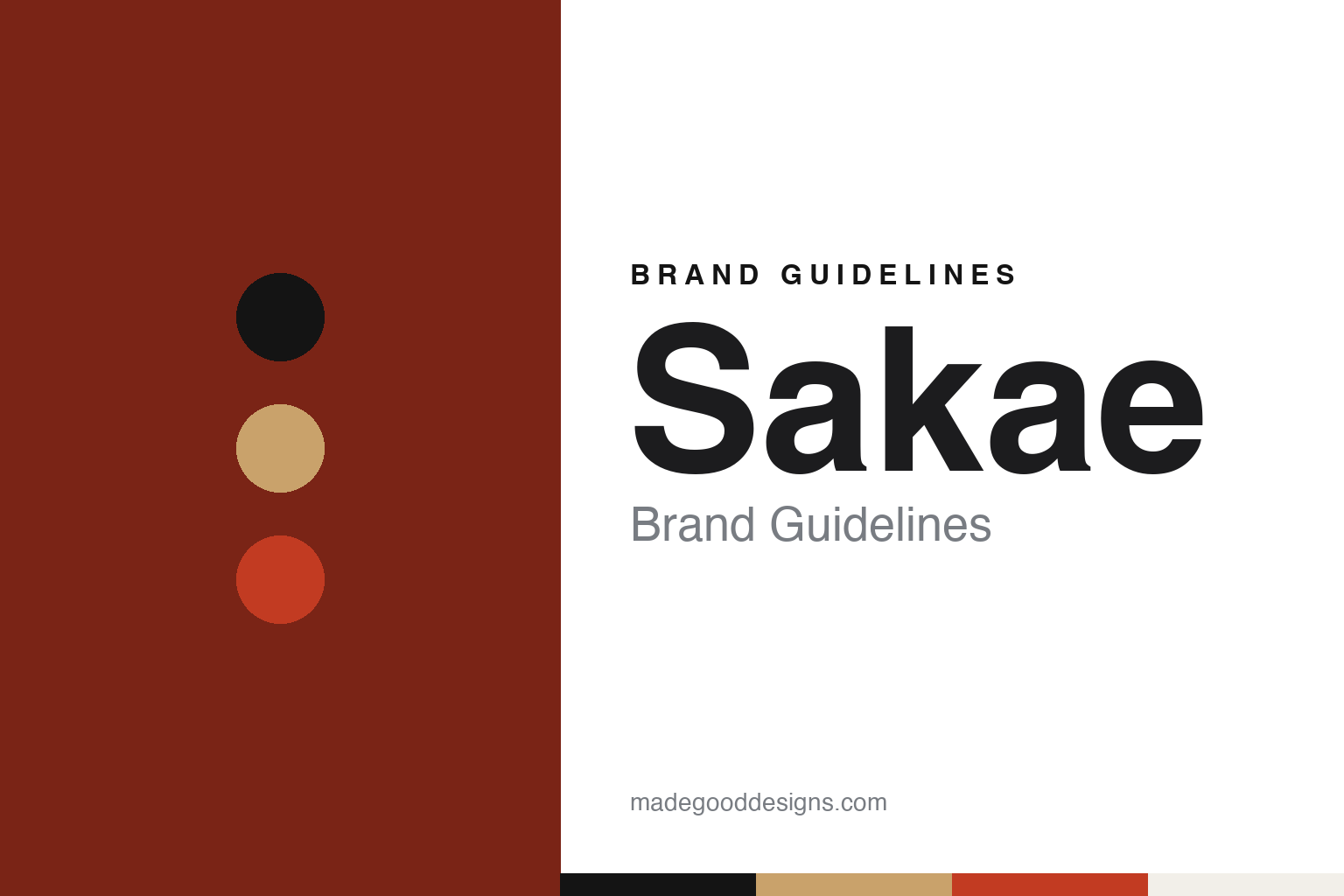
Kiesel Brand Guidelines
The Carvin family’s made-to-order guitar maker.
Aa
Two constants: a Kiesel black, oxblood and maple palette and a Condensed sans register. Abstract homage — not a Kiesel product or mark; no instrument, logo or headstock is reproduced.
L. C. Kiesel
A pickup maker, a lap steel and a direct-sales idea.
Kiesel Guitars is a young company with an old name. It was formed in 2015, but the business it grew out of goes back to 1946, when Lowell Kiesel founded the L. C. Kiesel Company to make guitar pickups. Sources differ on where. The company’s own history and the San Diego Union-Tribune, writing in January 2015, both say Los Angeles; English Wikipedia, citing a 2011 Premier Guitar profile, says San Diego. We note both.
The company says Lowell Kiesel was a Midwest-raised musician devoted to the Hawaiian lap steel guitar, who had moved to Los Angeles in 1936 and worked building aircraft during the Second World War. Its history credits his wife, Agnes Kiesel, with winding the first pickups on her sewing machine and helping with the catalogue, and quotes Lowell, from a 2003 interview for the NAMM oral-history archive, calling her “a very capable person.”
The business moved briefly to Gothenburg, Nebraska, around 1947, then back to Southern California. There it took a new name, Carvin, made from the first names of Lowell’s two eldest sons, Carson and Gavin. English Wikipedia, citing Vintage Guitar, dates the change to 1949; the company says the L. C. Kiesel Company closed after four years so that the renamed firm could sell directly to players rather than through dealers.
That decision shaped everything that followed. The company says its first full-sized catalogue appeared in 1954, and for decades Carvin sold guitars, lap steels and amplifiers by mail order. English Wikipedia adds that Carvin also made early guitars from a plastic called Resinox, and used Höfner necks on some of its guitars in the 1960s and early 1970s.
Colour
Mark Kiesel, the guitar division and the split.
The guitar side of the business has been in the hands of Mark Kiesel, Lowell’s middle son, for more than half a century. The company tells the story of a 20-year-old draftsman who heard that the guitar and bass division might close as Carvin neared its 25th anniversary, left his job and took it over. A 2015 announcement published by Premier Guitar says he had led the division since 1970.
Under him the line moved from lap steels to electric guitars. English Wikipedia credits Carvin with offering custom instruments made to order, letting buyers choose body shape, woods, colours and electronics, and with neck-through guitars that drew metal players such as Jason Becker and Marty Friedman. The company names the Ultra V and V220 of the 1980s, played by Jefferson Starship’s Craig Chaquico, and says it introduced a Custom Shop in the 1990s. By 2015 the Union-Tribune described Carvin as San Diego’s oldest and largest maker of electric guitars, amplifiers and concert audio equipment, building an estimated 5,000-plus guitars and basses a year.
Jeff Kiesel, Mark’s son, joined later; English Wikipedia says he began working for the company in 1995 and helping with design from 2011, while the company dates his push into design to 2013.
Then came the split. In January 2015 Carvin Corp. announced that a new and separate company, Kiesel Guitars, would take over the manufacturing and sales of all Carvin and Kiesel instruments from 1 February 2015, the Union-Tribune and Premier Guitar reported. The announcement named Mark and Jeff Kiesel as the owners, with Mark as president, and said the instruments would be made in the USA at the same facility. Carvin Corp., led by Mark’s brother Carson Kiesel, kept the amplifier and pro-audio business. Not everyone was convinced: a San Diego guitar dealer told the paper that “if you said ‘Kiesel Guitars’ to me, I would not know what that is.” In October 2017 Guitar World reported that Carvin Audio was closing its San Diego factory, adding that Kiesel and Carvin Guitars were unaffected.
Typography
Design and documentation.
The seven makers in this guide build electric guitars for rock and metal players, but they are organised in very different ways.
Two belong to Fender. Jackson, founded by Grover Jackson in Glendora, California, in 1980, and Charvel, begun by Wayne Charvel as a repair shop in Azusa in 1974 and sold to Grover Jackson in 1978, have both been owned by Fender since 2002, English Wikipedia says, and it gives Scottsdale, Arizona, as the base of both.
Two are linked through one man. ESP grew from Electric Sound Products, a parts shop that Hisatake Shibuya opened in Tokyo in 1975. In 1987, English Wikipedia says — ESP’s own corporate history gives 1990 — Shibuya bought Schecter, which David Schecter had started as a repair and parts shop in Van Nuys, California, in 1976, and which now gives its custom shop’s home as Sun Valley, Los Angeles; the two have remained separate companies.
Kiesel, in Escondido, California, traces its heritage to the pickup company Lowell Kiesel founded in Southern California in 1946, which became Carvin, and took its present name when it split from Carvin in 2015. Mayones was founded in Gdańsk, Poland, in 1982 by Zenon Dziewulski, Polish Wikipedia says, and is run by the Dziewulski family.
Cort, based in Seoul, is the odd one out: a large share of its output, by its own account, carries other brands’ names, and it makes its guitars in factories it runs in Indonesia and China.
This guide sets out what can be checked about each brand — who founded it, who owns it, and what it says about where its products are made — and marks clearly what rests only on the company’s own word.
Aa
A condensed sans — a family name on a made-to-order guitar. (Specimen set in Barlow Condensed, a sans STAND-IN; NOT the Kiesel logo.)
Kiesel
A family name on a made-to-order guitar.
The Kiesel name was chosen, English Wikipedia says, to honour Lowell Kiesel. The new company launched with a headless model, the Vader, which won Revolver’s Best of Show award at the January 2015 NAMM Show, and a bolt-on guitar, the Aries, which won a Guitar World Super NAMM award in 2016, according to English Wikipedia. The company says it moved from San Diego, where it had been for nearly 20 years, to Escondido in 2017, and that every Kiesel instrument is built there; we give that as its claim.
Today the company describes itself as “100% family-owned,” run by president Mark Kiesel and vice-president Jeff Kiesel. It still sells direct, through its website and by phone, with an online builder for custom orders. In June 2025 Guitar World reported the launch of the Kyber, a thin-bodied guitar for modern metal players that the company called “the culmination of 79 years of Kiesel luthiery,” starting at $1,599, and in October 2025 the same magazine reported that the blues guitarist Eric Gales had joined an artist roster that includes Stephen Carpenter, Devin Townsend and Sophie Lloyd.
For a design guide, Kiesel shows how a family business can rename itself without losing its history: the new name is the founder’s own, and the direct-to-player model dates from the 1950s. Compare Strandberg, whose headless designs Kiesel’s Vader and Kyber compete with, and Mayones, another family-run maker of custom-specified guitars. For this guide we use black, an oxblood red and a maple tone with a condensed sans, an unofficial interpretation; no product or logo is reproduced.
Explore & save
Keep Kiesel’s identity on hand — save it to a board in the Made Good inspiration library.
Kiesel identity set
Pin the Kiesel black, oxblood and maple palette and the Condensed sans register to your own board.