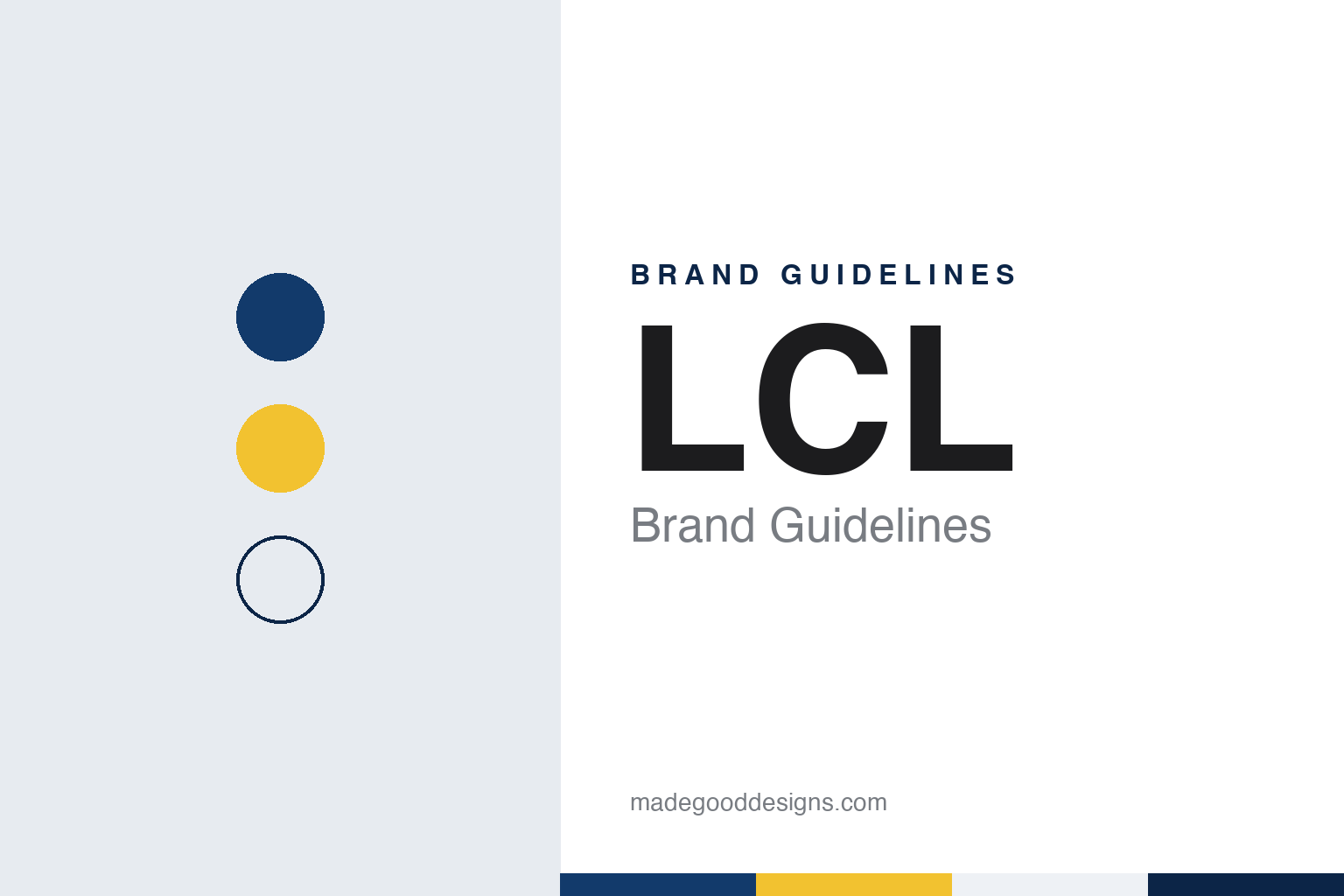
LCL Brand Guidelines
The Lyon bank of 1863 that became three letters in 2005.
Aa
Two constants: a navy and yellow palette and a compact sans register. Abstract homage — not an LCL asset; no logo, sign or card is reproduced.
Crédit Lyonnais
A Lyon bank, chartered in July 1863.
LCL began as Crédit Lyonnais, a bank chartered in Lyon on 6 July 1863. English Wikipedia credits the charter to Henri Germain, its largest shareholder and first chairman, and says the silk merchant François Barthélemy Arlès-Dufour persuaded him to launch it; French Wikipedia names both men as founders. A French law of May 1863 had just made it possible to form joint-stock companies without prior government authorisation, and the new bank opened for business later that July in Lyon’s Palais du Commerce.
It did not stay a local bank for long. Branches in Paris and Marseille opened in 1865, and a London office followed in 1870. From 1876 Germain built a large headquarters in Paris, on the boulevard des Italiens, and in 1882 the head office moved there, although the company stayed registered in Lyon. In the following decades the bank opened offices from Alexandria and Constantinople to Madrid, Saint Petersburg and Lisbon, and became a major placer of foreign government bonds, English Wikipedia says. By 1900, the same article says, it was the largest bank in the world by total assets, a position it held until 1920.
French Wikipedia describes the bank as one of the Trois Vieilles, the three old pillars of French banking, alongside the forerunners of BNP Paribas and Société Générale. It says the First World War hit the bank hard, with many branches closed and staff called up.
On the Second World War, French Wikipedia says the bank was less affected than in 1914–1918 and placed its deposits in Treasury bonds as lending slowed. It adds that the bank, which had long-standing ties with Deutsche Bank, drew profits from dealings with Nazi Germany during the occupation, and that in 1945 the committee for the confiscation of illicit profits made an assessment of them.
On 1 January 1946 Crédit Lyonnais was nationalised, together with Société Générale and two other large deposit banks.
Colour
Nationalisation, a rescue and a takeover.
As a state bank, Crédit Lyonnais kept growing at home and abroad. In 1972 it reopened an office in Moscow, and English Wikipedia says that by 1974 it had more than 1,900 branches. Under a new strategy from the late 1980s it expanded quickly across Europe, buying banks in Germany, Italy, Spain and Belgium, and lent heavily to film studios and property developers.
Bad loans grew from 1992, and the bank reported a large loss for 1993. A new chairman was appointed in November 1993, and the French state recapitalised the bank. In April 1995 the state created a separate body, the Consortium de réalisation, to take over and sell the bank’s non-core assets, and the European Commission set conditions that forced it to sell many foreign businesses, English Wikipedia says. On 5 May 1996 part of the Paris headquarters was destroyed by fire. The bank returned to profit in 1997.
The state then reversed the 1946 nationalisation in stages. Crédit Lyonnais shares were listed on the Paris Bourse in 1999, with the state keeping a stake and a group of partner shareholders, Crédit Agricole among them. In November 2002 the state auctioned its remaining holding; Crédit Agricole then made a friendly takeover bid and took full ownership in July 2003, English Wikipedia says. Crédit Agricole merged the investment banking arms of both groups into Calyon in 2004, a business renamed Crédit Agricole CIB in 2010, and the same year staff left the historic boulevard des Italiens building.
The retail network became the part of Crédit Lyonnais that carried its name forward. English Wikipedia describes LCL S.A. as a wholly owned subsidiary of Crédit Agricole, with its registered office in Lyon.
The bank is closely tied to French cycling. Crédit Lyonnais first sponsored the Tour de France in 1981 and has sponsored the yellow jersey, worn by the race leader, since 1987; each stage winner receives a plush lion, a play on the bank’s name, English Wikipedia says. French Wikipedia adds partnerships with Paris–Nice, Paris–Roubaix and the Critérium du Dauphiné, and with the French judo federation from 1985 to 2016.
Typography
How French banks present themselves.
French banks tend to present themselves through a small set of strong signals: a confident wordmark, a simple symbol and one or two colours used with discipline. Green, red and blue recur across the sector. Crédit Agricole is sometimes called “la banque verte,” the green bank, for its farming roots, while Société Générale has used a red and black square since 1990, according to French Wikipedia. The result is a high street where a colour can identify a bank before its name is read.
Many of the largest groups are mutualist or cooperative, built from local and regional banks owned by their members, and their identities often carry that structure. A national mark sits above regional names, and branch signage, city photography and local news pages speak to a particular town or département. The same brand has to work on a village branch, a city tower and a phone screen.
Online, the pages follow everyday needs: current accounts and cards, home loans, insurance, savings and investment, with separate areas for professionals, farmers and companies. Mobile apps now carry much of the relationship, and app screens, notifications and onboarding flows have become part of the visual identity as much as the logo on a branch front.
Sponsorship gives these brands a public stage. Crédit Agricole has backed football’s Coupe de France since 1974, according to English Wikipedia, and Société Générale says it has sponsored the French Rugby Federation since 1987; culture, music and disability sport also feature. Annual and integrated reports complete the picture: long documents in which the group’s colours, typefaces and photography are applied with the same care as on a campaign poster, and a useful place to study how each identity holds together.
Aa
A compact sans for a three-letter name. (Specimen set in Archivo, a sans STAND-IN; NOT the LCL logo.)
LCL
Three letters from 29 August 2005.
The name changed in 2005. On 29 August 2005, French Wikipedia says, the bank, until then abbreviated CL, launched new communication and visual identities, with a new logo, a new slogan and a new sound identity, under the commercial brand LCL – Le Crédit Lyonnais, usually shortened to LCL. The company’s legal name remains Crédit Lyonnais. English Wikipedia says the old brand was seen as tainted by the turmoil of the 1990s, and that the new one was introduced as a more dynamic version of the same bank.
The slogans trace the brand since then. French Wikipedia lists “Demandez plus à votre argent” (ask more of your money) from 2005 to 2012, “Demandez plus à votre banque” (ask more of your bank) from 2012 to 2018, and “LCL. Ma vie. Ma ville. Ma banque.” (my life, my city, my bank) from 2018 to October 2025. On 6 October 2025 LCL adopted a new signature, “Pour aller de l’avant” (to move forward), CB News reported that day: the campaign, by the agency Grinta, ran on television, posters, digital channels and social media, and presented each life project, from buying a home to starting a business, as a step forward.
Like many French networks, LCL has trimmed its branches. In March 2021 it announced the closure of about 15 percent of its branches, following earlier restructurings in 2016 and 2018, French Wikipedia says. In September 2012 the bank created a corporate foundation, Fondation LCL.
For a design guide, LCL shows how a bank with a long and troubled history can be carried forward by three letters, a sound identity and a yellow jersey seen every July. Compare Crédit Agricole, its owner since 2003, and Société Générale, another of the old Paris deposit banks nationalised in 1946. For this guide we use a deep navy, a jersey yellow and a pale mist with a sans, an unofficial interpretation; no product or logo is reproduced.
Explore & save
Keep LCL’s identity on hand — save it to a board in the Made Good inspiration library.
LCL identity set
Pin the LCL navy and yellow palette and the compact sans register to your own board.