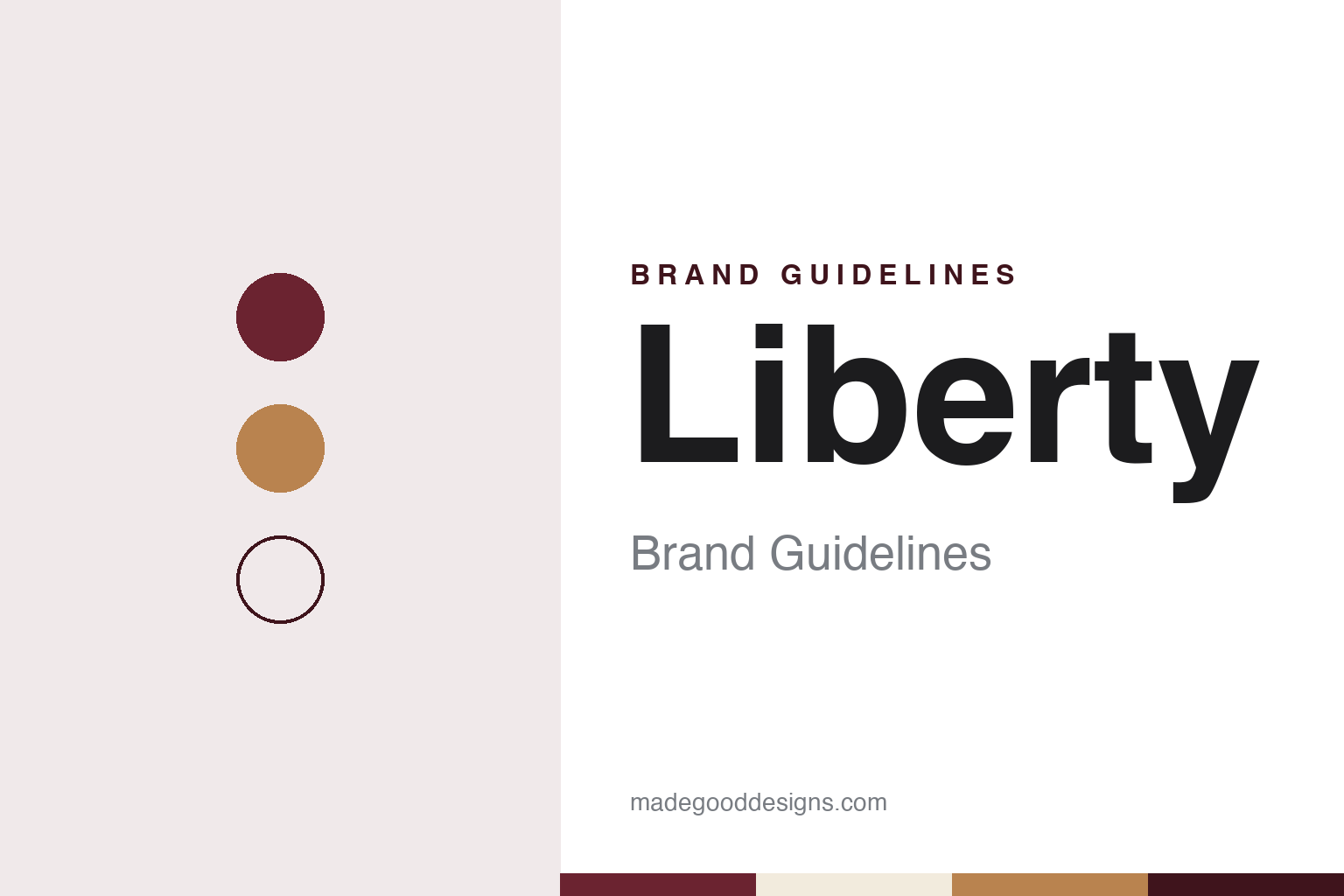
Liberty Brand Guidelines
The 1954 Karnal workshop that became a family of shoe brands.
Aa
Two constants: an oxblood, saddle tan and cream palette and a bookish serif register. Abstract homage — not a Liberty product or mark; no shoe, logo or nameplate is reproduced.
Pal Boot House
Four pairs a day in Karnal.
Liberty began in Karnal, a city in Haryana north of Delhi, in 1954. The company says it was established that year as Pal Boot House by Dharam Pal Gupta, Purshotam Das Gupta and Rajkumar Bansal, that its original factory and warehouse opened on 9 April 1954, and that it started with a production of four pairs of shoes a day. English Wikipedia gives the same founding year and names Karnal as the company’s headquarters.
The name came later. The company says Pal Boot House was renamed the Liberty Footwear Company, and it explains the choice as a statement of freedom from dependence. It dates the start of its export business to 1975, when it shipped an order to the Soviet Union, a step it presents as the beginning of its international trade.
The present company is Liberty Shoes Limited. It says it was incorporated in 1986 and received its certificate to commence business on 11 March 1988, permitting it to make and sell leather and non-leather footwear as well as shoe uppers, and that it later became a publicly traded company. Its shares are listed on BSE and on the National Stock Exchange of India, English Wikipedia says. In July 2014 the retail trade title Retail4Growth quoted Adesh Kumar Gupta as the company’s chief executive.
Colour
Sub-brands, showrooms and a supply chain rebuilt.
Liberty became a house of brands in the 1990s. The company says it launched ten sub-brands in that period, among them Gliders, Senorita, Coolers and Force 10, each aimed at a different group of buyers, and English Wikipedia describes the change as a shift from a single-brand footwear maker to a diversified consumer footwear business. More recently the company has added Leap7X and Healers, names it says were launched to reach younger customers. English Wikipedia lists the categories the company covers as formal, casual, athleisure, children’s and school footwear, among others.
Production is spread across three states. English Wikipedia names plants at Libertypuram and Gharaunda in Haryana, at Paonta Sahib in Himachal Pradesh and at Roorkee in Uttarakhand, and, citing company disclosures, gives an installed capacity of more than 60,000 pairs a day.
The shops changed shape in the 2000s. Retail4Growth reported in July 2014 that until the middle of that decade Liberty had worked through exclusive franchisees who met the company twice a year to say which designs and price points would sell, and that by the late 2000s the company was struggling with unsold stock. From around 2011, working with the Mumbai firm Vector Consulting Group, it set up a central warehouse in Panipat, began checking sales with distributors and retailers every week, and cut the time from factory to store shelf from 90 days to 21. The same report said the range was trimmed to about 3,000 models a year, split into steady sellers and newer designs shown in high-street stores, and that Liberty then had 100 company-owned and 450 franchised stores. In February 2015 the trade title World Footwear reported that the company had added 53 exclusive stores in nine months, giving it about 500 retail outlets. English Wikipedia also says the company runs 50 showrooms outside India. In its FY2025 corporate profile, cited by English Wikipedia, the company counted more than 500 exclusive stores, around 7,000 multi-brand outlets and sales in more than 25 countries.
One legal matter is on record.
Typography
Design and documentation.
Indian footwear, bag and accessory brands tend to present themselves through names more than through pictures. A single company often runs several labels at once, each with its own logo, catalogue and shop page, so that a rubber slipper, a sports shoe and a formal shoe can reach different buyers while sharing factories and distributors. On company websites the parent name usually sits in the footer and the investor pages, while the sub-brand names lead on the shelf.
Shopfronts carry much of that identity. Many of these companies sell through a mix of exclusive showrooms, franchised stores, multi-brand dealers and online marketplaces, and their own pages count those outlets and list the cities and states they reach. Some names are above all store names: Metro Brands runs Metro Shoes and Mochi as separate store banners.
Group ownership is part of the picture. Fastrack belongs to Titan Company, the watch and accessories business, and Woodland is the outdoor brand of the Delhi company Aero Club. Others, such as Relaxo, Liberty, Campus and Khadim’s, are listed companies whose corporate pages describe their founders, their factories and their share listings on the National Stock Exchange of India and BSE.
Advertising often leans on film actors, named in dated campaigns reported by the trade press, and on dated catalogues for each range. For a designer, the useful material is the documented part: the names, the store formats, the founding dates and the factories. The palettes and type in these guides are unofficial interpretations, and no logo or product is reproduced.
Aa
A bookish serif for a name chosen in the 1950s. (Specimen set in Libre Caslon Text, a serif STAND-IN; NOT the Liberty logo.)
Liberty
A one-word name over many smaller ones.
Liberty’s identity rests on a single, plain word. The company ties the name to its founders’ idea of freedom from dependence, and it has kept that word as the parent mark over every sub-brand since the 1990s. Below it sit names the company says were aimed at different groups of buyers, such as Gliders, Senorita, Coolers and Force 10, and, more recently, Leap7X and Healers, which it says were launched to reach younger customers.
That arrangement suits a maker selling through several channels at once. A buyer may meet Liberty in an exclusive showroom, in a franchised store, in a multi-brand shop or online, and the sub-brand names do much of the work of telling those buyers apart. Retail4Growth’s 2014 account of the company’s supply chain also shows the other half of the system: a range trimmed to a few thousand models a year, with steady sellers kept in production and newer designs placed in high-street windows.
The long history is part of the presentation too. The company tells its story from the four pairs a day of 1954 through the Soviet export order of 1975 to listed company, and that story of a Karnal workshop is the thread that connects the parent name to its younger brands.
For a design guide, Liberty shows how a one-word parent name can hold a large family of sub-brands together. Compare Relaxo, a Delhi footwear maker with its own house of brands, and Woodland, another Indian footwear name with its own store network. For this guide we use an oxblood, a saddle tan and a cream with a serif, an unofficial interpretation; no product or logo is reproduced.
Explore & save
Keep Liberty’s identity on hand — save it to a board in the Made Good inspiration library.
Liberty identity set
Pin the Liberty oxblood, saddle tan and cream palette and the bookish serif register to your own board.
Source & notes
Frequently Asked Questions
What font can I use to match the Liberty look?
This guide describes Liberty’s type as “A bookish serif for a name chosen in the 1950s”. Its type specimen is set in Libre Caslon Text from Google Fonts as a stand-in; Libre Caslon Text is not Liberty’s own lettering.
What colours are in the Liberty palette?
This guide’s Liberty palette is Oxblood #6B2330, Deep oxblood #3F141C, Saddle tan #B9834F, Karnal cream #F2EBDD and Charcoal #28282C. The tones are the guide’s own unofficial interpretation, not official Liberty hex codes.
When was Liberty founded?
Liberty was founded in 1954 (as Pal Boot House), in Karnal, Haryana, India.
Who founded Liberty?
Liberty was founded by Dharam Pal Gupta, Purshotam Das Gupta and Rajkumar Bansal in 1954 (as Pal Boot House).
Where is Liberty made?
Liberty is made in Haryana, Himachal Pradesh, Uttarakhand. This guide dates Liberty to 1954 (as Pal Boot House), in Karnal, Haryana, India.