Lotteria Brand Guidelines
Tokyo in 1972, Sogong-dong in 1979, and a Korean menu of bulgogi and shrimp.
Aa
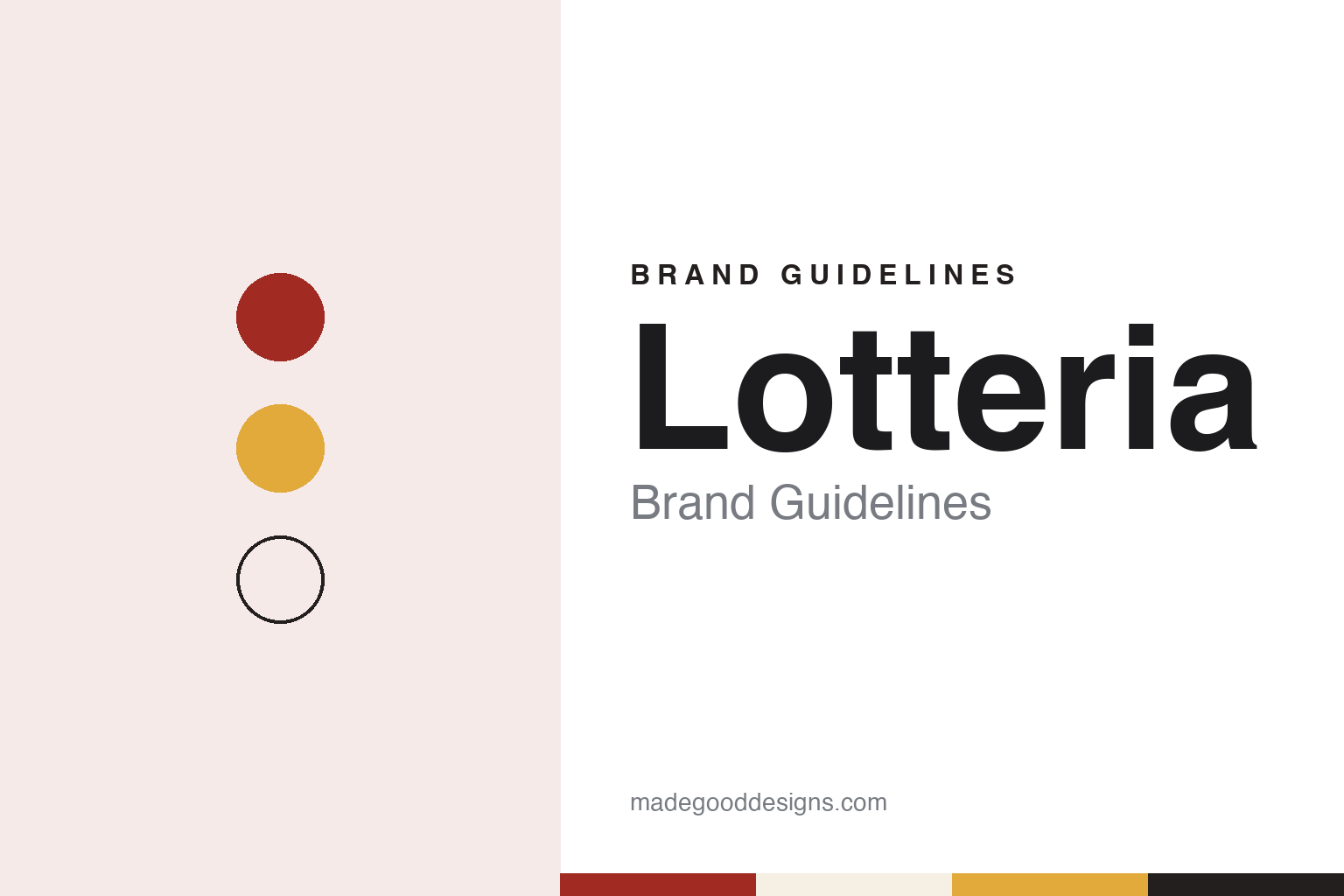
Two constants: a sauce red, mustard and bun cream palette and a rounded grotesque register. Abstract homage — not a Lotteria product or mark; no logo, packaging or menu board is reproduced.
Lotte and cafeteria
A Tokyo department store, then a Seoul one.
Lotteria began in Japan. English Wikipedia says the company was founded in Tokyo in February 1972 by Shin Kyuk-ho, the founder of the Lotte group, and that its first restaurants opened that September in Nihonbashi, Ueno and Yokohama. The Korean business daily Financial News reported in January 2026, citing the Nikkei, that the first Lotteria sign went up in 1972 at the Takashimaya department store in Nihonbashi, Tokyo. Lotte GRS, which runs the chain in Korea, says the name joins “Lotte”, the group, with “cafeteria”, a self-service restaurant.
The Korean chain followed in 1979. Asia Economy reported in January 2023 that Lotte GRS opened the first Lotteria store, the Sogong branch in central Seoul, in October 1979; English Wikipedia gives 25 October 1979, while Korean Wikipedia places the first store in the Lotte Department Store in Sogong-dong in December 1979. Korean Wikipedia says the Korean company began as a joint venture with the Japanese Lotteria and that, in 2004, it bought all the shares the Japanese side held in it.
From then on the two chains went separate ways. Financial News reported that Lotteria Korea took management control from Lotteria Japan and that the two were run as separate companies. Korean Wikipedia says the Korean company changed its name from Lotteria to Lotte GRS in July 2017; Lotteria remains its burger brand. In 2020 Asia Economy listed Angel-in-us coffee, Krispy Kreme Doughnuts and TGI Fridays among the other restaurant brands Lotte GRS operated in Korea.
The Korean network grew large. Asia Economy put it at about 1,350 stores nationwide in May 2020 and about 1,330 direct and franchised stores in January 2023. Lotte GRS’s English brand page, read in November 2026, says Lotteria runs more than 1,600 stores in seven countries.
Colour
Bulgogi, shrimp and seasoned fries.
The Korean menu leans on local flavours. Asia Economy reported in May 2020 that Lotteria launched the Bulgogi Burger in 1992, a patty seasoned with bulgogi marinade and sauce and made with Australian beef, and that its Shrimp Burger, with its own sauce, has a strong following. English Wikipedia also names a kimchi burger among its Korean lines, and Lotte GRS lists rice burgers among the Korean-style products it has developed.
New lines keep the same themes. In February 2020 the chain launched the Miracle Burger, with a plant-based patty, bun and sauce, Asia Economy reported. In January 2021 a square double-shrimp burger sold for a month as a limited edition was moved to the regular menu, English Wikipedia says. In June 2022 the Hanwoo Bulgogi burgers, made with Korean Hanwoo beef, joined the range, Asia Economy reported in January 2023. Korean Wikipedia adds two side orders that the Korean menu treats as house items: yangnyeom gamja, fries shaken with onion, chilli or cheese seasoning, and the Tornado, a cup of soft-serve mixed with toppings in a spinning machine.
The Korean company took the brand abroad. Asia Economy reported in 2020 that Lotteria first entered Vietnam in 1998 and expanded there from 2004, passing 100 stores in 2011 and running about 240 in 2020; English Wikipedia dates the Vietnamese entry to 2004 and mentions a local rice-and-spaghetti dish. English Wikipedia also records a first period in China from 1994 to 2003 and a return in 2008 centred on the Yanbian region, a first store in Yangon in April 2013, and a first store in Ulaanbaatar in June 2018. Not every market lasted: the same source says all Indonesian outlets closed on 29 June 2020 and all Cambodian ones in 2024.
In 2025 the chain reached North America. Lotteria opened its first store there in Fullerton, California, on 14 August 2025, 46 years after the Sogong-dong store, the Los Angeles Korea Daily reported; it was marketed as a “K-burger,” and opening day brought long queues at the drive-through. English Wikipedia adds a first Malaysian store at The Curve in Petaling Jaya in December 2025 and a first Singapore outlet at Jewel Changi Airport in February 2026.
Typography
Shopfronts, packaging and menus.
South Korea’s café, bakery and quick-meal chains present themselves first through the street. Most are franchise networks, so a shopfront, a cup and a menu board have to look the same in thousands of places run by different owners. When the Korea Times reported in January 2025 that one coffee chain’s rebrand was on hold, the reason it gave was franchisees’ reluctance to pay for new store fittings: in a franchise system, a new look is also a shared bill.
Menus carry much of the identity. The chains in this group name their dishes and drinks rather than describing them in general terms, and abroad they lean on Korean flavours: dalgona lattes, sikhye, roasted sweet potato, injeolmi and black sesame cakes, misutgaru drinks and street snacks such as hotteok and bungeoppang, according to press reports on their stores in Malaysia, Laos and the United States. Cakes, toast, porridge, lunchboxes and burgers each give a chain its own signature.
Ownership is described plainly in the companies’ own pages and in the business press. Some chains belong to large food groups, some to private equity funds and some to individual owners; a single brand can pass through several of these in two decades. Store counts are published by the companies and repeated by the press with dates, and the numbers change quickly in a market the Korea Times described as split between premium and budget tiers.
Expansion abroad takes two main forms in these reports: a master franchise, in which a local partner runs the stores, or a subsidiary that runs them directly. This guide sets out what can be checked about each brand: who founded it, who owns it now, how its stores and menus present it at home and abroad, and which facts rest only on the company’s own word.
Aa
A rounded grotesque for a red-and-white burger chain. (Specimen set in Archivo, a sans STAND-IN; NOT the Lotteria logo.)
Lotteria
An L, an O and a bitten burger.
Lotte GRS explains its mark in simple shapes. Its English brand page says the symbol is built from the letters L and O of Lotteria: the long straight stroke of the L stands for the company’s operating principles, and the O is meant as a top-down view of a hamburger with a bite taken out, as well as the profile of a smiling face. The company also writes the brand name in capitals, as LOTTERIA, on that page.
The Japanese chain has had a different history. Financial News reported in January 2026 that Lotteria Japan took investment from the restructuring firm ReVamp in 2005 and was acquired by Zensho Holdings, the owner of the Sukiya beef-bowl chain, in 2023; English Wikipedia says the sale of all shares took effect on 1 April 2023. Zensho opened the first outlet of a new burger brand, Zetteria, in Tokyo in September 2023 and began converting Lotteria stores. Asia Economy reported that the name joins “ZE” from the Zeppin burger with “TERIA” from cafeteria, and that the Japanese weekly Shukan Bunshun described the new stores as spaces that do not feel like fast-food restaurants, with calmer lighting, wider seating and table tablets in place of counter ordering.
In January 2026 Zensho announced that the remaining Lotteria stores in Japan would be closed or turned into Zetteria outlets, Financial News and VnExpress International reported, citing the Nikkei. At the end of December 2025 there were 106 Lotteria and 172 Zetteria stores in Japan, according to those reports, down from 358 Lotteria stores in January 2023. English Wikipedia says the Japanese company changed its name from Lotteria to Burger One on 16 February 2026. In Japan the brand has been wound down by its new owner; in Korea and in its overseas markets it remains Lotte GRS’s burger brand.
For a design guide, Lotteria shows how one name can split into two companies with two different futures: a Korean chain that keeps its 1979 brand and exports it, and a Japanese chain retired by its new owner. Compare Lotte, the confectionery group founded by the same businessman, and Mom’s Touch, another Korean burger chain. For this guide we use a sauce red, mustard and bun cream with a sans, an unofficial interpretation; no product or logo is reproduced.
Explore & save
Keep Lotteria’s identity on hand — save it to a board in the Made Good inspiration library.
Lotteria identity set
Pin the Lotteria sauce red, mustard and bun cream palette and the rounded grotesque register to your own board.
Source & notes
Frequently Asked Questions
What font can I use to match the Lotteria look?
This guide describes Lotteria’s type as “A rounded grotesque for a red-and-white burger chain”. Its type specimen is set in Archivo from Google Fonts as a stand-in; Archivo is not Lotteria’s own lettering.
What colours are in the Lotteria palette?
This guide’s Lotteria palette is Sauce red #A12A22, Grill ink #231F1E, Mustard #E2A93B, Bun cream #F6EFE3 and Tray paper #FBF8F3. The tones are the guide’s own unofficial interpretation, not official Lotteria hex codes.
When was Lotteria founded?
Lotteria was founded in 1972, in Tokyo, Japan. Lotteria is known for Bulgogi Burger, Shrimp Burger.