Noel Leeming Brand Guidelines
A 1973 Christchurch television shop that became a national electronics chain.
Aa
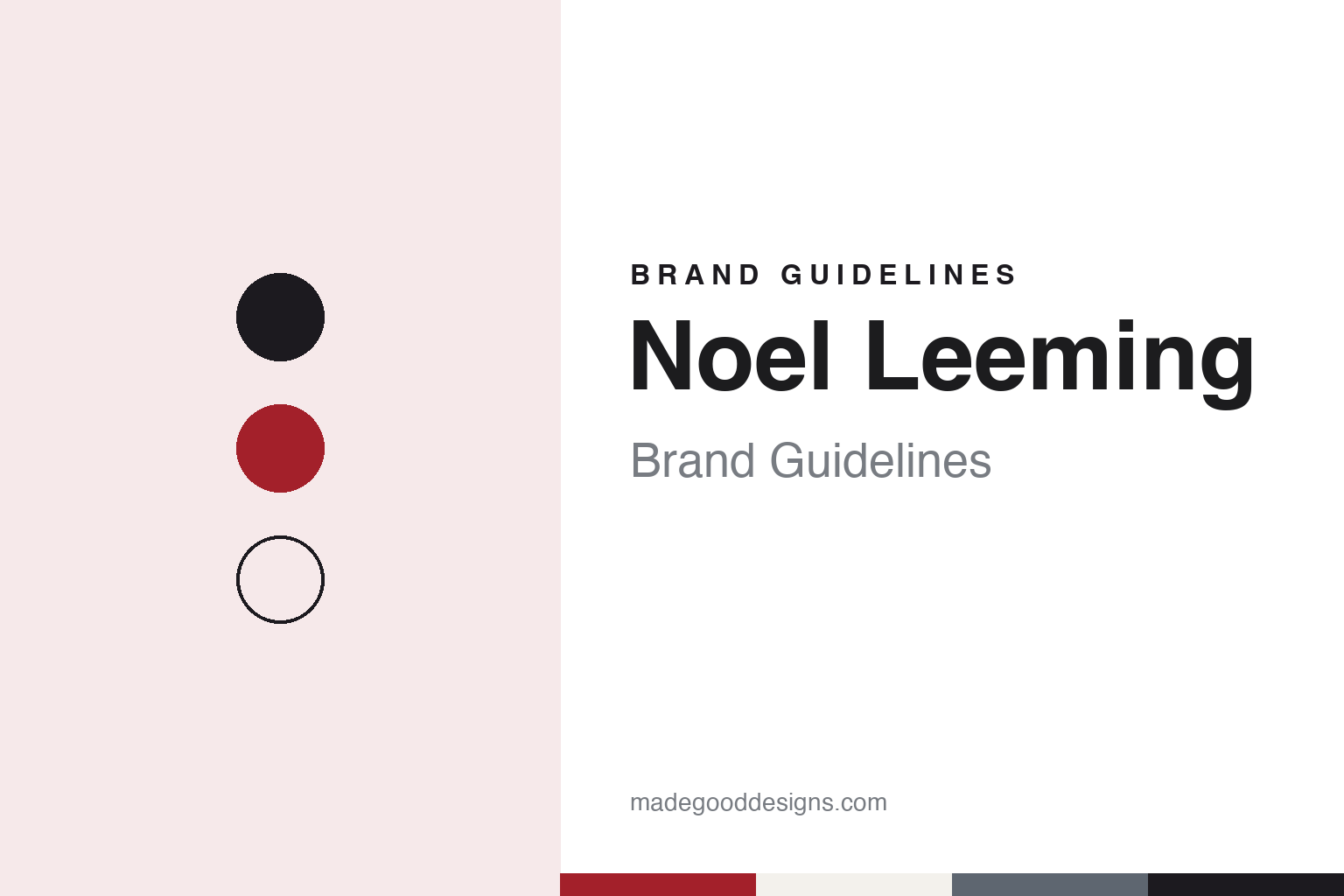
Two constants: a red, charcoal and warm white palette and a retail grotesque register. Abstract homage — not a Noel Leeming asset or mark; no logo, sign or product is reproduced.
Noel Leeming Television
A Christchurch television business of 1973.
Noel Leeming began in Christchurch in 1973, under the name Noel Leeming Television. English Wikipedia places its first store in Barrington Park Mall, in the south of the city, and says the business grew through the South Island before opening its first North Island branch, in Auckland, in 1986. The founder, Noel Leeming, retired as managing director in 1992, the same source says. When the company reopened its refurbished Christchurch flagship in 2016, its then chief executive, Tim Edwards, told Inside Retail that the city held “a special place” in its history, and spoke of the video recorders and bulky colour televisions on which the business was founded.
The chain then passed through a run of corporate owners. In 1996, according to English Wikipedia, Noel Leeming merged with the appliance retailer Bond & Bond under Pacific Retail Group, which ran about 90 branches across the country. In 2004 the Australian firm Gresham Private Equity bought Pacific Retail Group and renamed it Noel Leeming Group, the encyclopaedia says.
Gresham’s ownership ended in December 2012. ChannelLife, the New Zealand technology trade title, reported on 10 December 2012 that The Warehouse Group, the listed owner of The Warehouse discount chain, had bought Noel Leeming Group’s retail chain and online business in a deal completed that day. At the time the group had 92 stores in New Zealand and counted Bond & Bond among its brands. The buyer said Noel Leeming would carry on as a separate trading division, with its own retail brand positioning and its existing management team, and described the purchase as a way into consumer electronics and home appliances through a specialist retailer.
The new parent moved quickly. Within a year Noel Leeming Group had bought Maclean Technology, an information-technology services business whose predecessor, Maclean Computing, had gone into liquidation in 2012. At an event marking that sale in November 2013, Warehouse Group chief executive Mark Powell said the group had made about ten acquisitions in the previous year, Noel Leeming among them, and that services around a product mattered as much as the product itself, ChannelLife reported.
Colour
Televisions, whiteware and a service desk.
Noel Leeming sells consumer electronics, whiteware, small appliances and accessories, according to English Wikipedia. Alongside the goods it sells help: its Tech Solutions service, launched in 2011, installs and repairs equipment and teaches people how to use it, for households and for businesses, the encyclopaedia says. The Maclean deal of 2013 added a commercial IT arm to that service side; at the time Noel Leeming Group’s chief executive said the company was “a retailer first and foremost” but also had a very large commercial business, ChannelLife reported.
The service idea shapes the shops. When the Christchurch flagship reopened in August 2016, Inside Retail described a services hub where customers could talk to specialist staff in a dedicated zone, a smart-home display, a built-in cooking centre with an area given over to Fisher & Paykel appliances, and a wall of Sonos wireless speakers. A connected-solutions desk was there to help customers set up mobile and broadband services for their devices.
Store numbers have moved with the years. ChannelLife counted 92 stores in 2012, when Bond & Bond was still part of the group; English Wikipedia gives 73 stores and collection centres as of September 2025. In Auckland’s city centre the chain left Queen Street in 2021 when its lease expired, and in May 2026 chief executive Jason Bell announced a new interactive store on the same street, built around expert demonstrations, gaming events, product launches and try-before-you-buy zones, RNZ reported. In 2026 Bell also told RNZ that cost prices for technology products had been rising around the world and that New Zealand was not immune.
The brand’s present look dates from a 2014 refresh of its visual identity, English Wikipedia says. No official typeface or colour code is documented in the sources used here, so the type and palette on this page are a stand-in.
Typography
Design and documentation.
Australian and New Zealand department, discount and specialty retailers present themselves first through the shop front. Many chains grew by buying older local stores and then putting their own name over the door, so a single fascia in a city mall or a regional town often carries several earlier businesses behind it. Myer, for example, renamed the Grace Bros stores of New South Wales in 2004, two decades after buying the chain. Store names are usually plain: a founder’s surname, a description of what is sold, or a short set of initials.
The calendar does much of the talking. Department stores mark Christmas with window displays, and in Melbourne the Myer windows on Bourke Street have been documented by State Library Victoria since their start in 1956. Discount and specialty chains lean instead on printed and online catalogues, seasonal sales with their own names and colour-coded sale signs, published on the companies’ own channels. Loyalty programmes, cards and apps carry the same name and colours as the stores.
Own-label ranges sit beside the brands a retailer stocks. Many groups sell products under house names, or own fashion and homewares labels that also trade as separate shops, and present them in their own sections of the store and website. A pattern, a single colour or a capitalised wordmark often does the work of recognition: David Jones adopted a black-and-white houndstooth in 1967 so that its packaging would not need the name.
Behind the fascias sit corporate pages. These usually give a founding story and name the founders, the parent group and, for listed companies, the exchange and investor pages with dated announcements. Changes of owner, administrations and store closures appear there and in the business press, which is often the clearest record of how a shop name has passed from one owner to the next.
Aa
A heavy retail grotesque for a showroom fascia. (Specimen set in Archivo, a sans STAND-IN; NOT the Noel Leeming logo.)
Noel Leeming
A division inside The Warehouse Group.
Noel Leeming has spent more than a decade as one division of a larger group. In February 2026 RNZ described The Warehouse Group as the operator of the Red Sheds, Warehouse Stationery and the appliance and electronics chain Noel Leeming, as the group set out a restructure of its head office. RNZ also reported in May 2026 that Noel Leeming was owned by The Warehouse Group.
The chain has a record with New Zealand’s consumer regulator, the Commerce Commission. In 2018 the Commission prosecuted Noel Leeming Group on eight charges under the Fair Trading Act concerning what it told customers about their rights under the Consumer Guarantees Act; the company pleaded guilty and was fined in the District Court, English Wikipedia says. In December 2020 the Commission issued the company a formal warning over delivery representations, the same source says.
For a design guide, Noel Leeming shows how a founder’s name can outlast several owners and become the label for a whole division of a listed retail group. Compare The Warehouse, its sister chain under the same parent, and Harvey Norman, another founder-named electronics and appliance retailer that trades in New Zealand. For this guide we use a showroom red, charcoal and warm white with a sans, an unofficial interpretation; no product or logo is reproduced.
Explore & save
Keep Noel Leeming’s identity on hand — save it to a board in the Made Good inspiration library.
Noel Leeming identity set
Pin the Noel Leeming red, charcoal and warm white palette and the retail grotesque register to your own board.
Source & notes
Frequently Asked Questions
What font can I use to match the Noel Leeming look?
This guide describes Noel Leeming’s type as “A heavy retail grotesque for a showroom fascia”. Its type specimen is set in Archivo from Google Fonts as a stand-in; Archivo is not Noel Leeming’s own lettering.
What colours are in the Noel Leeming palette?
This guide’s Noel Leeming palette is Showroom red #A3202A, Charcoal #1C1A1F, Screen grey #5E6670, Warm white #F3F1EC and Paper #FAF9F6. The tones are the guide’s own unofficial interpretation, not official Noel Leeming hex codes.
When was Noel Leeming founded?
Noel Leeming was founded in 1973 (as Noel Leeming Television), in Christchurch, New Zealand.
Who founded Noel Leeming?
Noel Leeming was founded by Noel Leeming in 1973 (as Noel Leeming Television).