Pearl River Brand Guidelines
The world’s biggest, shrinking.
Aa
Two constants: a river-jade palette and an industrial-sans register. Abstract homage — not a Pearl River product or mark; no piano or wordmark is reproduced.
A city’s piano factory
Pearl River has no founder in its story. It has a city.
Pearl River’s own annual report gives its origin in one line: “公司始创于1956年,2012年在深交所上市” — founded in 1956, listed on the Shenzhen exchange in 2012. There is no founding craftsman, because there was none: it began as a municipal piano factory in Guangzhou, and it remains, in the words of the same report, a company whose “最终控制方是广州市人民政府国有资产监督管理委员会” — whose ultimate controller is the Guangzhou municipal government’s state-owned assets supervision and administration commission.
The shareholder table makes it concrete. Guangzhou City Construction Investment Group holds 51 percent; Guangzhou Industrial Investment Holding Group 16.4 percent; the Guangdong provincial finance department 7.49 percent. Those three public shareholders alone hold about three-quarters of the company. The city transferred its controlling stake to its construction-investment group in 2022. This is, without ambiguity, a state enterprise — and the owner of a German heritage name.
It also says it is the biggest. Its annual report claims that “自2001年起…全球钢琴产销规模第一” — since 2001 it has been the world’s largest piano maker by output and sales — and that it has built more than three million pianos in total. In 2013, the Chinese government’s English-language portal reported, it made 136,000 pianos, “a 25-percent share of the international market.” Its American distributor calls it simply “The World’s Best Selling Piano.”
Colour
Its own brands, a German name it bought, and a famous name it builds for.
Pearl River sells under a family of names. Its annual report lists Kayserburg, a premium line it says it launched in 2007; Pearl River itself, one of the first instrument brands recognised as a well-known trademark in China, in 1999; Ritmüller, which its American distributor says was revived in 2009 with a heritage dating to 1795; and Jingzhu. Two of those names — Kayserburg and Ritmüller — sound European. The 1795 date attached to Ritmüller is the distributor’s claim for a name revived in 2009, and we did not verify it; a heritage date on a revived name tells you about the name, not about the factory. It holds, the report says, 259 registered trademarks at home and 141 abroad.
Then there is the name it bought. Pearl River’s 2016 annual report records the acquisition of 90.00 percent of Schimmel’s parent company, completed on 13 May 2016, for RMB 178.54 million. Its 2025 report still lists the German company, an American sales company, and a Polish Schimmel factory company among its subsidiaries. Schimmel’s own history calls the arrangement an alliance; Pearl River’s accounts call it a 90 percent subsidiary.
And there is the name it builds for. Steinway’s annual report filed in March 2006 says: “In 2005, we established a relationship with Pearl River Piano Group, the largest piano manufacturer in China, to build pianos for our Essex line.” Steinway’s 2022 filing places Essex manufacturing in Guangzhou “by a third-party manufacturer.” The buyer’s guide PianoBuyer adds that since 2020 two lines of the American house Mason & Hamlin “are made in China in partnership with Pearl River” — PianoBuyer’s statement, not either company’s. Pearl River’s own annual reports, which we searched for “OEM” and its Chinese equivalent, name no clients at all.
Typography
From 136,063 pianos in 2016 to 12,573 in 2025.
The most striking numbers are in Pearl River’s own filings. In 2016 it made 136,063 pianos and sold 133,439. In 2024 it made 31,373. In 2025, its annual report says, it made 12,573 acoustic pianos — down 59.92 percent in a year — sold 23,174, and still held 34,344 in inventory. Revenue for 2025 was RMB 569.7 million, about half the 2023 figure, and the company reported a net loss of RMB 374.0 million. It says it cut production deliberately to work down stock.
The collapse belongs to China’s market, not only to Pearl River. The chairman of the China Musical Instrument Association said in 2024 that national output and sales had passed 300,000 pianos in 2003 and reached 390,000 in 2019 — 75 percent of the world market — but that 2023 sales were expected to be about 160,000. The world’s largest piano industry fell by more than half in four years, and its largest maker’s own output fell further still by 2025. In 2013, China Daily reported in November 2014, Pearl River held a “35-percent share of the domestic market” as well as a quarter of the international one — which is why its numbers track the country’s so closely.
Trade policy played its part abroad. In 2019 the United States put pianos from China — upright, grand and other — on its “List 4” of Section 301 tariffs, at an additional 10 percent from 1 September 2019, reduced to 7.5 percent from 14 February 2020. America has never imposed an anti-dumping duty on Chinese pianos; its one piano dumping case, against Korea in 1984, ended with no order. The tariff that did arrive came through a wider trade dispute.
Pearl River’s response is visible in its 2025 report: it bought into a stage-lighting business in June 2025 and took a 20-year concession to operate a tourist site in August. The world’s largest piano maker, by its own long-standing claim, is diversifying away from pianos.
Aa
A plain industrial sans — sturdy, legible, built for scale. (Specimen set in Barlow, a sans STAND-IN; NOT the Pearl River wordmark or products.)
An envoy of refined culture
The mission statement is lofty. The distributor’s tagline is commercial.
The company’s mission, in its annual report, is “创造完美声音之源,做人类和谐生活、高雅文化的使者” — to create the source of perfect sound, and to be an envoy of harmonious life and refined culture. Its American distributor speaks more plainly: “The World’s Best Selling Piano,” and “Your Pearl River Piano Took Over 70 Years to Build.” We could not reach the company’s own official website to verify its current logo, so we describe none.
The identity question for Pearl River is the inverse of the European houses in this series. The European houses in this series are names first and factories second. Pearl River is a factory first — the largest in the world, by its own account — with a set of names that sound like the houses it competes with. Owning Schimmel gave it one of those houses outright.
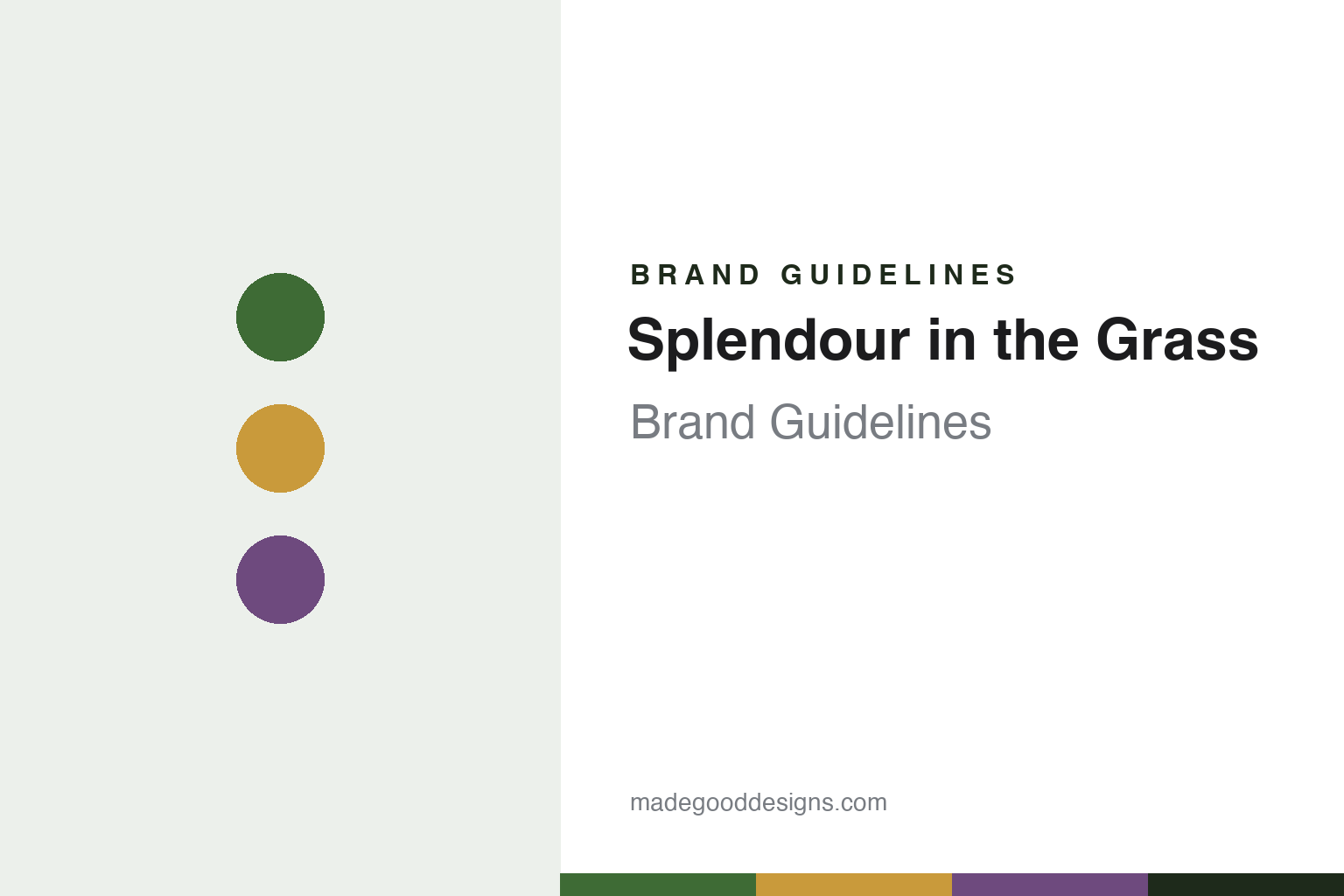
For this guide we use a river jade and a pale jade with a plain industrial sans. These are an unofficial interpretation, not Pearl River’s own colour values, and nothing of its mark is reproduced.
Explore & save
Keep Pearl River’s identity on hand — save it to a board in the Made Good inspiration library.
Pearl River identity set
Pin the river-jade palette and the industrial-sans register to your own board.