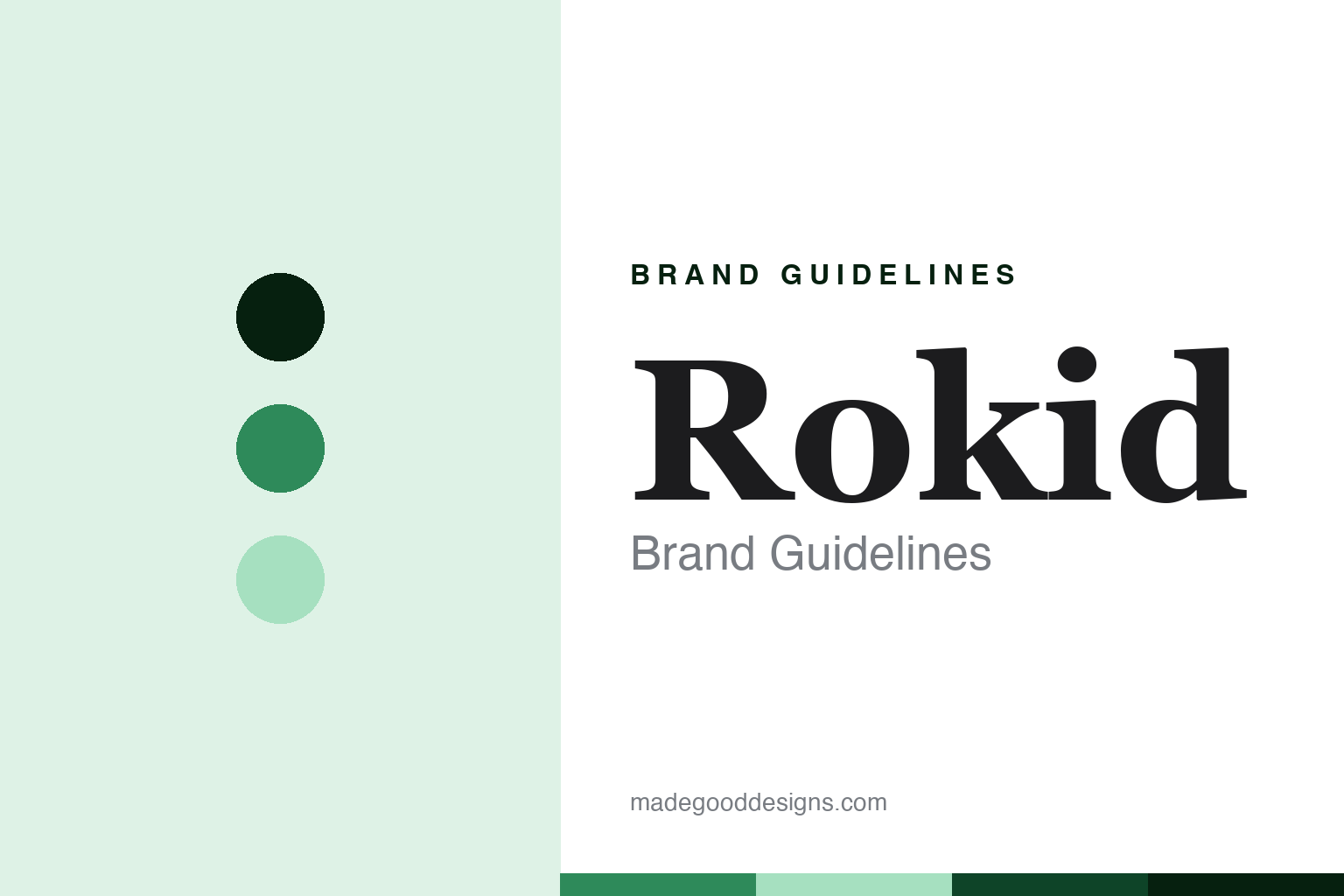
Rokid Brand Guidelines
The dual-lane AR maker.
Aa
Two constants: an AR-green palette and an AR-serif register. Abstract homage — not a Rokid product or mark; no glasses, lens or logo is reproduced.
The dual-lane AR maker
Rokid is the Chinese AR company that plays both lanes: birdbath media viewers and everyday AI glasses, on its own YodaOS.
Rokid brings the round its dual-lane node — a Chinese AR company that makes both the screen-on-your-face media viewer and the true everyday AI glasses, rather than picking one. Its answer to a round about who owns the smart glasses and where they are made is a straightforward Chinese one: a private AR company, made in China, running its own operating system across both product lines.
Its identity is the dual-lane AR maker. The presence in both lanes, the everyday AI glasses and the proprietary software are the story here. Glasses, in two lanes. The dual-lane AR maker.
(Honest notes, so the range, the ownership and one naming caution are framed accurately. Rokid sells across both lanes as its heroes — the Rokid Max birdbath media viewers and AR Spatial workspace on one side, and the Rokid Glasses everyday AI-and-AR pair on the other, with dual green micro-LED displays, a light frame, a mobile AR chip, a camera and large-language-model features like live translation — and we report its specification language as the brand’s own. On the ownership: Rokid is a Chinese AR company, described as China-and-US-based, commonly placed in Hangzhou with a US office, private and venture-backed, founded in 2014, with the founder reported but not verified. On the software: it runs its own operating system, and we note only that its name coincidentally echoes a well-known film character, which we deliberately do not associate the brand with. On the point that matters: Rokid genuinely plays both lanes, so it should not be lumped only with the media viewers. On where it is made: China. Its designs, the Rokid name and its operating-system and product names are IP we describe but do not reproduce; these tones are an unofficial interpretation.)
Colour
Rokid lives in an AR green. Click a swatch to copy the hex.
Rokid’s identity is versatile, AI-forward and Chinese — an AR green, an ink, a pale mint, a deep pine, and a paper. The palette leans AR green and pale mint: a bright, display register that nods to a green micro-LED HUD rather than a loud logo colour. It signals the dual-lane AR maker — versatile, AI-forward and Chinese. The honest caveat: with no published brand hex, these values are an original, unofficial interpretation, not first-party colours.
The lesson is an AR green signals a versatile, AI-forward identity. Rokid’s world spans a private cinema and a pair of AI glasses that translate a conversation in real time. For designers, it is a reminder that a bright AR green and a soft pale mint can carry a hardware brand — a display tone held as colour, not a product shot. Because these tones can fail as small text, keep type dark and let the colour live in the accents, palette and band. The takeaways: frame Rokid as dual-lane, not media-only; date it to 2014 and hedge the founder; place it in Hangzhou and China-made; and keep the operating-system name free of any film association.
Typography
The register is an AR serif — versatile, AI-forward, Chinese.
Rokid’s identity carries a versatile, AI-forward, Chinese spirit — a broad AR maker, not a single-product brand. An AR serif captures the mood: confident, modern and considered, the register of a company across two lanes. Set in an AR-green palette, the AR serif feels versatile and AI-forward — exactly the personality Rokid carries. It behaves like a made, engineered thing rather than a loud logo, mirroring a HUD glow and an optical ray-trace. (Rokid’s real products and the names are things we describe but do not reproduce, and the exact typeface is not ours to use.) Because it is not ours to use, the honest description is “an AR-serif brand,” shown here in a stand-in. The type behaves like the brand: versatile, AI-forward and Chinese.
Aa
An AR-serif brand — versatile and AI-forward. (Specimen set in Fraunces, an AR-serif STAND-IN; NOT the Rokid logo or livery.)
The smart glasses
Rokid stands for the dual-lane AR maker.
Rokid brings the round its dual-lane node. An AR-green palette, an AR serif and a 2014 founding make one thing — the dual-lane AR maker — the whole identity: versatile, AI-forward and Chinese. The presence in both lanes is the pitch, and the everyday AI glasses are the proof. The point is a Chinese AR company that refuses to pick one lane, in a round about who owns the smart glasses and where they are made.
Put to work, the identity is the brand told straight, the range clarified and the naming kept clean. A brand in this spirit would frame Rokid as dual-lane, date it to 2014, and keep the operating-system name free of any film association. A reader in this spirit would keep the facts right: Rokid sells the Max media viewers and the Rokid Glasses AI pair as heroes; it is a Chinese AR company founded in 2014, placed in Hangzhou; it runs its own operating system; it plays both lanes; and it is made in China. Rokid sits second in the round, after Viture. The honest editorial moves are to frame it as dual-lane, to date it to 2014 and hedge the founder, to place it in Hangzhou, and to keep the OS name free of any film association.
For designers and brand-builders, Rokid continues the smart glasses: play both lanes credibly — and keep a coincidental name free of a famous association. The lessons: a maker can span both the media-viewer and everyday-AI lanes rather than specialise; a proprietary operating system is a real platform asset; a product or OS name that echoes a famous character should be kept deliberately unassociated with it; and origin and founder should be placed and hedged honestly. It is also a reminder to stay precise: Rokid is the Chinese AR company that plays both lanes — birdbath media viewers and everyday AI glasses, on its own YodaOS — with the palette here an unofficial interpretation. The hook is that breadth: while others pick a lane, Rokid makes both the private-cinema viewer and the everyday AI glasses that translate a conversation in front of you, all on its own operating system — a Chinese AR company since 2014 that refuses to specialise. Read that way, Rokid is less a single-lane brand than a dual-lane AR maker: versatile, AI-forward, Chinese. The lesson for a brand is that lane-spanning breadth and clean naming reinforce each other, and keeping the OS name unassociated keeps the story earned. Rokid made the-dual-lane-AR-maker the identity — proof that breadth can carry a round.
Explore & save
Keep Rokid’s identity on hand — save it to a board in the Made Good inspiration library.
Rokid identity set
Pin the AR-green palette and the AR-serif register to your own board.


