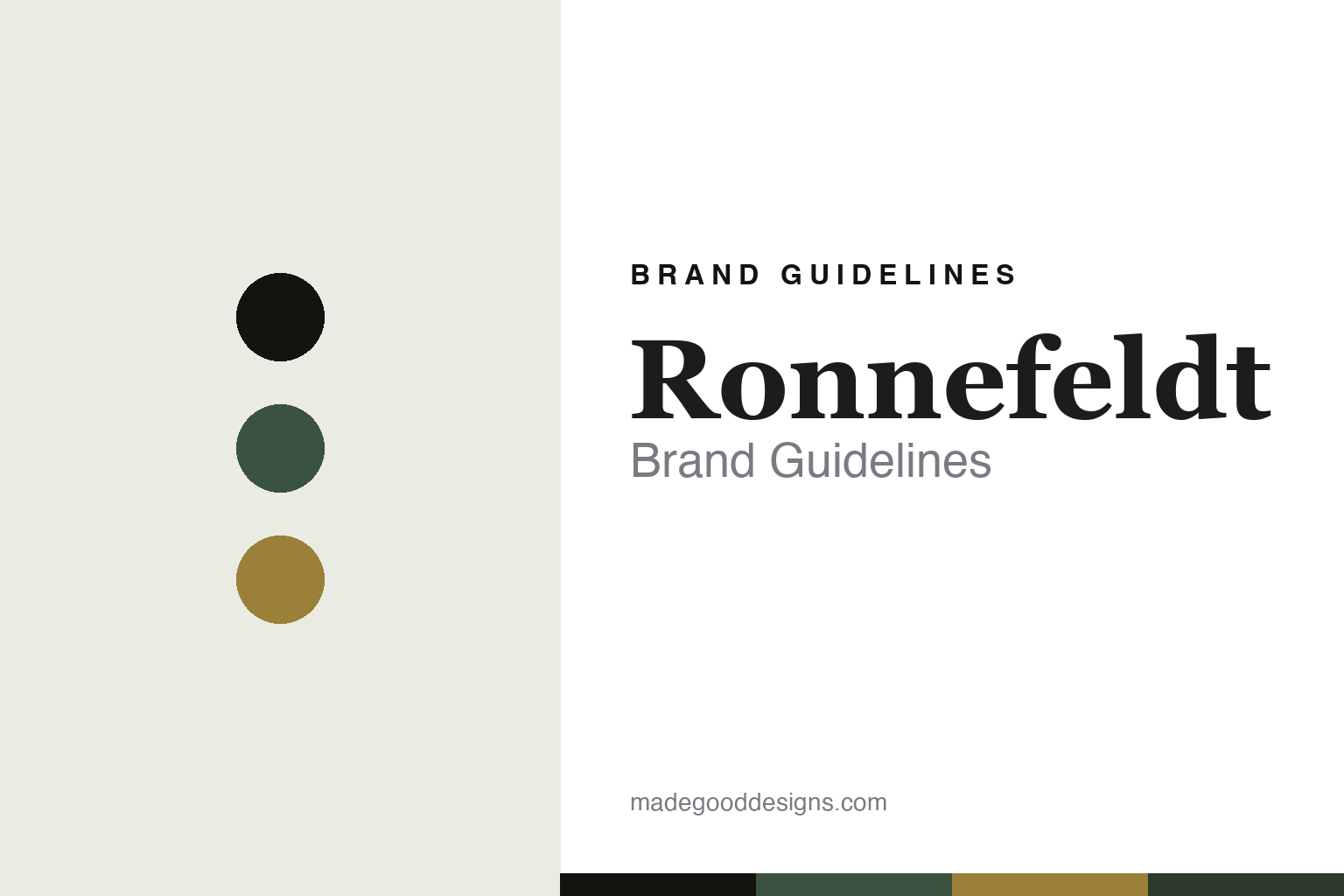
Ronnefeldt Brand Guidelines
The tea of hotels.
Aa
Two constants: a green-and-gold palette and a heritage serif register. Abstract homage — not the Ronnefeldt packaging.
The tea of hotels
Ronnefeldt built its identity on the best hotels and restaurants.
Ronnefeldt is a lesson in a channel as identity. Founded in 1823 in Frankfurt by Johann Tobias Ronnefeldt, J.T. Ronnefeldt KG built its name on premium hospitality — positioning itself as the tea of the world’s best hotels and restaurants (HORECA), not the supermarket shelf.
Its identity is refined HORECA luxury, expressed as much through service design as packaging: the Teavelope® tea bag and the famous Tilting Teapot (Kippkanne), a one-hand service pot. The mark is a heritage dragon’s-head emblem (created in 1904 by the Jugendstil artist Hans Christiansen) with a gold “J.T. Ronnefeldt” serif wordmark. Lines include Teavelope, Joy of Tea and Tea Couture, plus Morgentau® (“morning dew”), a green mango-citrus blend.
(Honest notes: Ronnefeldt is an independent, privately held German family firm — but it’s owned and led by the Holzapfel family (managing director Jan-Berend Holzapfel since 2004), not the founding Ronnefeldt family; the Ronnefeldt name is the brand, not the ownership. Earl Grey is a generic type, not proprietary, and there’s no official brand hex, so these tones are an unofficial interpretation.)
Colour
Ronnefeldt lives in a green-and-gold palette. Click a swatch to copy the hex.
Ronnefeldt’s identity is refined, heritage and hospitable — a Ronnefeldt green, an ink, a Jugendstil gold, a forest, and an ivory. The palette pairs a deep green with a heritage gold — the register of a grand hotel tea service. It signals hospitality and heritage rather than novelty. The honest caveat: with no published brand hex, these tones are an original, unofficial interpretation, not first-party values.
The lesson is a deep green with a heritage gold signals hospitality luxury. Ronnefeldt’s world is a hotel tea tray. For designers, it is a reminder that a green with a gilded gold reads as refined and hospitable — right for a HORECA brand. The takeaways: design the service, not just the pack (Teavelope, the Tilting Teapot); carry a heritage mark (the dragon’s head); keep the palette refined; and — because a mid-gold can fail as small text — keep type dark and let the gold live in the emblem, palette and band; treat any single hex as unofficial.
Typography
The register is a heritage serif — refined, hospitable, storied.
Ronnefeldt’s identity carries a refined, hospitable, storied spirit — a hotel tea service and a heritage emblem. A classic heritage serif captures the mood: it is elegant and timeless, the register of a 200-year house. Set in a green-and-gold palette, the heritage serif feels refined and storied — exactly the personality Ronnefeldt carries. It is hospitable rather than loud, mirroring a hotel tea tray. (Ronnefeldt’s real emblem and packaging are works we describe but do not reproduce, and the exact typeface is not ours to use.) Because it is not ours to use, the honest description is “a heritage serif spirit,” shown here in a stand-in. The type behaves like the brand: refined, hospitable and storied.
Aa
A heritage serif spirit — refined and storied. (Specimen set in EB Garamond, a classic serif STAND-IN; NOT the Ronnefeldt packaging.)
A channel as identity
Ronnefeldt stands for the tea of great hotels.
Ronnefeldt is a lesson in making a channel the identity. A green-and-gold palette, a heritage serif and a hotel-grade service make hospitality the whole brand — refined, hospitable, storied. The channel is the differentiator. The differentiator is a HORECA-luxury identity, designed for service.
For designers and brand-builders, Ronnefeldt offers a clear takeaway: design the whole ritual, not just the pack. The lessons: build for the setting (hotels and restaurants); design the service objects (the Teavelope, the Tilting Teapot); carry a heritage mark (the dragon’s head); and be honest about the ownership. It is also a reminder to stay accurate: it’s Holzapfel-family-owned (not the Ronnefeldt family), founded in 1823, and the palette here is an unofficial interpretation. Ronnefeldt made a channel the brand — proof that where and how tea is served can be the difference.
Explore & save
Keep Ronnefeldt’s identity on hand — save it to a board in the Made Good inspiration library.
Ronnefeldt identity set
Pin the green-and-gold palette and the heritage-serif register to your own board.