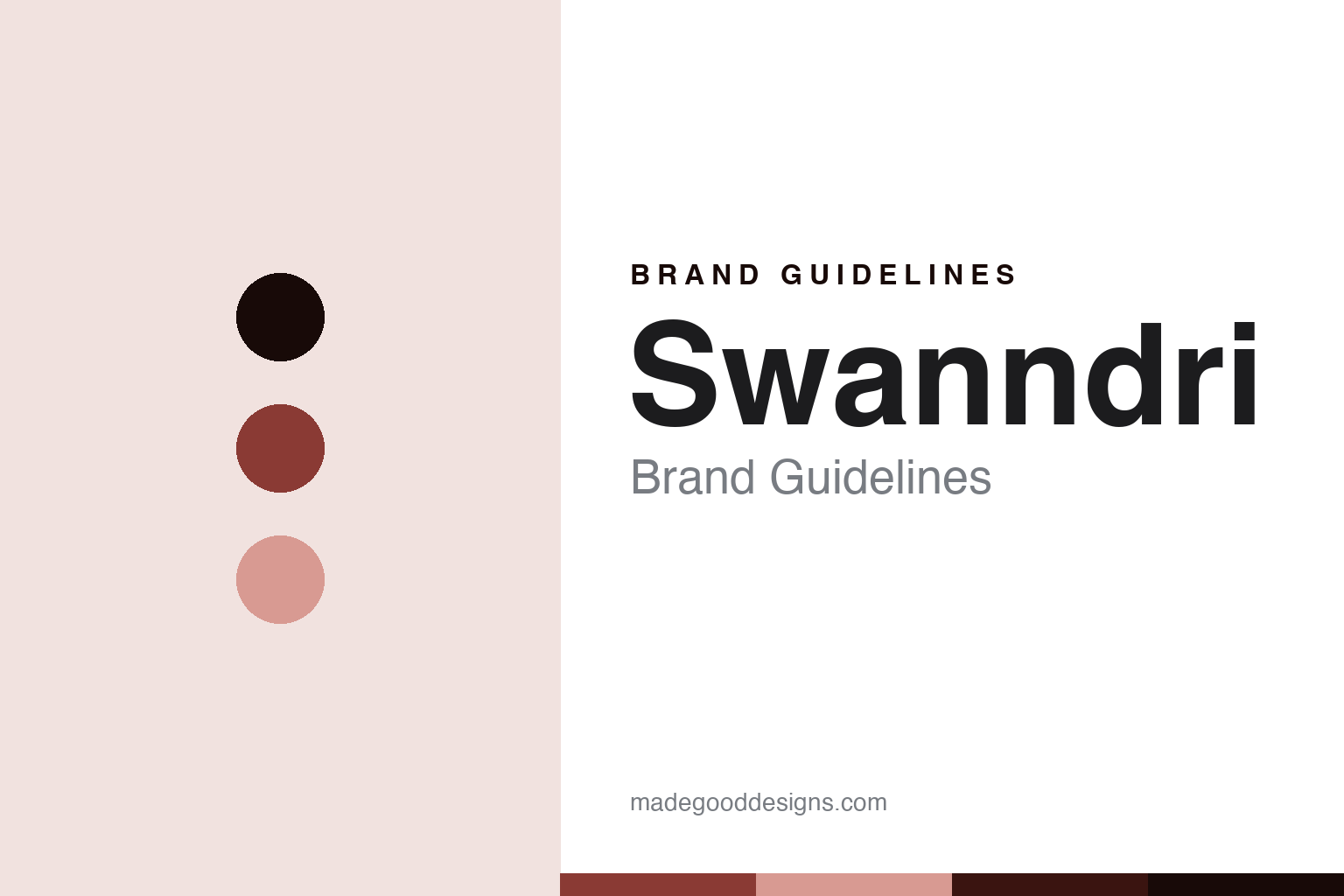
Swanndri Brand Guidelines
The wool bush shirt.
Aa
Two constants: a wool-red palette and a heritage-sans register. Abstract homage — not a Swanndri garment or mark.
The wool bush shirt
Swanndri is the New Zealand maker of the wool bush shirt, a 1913 heritage icon whose garments are now mostly made in China with a small New Zealand-made line.
Swanndri closes the round — the workwear makers — with a New Zealand icon and an honest made-where story. From New Zealand, Swanndri makes the “swanny,” a heavy hooded woollen bush shirt, plus wool and outdoor work clothing for farmers, hunters and the outdoors. Its answer to how a maker becomes a name is a single national garment: make the wool bush shirt a country grew up wearing, from New Zealand wool. A New Zealand bush shirt, wool to the core.
Its identity is the wool bush shirt. Swanndri’s wool bush shirt, its New Zealand heritage and its honest made-where story are the work it is known for. A bush shirt, from New Zealand wool. A national garment, honestly made.
(Honest notes, so the story stays precise, and the made-where is the heart. Swanndri, at swanndri.co.nz, dates to 1913, when William Broome trademarked the name — for a garment made to shed rain like a swan’s plumage — in the Taranaki region, near New Plymouth (not Taihape). On what it makes, the heavy hooded wool bush shirt is the icon, alongside wool and outdoor work clothing; wool is the core fibre. On where it is made — the crux of this round — Swanndri outsourced mainstream production to China from 2005, and its garments carry labelling such as “final construction in China to Swanndri NZ standards,” so it no longer qualifies for Buy New Zealand Made; the wool is still New Zealand-grown, socks and belts are still New Zealand-made, and a small New-Zealand-made bush-shirt line was reintroduced in 2018. So we say New Zealand heritage and New Zealand wool, mostly made in China since 2005, with a small New-Zealand-made line, and never a blanket made in New Zealand. On ownership, it is New Zealand-owned and privately held, having changed hands over the years and been bought back from Alliance Textiles in 1994. Its name, its swan device and its bush-check pattern are IP, described but never reproduced, and there is no official brand hex; these tones are an unofficial interpretation. This is design commentary and does not promote any product.)
Colour
Swanndri lives in a wool-red palette. Click a swatch to copy the hex.
Swanndri’s identity is woollen, New Zealand and honest — a wool red, an ink, a warm wool, a deep red, and a paper. The palette leans wool red and warm wool: the register of a heavy woollen bush shirt in its classic red. It signals a national wool garment. The honest caveat: with no published brand hex, these values are an original, unofficial interpretation, not first-party colours — and the red is an abstract wool tone, not the brand’s bush-check pattern.
The lesson is a wool-red palette signals a woollen, New Zealand-heritage identity. Swanndri’s world is a woollen, New Zealand object. For designers, it is a reminder that a warm wool red and a soft warm wool can carry a heritage wool brand — the red of a bush shirt and the neutral of a woollen nap. Because these tones can fail as small text, keep type dark and let the colour live in the accents, palette and band. The takeaways: build a national garment; keep the wool; be honest about where it is sewn; and treat any single hex as unofficial.
Typography
The register is a heritage sans — plain, rugged, honest.
Swanndri’s identity carries a plain, rugged, honest spirit — a heritage wool brand, not a fashion label. A heritage sans captures the mood: even, sturdy and outdoors, the register of a farm and a forest. Set in a wool-red palette, the heritage sans feels rugged and honest — exactly the personality Swanndri carries. It is a national garment rather than a logo, mirroring a wool bush shirt. (Swanndri’s real wordmark, its swan device and its bush-check pattern are things we describe but do not reproduce, and the exact typeface is not ours to use.) Because it is not ours to use, the honest description is “a heritage-sans spirit,” shown here in a stand-in. The type behaves like the garment: plain, rugged and honest.
Aa
A heritage-sans spirit — rugged and honest. (Specimen set in Mulish, a heritage-sans STAND-IN; NOT the Swanndri wordmark, swan device or bush check.)
The workwear makers
Swanndri stands for the wool bush shirt, honest about where it is made.
Swanndri closes the round with a national icon and a plain admission: heritage here, mostly made elsewhere. A wool-red palette, a heritage sans and a wool bush shirt make one thing — the wool bush shirt — the whole identity: woollen, New Zealand and honest. The wool bush shirt is the differentiator, and the honest made-where story is the meaning. The point is a New Zealand icon, made from New Zealand wool, whose garments are now mostly made in China, with a small New-Zealand-made line kept alive.
Put to work, the identity is an honest made-where, told as design. A maker in this spirit would build a national garment, keep the wool, and be honest about the sewing — the bush shirt, New Zealand wool, mostly made in China with a small home line. A brand learning from it would see that honesty about offshoring is a durable identity — that an icon which admits its garments are mostly made in China, while keeping a small home line, earns more trust than one that trades on a made-in it no longer holds — and that being precise, trademarked 1913 by William Broome in Taranaki, New Zealand wool, mostly made in China since 2005, keeps the story honest. Swanndri closes the round at the offshore end of the where-made spectrum, beside the Swedish trade brand — a heritage-country icon whose garments are largely made abroad, honestly stated. The honest editorial moves are to never claim a blanket made in New Zealand, to correct the founding place to Taranaki, to say trademarked rather than patented, and to keep the swan and the bush check off the page. The lesson Swanndri teaches is that honesty can hold an identity even when the making has moved: the New Zealand wool and heritage give it substance, and the plainness about where it is sewn keeps it credible. The wool is the personality, and the honestly-labelled bush shirt is the proof.
For designers and brand-builders, Swanndri closes the workwear makers, from New Zealand: keep the wool, and be honest about where it is sewn. The lessons: build a national garment; keep what is still local; never claim a made-in you no longer hold; correct the record; and never reproduce a logo or pattern. It is also a reminder to stay precise: Swanndri is the New Zealand maker of the wool bush shirt, a 1913 heritage icon whose garments are now mostly made in China with a small New Zealand-made line — with the palette here an unofficial interpretation. Swanndri made an honest made-where the identity — proof that the wool bush shirt, honestly told, can be the difference.
Explore & save
Keep Swanndri’s identity on hand — save it to a board in the Made Good inspiration library.
Swanndri identity set
Pin the wool-red palette and the heritage-sans register to your own board.