Sweetgreen Brand Guidelines
Healthy fast-casual — connecting people to real food.
Aa
Two constants: a clean-green palette and a clean sans. Abstract homage — not the Sweetgreen wordmark or logo.
Salad as a lifestyle brand
Sweetgreen reimagined fast food as healthy.
Sweetgreen is a lesson in turning a salad shop into a lifestyle brand. Founded in 2007 by three Georgetown University classmates — Jonathan Neman, Nicolas Jammet and Nathaniel Ru — who opened the first tiny store in Georgetown, Washington DC just after graduating, it serves healthy, seasonal, locally-sourced salads and warm bowls, cooked from scratch, with a menu that rotates through the year.
Its mission — “connecting people to real food” — is matched by an unusually tech-forward, design-led approach: a leading digital-ordering app, chef collaborations, the Sweetlife music festival it ran in the early 2010s, and even a robotic “Infinite Kitchen” makeline. It went public on the NYSE in 2021 (ticker SG) and grew to around 250 locations.
(Honest notes: Sweetgreen was founded by three Georgetown classmates in 2007 (incorporated in late 2006, first store August 2007) — not a solo founder or a restaurant-group spinoff; it is a tech-forward lifestyle brand, not “just a salad shop”; the Sweetlife Festival ran 2011–2016; and it has been publicly traded since 2021. No official brand hex is published.)
Colour
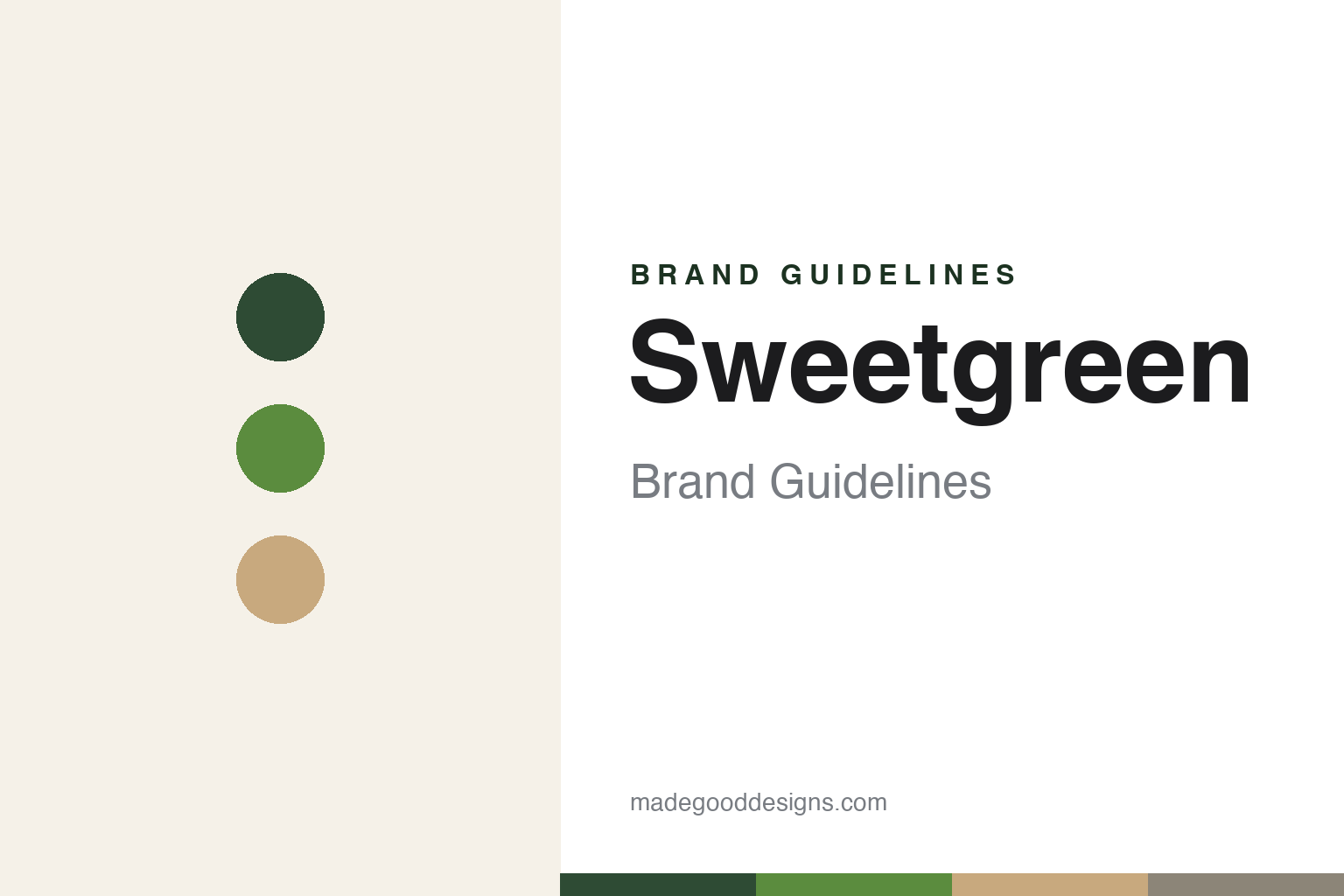
Sweetgreen lives in a clean-green palette. Click a swatch to copy the hex.
Sweetgreen’s identity is clean, natural and green — a deep leaf green, a fresh green, a warm cream, a wood tan, and a concrete grey. The palette reads like its stores: fresh greens against natural materials — wood, concrete and greenery. It signals healthy, seasonal, design-led food rather than fast-food loudness. The honest caveat: with no published brand hex, these tones are an original, unofficial interpretation, not first-party values.
The lesson is a clean-green palette signals healthy, design-led fast-casual. Sweetgreen’s world reads as fresh and minimal. For designers, it is a reminder that leaf greens with natural wood and concrete tones convey seasonal, real-food craft, matching a brand built as a lifestyle. The takeaways: pair fresh greens with warm natural neutrals; keep it clean and minimal; and treat any single hex as unofficial — using the deep leaf green for small text so the brighter green stays in the palette.
Typography
The wordmark spirit is a clean sans — fresh and minimal.
Sweetgreen’s identity carries a fresh, minimal, modern spirit — a lowercase “sweetgreen” wordmark whose clean forms match a design-led, healthy brand. A clean sans captures the mood: it is simple and contemporary, the register of a modern lifestyle brand rather than a shouty fast-food chain. Set against a clean-green palette, the clean sans feels fresh and minimal — exactly the seasonal, real-food personality Sweetgreen carries. It is calm rather than loud, mirroring a considered, natural brand. (Sweetgreen’s real wordmark is a trademark we describe but do not reproduce, and the exact typeface is not something we assert.) Because the specific mark is not ours to use, the honest description is “a clean sans spirit,” not the Sweetgreen logo. The type behaves like the brand: fresh, minimal and modern.
Aa
A clean sans spirit — fresh and minimal. (Specimen set in Albert Sans, a clean geometric sans; NOT the Sweetgreen logo, which is a trademark.)
Design and tech as the difference
Sweetgreen stands for healthy food as a brand.
Sweetgreen is a lesson in elevating a humble category with design and technology. A salad chain could have been forgettable; instead Sweetgreen treated healthy food as a lifestyle brand — minimalist stores, a strong green identity, a music festival, chef collabs and app-led ordering — so eating a salad felt like joining something. That design-and-tech ambition, plus real seasonal sourcing, is what made it a category leader and a public company. The differentiator is brand and experience, not just the bowl.
For designers and brand-builders, Sweetgreen offers a clear takeaway: design and technology can turn a commodity into a brand. The lessons: give healthy food a coherent, minimal identity (green, natural materials); build culture around it (festival, collabs, app); and let the experience carry the story. It is also a reminder to stay accurate: Sweetgreen was founded by three Georgetown grads in 2007, it is a tech-forward lifestyle brand, and it has been public since 2021 — with the palette here an unofficial interpretation. Sweetgreen branded the salad — proof that design and tech can be the difference.
Explore & save
Keep Sweetgreen’s identity on hand — save it to a board in the Made Good inspiration library.
Sweetgreen identity set
Pin the clean-green palette and the clean-sans spirit to your own board.