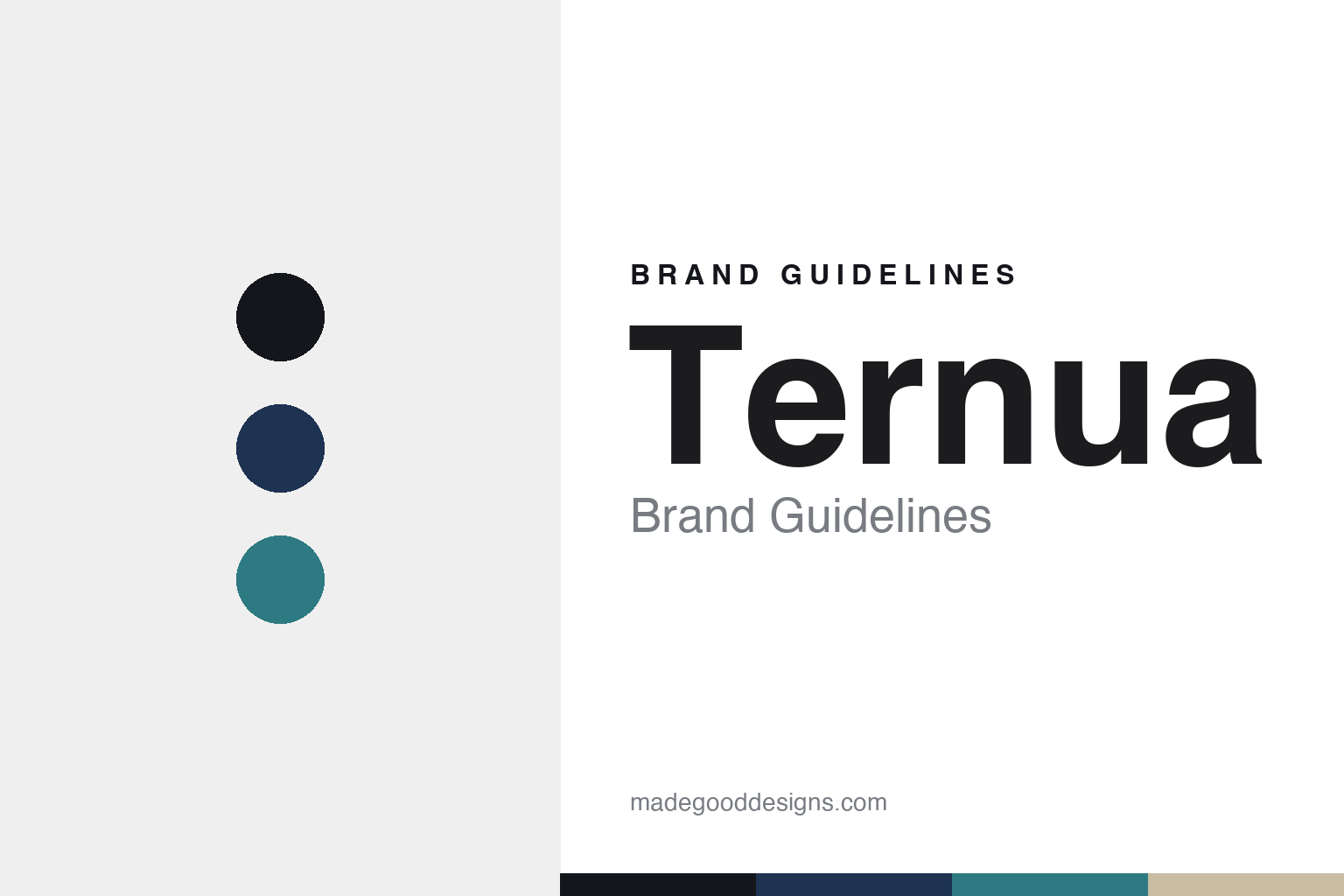
Ternua Brand Guidelines
The whale’s tail.
Aa
Two constants: a deep-sea palette and a clean sans register. Abstract homage — not the Ternua wordmark or whale-tail mark.
The whale’s tail
Ternua is a Basque brand named for Newfoundland.
Ternua is a lesson in heritage as a naming system. Born in 1994 as the outdoor brand of a family-owned Basque group in Spain, Ternua takes its name from the Basque word for Newfoundland (Terranova) — the cold, distant waters Basque whalers sailed centuries ago. Its first athletes were Basque mountaineers, the Iñurrategi brothers.
Its brand identity is Basque, technical and sustainability-led — “sustainable mountain and urban clothing.” Its logo is a whale’s tail: in 1994 Ternua adopted four humpback whales through Whale and Dolphin Conservation, and their flukes became the mark. Sustainability is the core — recycled down (Neokdun), recycled fishing nets (REDCYCLE), PFC-free treatments and organic cotton.
(Honest notes: Ternua is independent and family-owned — not a B Corp (a common assumption). It’s a pioneer in using recycled down, not its inventor. And there’s no official brand hex, so the tones here are an unofficial interpretation.)
Colour
Ternua lives in a deep-sea palette. Click a swatch to copy the hex.
Ternua’s identity is maritime, Basque and considered — an ink, a deep sea, a whale teal, a sand, and a snow. The palette pairs a deep-sea navy with a whale teal — the register of the North Atlantic, whaling heritage and cold water. It signals the sea, sustainability and Basque roots rather than fashion. The honest caveat: with no published brand hex, these tones are an original, unofficial interpretation, not first-party values.
The lesson is deep-sea tones signal a maritime, sustainable brand. Ternua’s world is the cold North Atlantic and a humpback’s fluke. For designers, it is a reminder that a deep-sea navy with a whale teal reads as maritime and considered — right for a brand named for Newfoundland. The takeaways: use deep-sea tones; add a whale teal; and treat any single hex as unofficial — using ink for small text so the palette stays oceanic.
Typography
The register is a clean sans — considered and technical.
Ternua’s identity carries a considered, Basque, sustainable spirit — whaling heritage and eco commitment. A clean sans captures the mood: it is considered and technical, the register of a sustainability-led outdoor brand. Set in a deep-sea palette, the clean sans feels considered and technical — exactly the personality Ternua carries. It is thoughtful rather than loud, mirroring an eco-first brand. (Ternua’s real wordmark and whale-tail mark are trademarks we describe but do not reproduce, and the exact brand typeface is not ours to use.) Because the marks are not ours to use, the honest description is “a clean sans spirit,” shown here in a stand-in. The type behaves like the brand: considered, Basque and sustainable.
Aa
A clean sans spirit — considered and technical. (Specimen set in Sora, a clean sans STAND-IN; NOT the Ternua wordmark or whale-tail mark, which are trademarks.)
Sustainability as identity
Ternua stands for Basque, sustainable outdoors.
Ternua is a lesson in making sustainability the identity. A deep-sea palette, a whale-tail mark and real recycled-material programs make sustainability the whole brand — Basque, considered, ocean-rooted. The sustainability is the differentiator. The differentiator is a Basque, maritime, sustainability-led identity.
For designers and brand-builders, Ternua offers a clear takeaway: values plus a story can be a brand. The lessons: root the name in real heritage (Basque whalers, Newfoundland); carry a meaningful mark (adopted whales’ tails); and make sustainability concrete (recycled down, recycled nets, PFC-free). It is also a reminder to stay accurate: it’s independent and family-owned, it’s not a B Corp, and the palette here is an unofficial interpretation. Ternua made sustainability the brand — proof that values can be the difference.
Explore & save
Keep Ternua’s identity on hand — save it to a board in the Made Good inspiration library.
Ternua identity set
Pin the deep-sea palette and the clean-sans register to your own board.