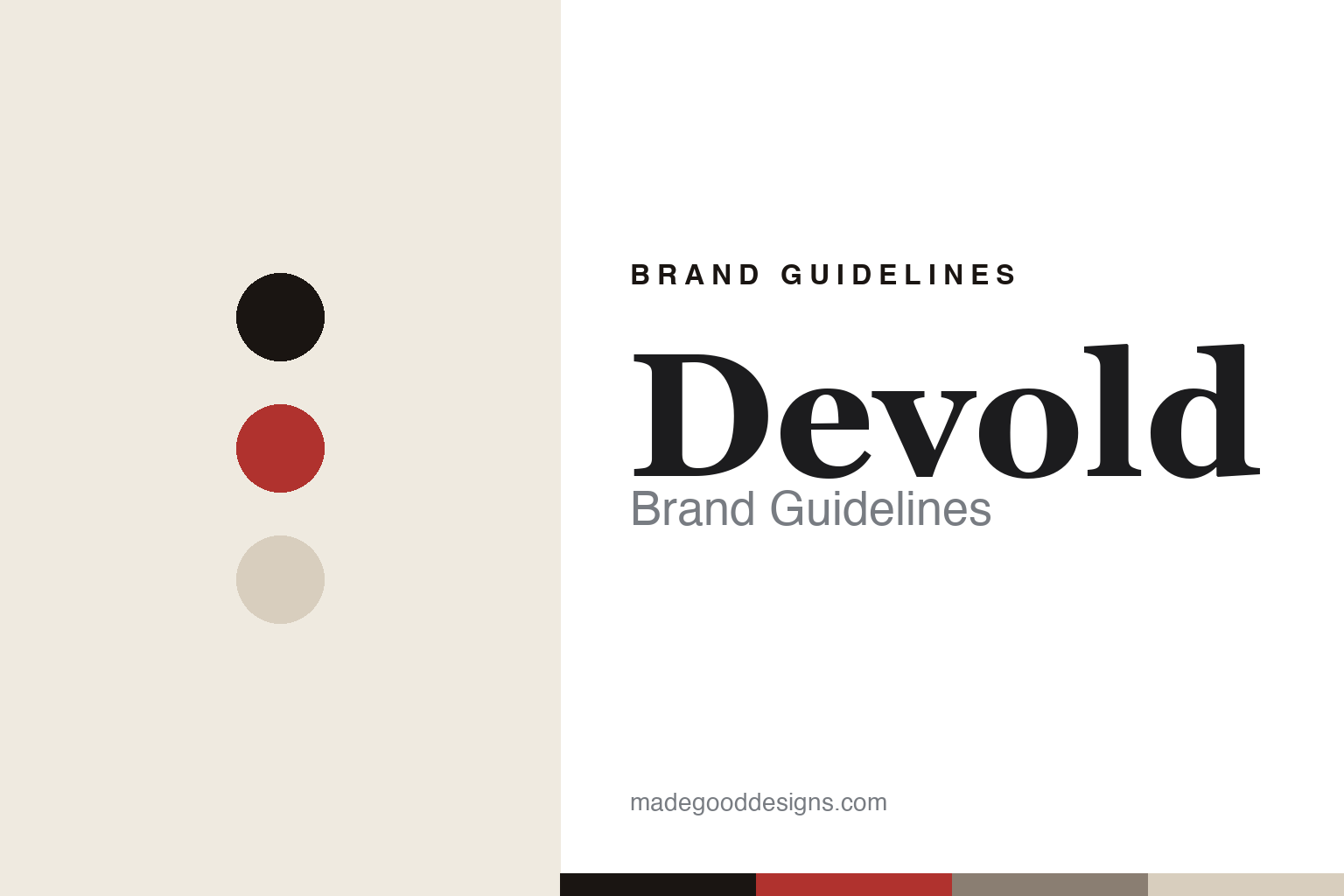
Devold Brand Guidelines
Wool since 1853.
Aa
Two constants: a heritage-red palette and a heritage serif register. Abstract homage — not the Devold wordmark or logo.
Wool since 1853
Devold is one of the oldest names in wool.
Devold is a lesson in wool as heritage. Founded in 1853 by Ole Andreas Devold in Langevåg, Norway, it is one of the oldest wool and knitwear makers — its garments worn by fishermen and on polar expeditions (its classic expedition knit is the Islender).
Its brand identity is Norwegian, heritage-rich and wool-first — a merino specialist with a traceable value chain, sourcing wool from named New Zealand farms and a Uruguay partner, with Nordic Swan and EU Ecolabel credentials. Its ranges run from Expedition and Nansen to Everyday, Wool Mesh and Waste Wool, alongside heritage icons like the Blaatrøia and the red rødlua cap.
(Honest notes: Devold is no longer independent — as of May 2026 it is wholly owned by Fenix Outdoor, the group behind Fjällräven, making it a stablemate to that brand. Its wool comes from New Zealand and Uruguay (not Tasmania or Patagonia), and its labels are Nordic Swan and EU Ecolabel (not ZQ or RWS). And there’s no official brand hex, so the tones here are an unofficial interpretation.)
Colour
Devold lives in a heritage-red palette. Click a swatch to copy the hex.
Devold’s identity is Norwegian, heritage and wool-rooted — an ink, a heritage red, a natural wool tone, a heather, and a bone. The palette pairs a heritage red with a natural wool tone — a nod to the classic red rødlua cap and to raw wool. It signals heritage, warmth and craft rather than fashion. The honest caveat: with no published brand hex, these tones are an original, unofficial interpretation, not first-party values.
The lesson is a heritage red plus a wool tone signals wool heritage. Devold’s world is a Norwegian winter and a 170-year-old knitting tradition. For designers, it is a reminder that a heritage red with a natural wool tone reads as warm and traditional — right for one of the oldest names in wool. The takeaways: anchor with ink; use a heritage red; add a natural wool tone; and treat any single hex as unofficial — using ink for small text so the red stays warm.
Typography
The register is a heritage serif — warm and traditional.
Devold’s identity carries a heritage, Norwegian, wool-first spirit — 170 years of knitting. A heritage serif captures the mood: it is warm and traditional, the register of an old wool house. Set in a heritage-red palette, the serif feels warm and traditional — exactly the depth Devold carries. It is classic rather than trend-led, mirroring a long lineage. (Devold’s real wordmark is a trademark we describe but do not reproduce, and the exact brand typeface is not ours to use.) Because the mark is not ours to use, the honest description is “a heritage serif spirit,” shown here in a stand-in. The type behaves like the brand: heritage, Norwegian and wool-first.
Aa
A heritage serif spirit — warm and traditional. (Specimen set in Fraunces, a heritage serif STAND-IN; NOT the Devold wordmark, which is a trademark.)
Wool as identity
Devold stands for Norwegian wool heritage.
Devold is a lesson in making wool the identity. A heritage-red palette, a 170-year lineage and a traceable merino value chain make wool heritage the whole brand — Norwegian, warm, traceable. The wool is the differentiator. The differentiator is a heritage, Norwegian, wool-first identity.
For designers and brand-builders, Devold offers a clear takeaway: a single material can be a brand. The lessons: own one material deeply (merino, since 1853); make it traceable (named farms, Ecolabels); and carry the heritage icons (the Islender, the rødlua). It is also a reminder to stay accurate: it’s Fenix-owned since 2026 (a Fjällräven stablemate, not independent), its wool is New Zealand and Uruguay, and the palette here is an unofficial interpretation. Devold made wool the brand — proof that a material can be the difference.
Explore & save
Keep Devold’s identity on hand — save it to a board in the Made Good inspiration library.
Devold identity set
Pin the heritage-red palette and the heritage-serif register to your own board.