Icebreaker Brand Guidelines
Move to natural.
Aa
Two constants: a natural, merino palette and a natural sans register. Abstract homage — not the Icebreaker wordmark or logo.
Move to natural
Icebreaker pioneered merino wool as a natural performance fibre.
Icebreaker is a lesson in a natural material as the whole idea. Founded in 1995 by Jeremy Moon in Wellington, New Zealand (HQ now Auckland), the brand pioneered merino wool as a high-performance, natural alternative to petroleum-based synthetics — “move to natural.”
Its brand identity is natural, transparent and merino-first — base layers, socks and layers built on merino, with a landmark transparency move: Baacode (2008) let customers trace a garment back to the New Zealand sheep station it came from. It sources ZQ-certified, mulesing-free merino, and its Oasis base layer is the iconic hero.
(Honest notes: Icebreaker isn’t an independent Kiwi label anymore — it has been owned by the US group VF Corporation since 2018 (which also owns The North Face and, notably, Icebreaker’s merino rival Smartwool). It targets a plastic-free line but hasn’t reached 100%. And there’s no official brand hex, so the tones here are an unofficial interpretation.)
Colour
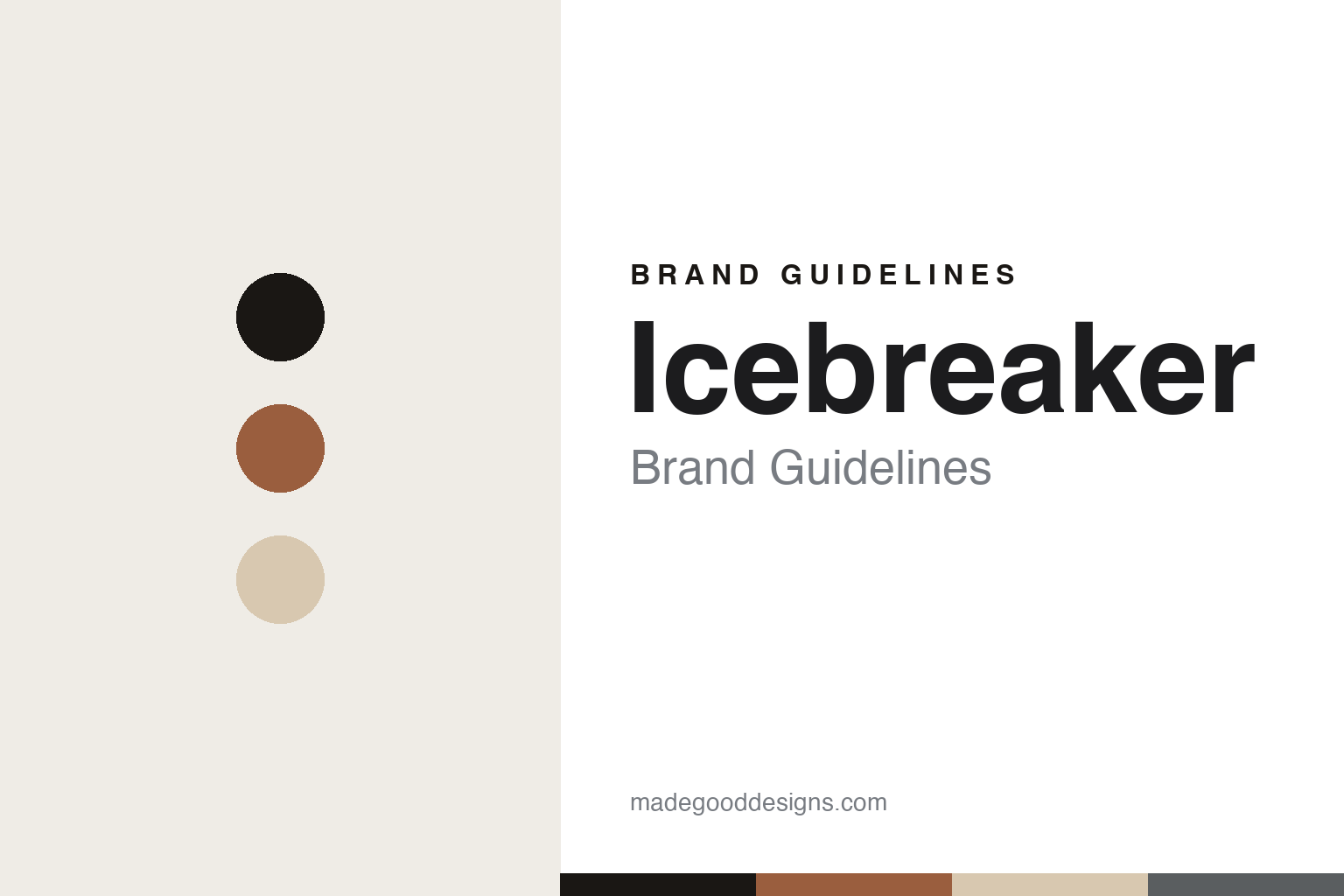
Icebreaker lives in a natural, merino palette. Click a swatch to copy the hex.
Icebreaker’s identity is natural, earthy and merino-led — an ink, a clay, a merino oat, a slate, and a snow. The palette leans on natural, undyed-wool tones — clay, oat — the register of natural fibre and the high country. It signals nature, wool and transparency rather than synthetic brights. The honest caveat: with no published brand hex, these tones are an original, unofficial interpretation, not first-party values.
The lesson is natural wool tones signal a merino-first brand. Icebreaker’s world is a merino sheep station. For designers, it is a reminder that clay and oat read as natural and honest — right for a brand built on “move to natural.” The takeaways: use natural, wool-derived tones; keep it earthy; and treat any single hex as unofficial — using ink for small text so the palette stays natural.
Typography
The register is a natural sans — clean and honest.
Icebreaker’s identity carries a natural, honest, transparent spirit — merino and traceability. A natural, clean sans captures the mood: it is honest and unfussy, the register of a natural-fibre brand. Set in a natural palette, the sans feels clean and honest — exactly the personality Icebreaker carries. It is understated rather than loud, mirroring natural design. (Icebreaker’s real lowercase wordmark is a trademark we describe but do not reproduce, and the exact brand typeface is not ours to use.) Because the mark is not ours to use, the honest description is “a natural sans spirit,” shown here in a stand-in. The type behaves like the brand: natural, honest and merino-first.
Aa
A natural sans spirit — clean and honest. (Specimen set in Onest, a natural sans STAND-IN; NOT the Icebreaker wordmark, which is a trademark.)
Natural fibre as identity
Icebreaker stands for merino and natural.
Icebreaker is a lesson in making a natural fibre the identity. A natural palette, merino performance and radical traceability make “natural” the whole brand — honest, earthy, merino-first. The natural fibre is the differentiator. The differentiator is a merino-based, natural, transparent identity.
For designers and brand-builders, Icebreaker offers a clear takeaway: a material and a value can be a brand. The lessons: pick a natural material (merino); make it transparent (Baacode, transparency reports); and hold a clear position (natural over synthetic). It is also a reminder to stay accurate: it’s VF-owned since 2018 (not an independent Kiwi label), it hasn’t reached a 100% plastic-free line, and the palette here is an unofficial interpretation. Icebreaker made natural fibre the brand — proof that a material can be the difference.
Explore & save
Keep Icebreaker’s identity on hand — save it to a board in the Made Good inspiration library.
Icebreaker identity set
Pin the natural merino palette and the natural-sans register to your own board.