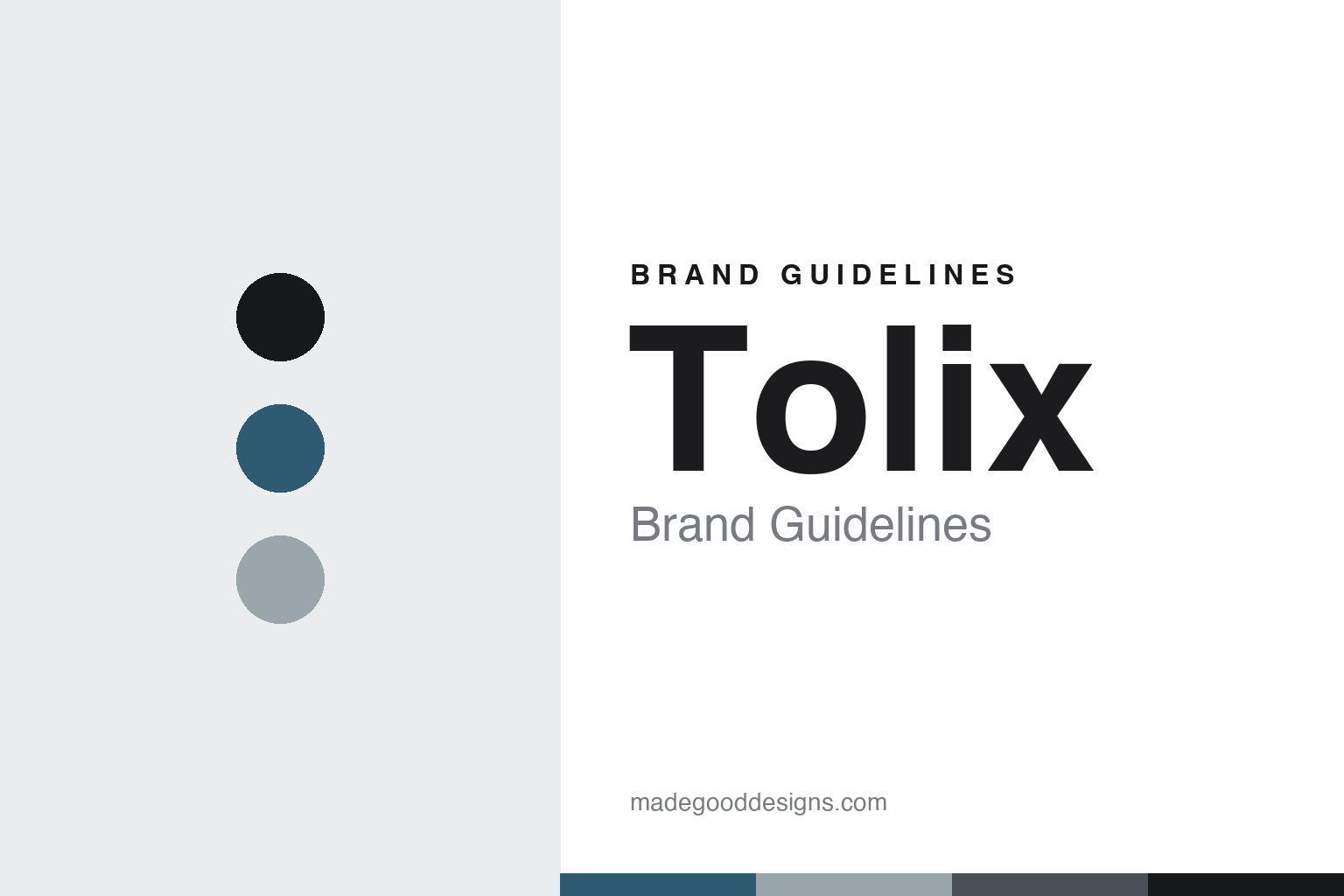
Tolix Brand Guidelines
The bistro chair.
Aa
Two constants: a zinc-and-galvanized palette and an industrial sans register. Abstract homage — not a Tolix chair or wordmark.
The bistro chair
Tolix stamps and folds galvanized steel into the Model A chair in Autun, France.
Tolix is a lesson in a humble material as the identity. A French maker in Autun, it presses, folds and welds galvanized sheet steel into the Model A — the stackable café chair that turned an industrial material into a design icon — mostly by hand, in its own workshop. A chair, made from a sheet of steel.
Its identity is the bistro chair. Tolix’s stamped, galvanized-steel Model A is the work it is known for. A material, made a signature. A workshop that made steel beautiful.
(Honest notes, so the story stays precise. Tolix takes its name from the 1927 registration of metalworker Xavier Pauchard’s business; its Model A chair dates to 1934. Everything is genuinely made in France, in-house in Autun, largely by hand — sheet-steel stamping, bending, brazing and galvanizing — and it holds France’s “Living Heritage Company” label. On its recent story we are candid: after a 2004 receivership it was rescued by Chantal Andriot, but she sold the company around 2022, and it came through a court safeguard plan that ran from early 2025 until early 2026 — so we frame it around heritage and craft, as a maker operating and restructuring, rather than calling it stably founder-run. Beware, too, the many cheap imitations: the genuine article is French-made. Its designs and name are its IP, described but never reproduced, and there is no official brand hex — these tones are an unofficial interpretation. This is design commentary and does not promote any product.)
Colour
Tolix lives in a zinc-and-galvanized palette. Click a swatch to copy the hex.
Tolix’s identity is industrial, honest and enduring — a zinc blue, an ink, a galvanized, a graphite, and a chalk. The palette leans zinc and galvanized: the register of folded, galvanized steel. It signals utility and craft over decoration. The honest caveat: with no published brand hex, these values are an original, unofficial interpretation, not first-party colours.
The lesson is a zinc-and-galvanized palette signals an industrial, steel identity. Tolix’s world is a utilitarian, made-in-France, steel object. For designers, it is a reminder that industrial metal tones can carry a brand built on a humble material — the blue-grey of zinc and the sheen of galvanized steel. Because these tones can fail as small text, keep type dark and let the colour live in the accents, palette and band. The takeaways: elevate a humble material; make it at home; fight the fakes; and treat any single hex as unofficial.
Typography
The register is an industrial sans — plain, sturdy, honest.
Tolix’s identity carries a plain, sturdy, honest spirit — a utilitarian object, not a precious one. An industrial sans captures the mood: even, workmanlike and grounded, the register of a stamped-steel café chair. Set in a zinc-and-galvanized palette, the industrial sans feels plain and sturdy — exactly the personality Tolix carries. It is honest rather than showy, mirroring a folded-steel chair. (Tolix’s real chairs and wordmark are things we describe but do not reproduce, and the exact typeface is not ours to use.) Because it is not ours to use, the honest description is “an industrial-sans spirit,” shown here in a stand-in. The type behaves like the maker: plain, sturdy and honest.
Aa
An industrial-sans spirit — plain and sturdy. (Specimen set in Archivo, an industrial-sans STAND-IN; NOT the Tolix wordmark or any chair design.)
A humble material as identity
Tolix stands for the bistro chair.
Tolix is a lesson in making a humble material the identity. A zinc-and-galvanized palette, an industrial sans and a stamped-steel chair make one material the whole maker — plain, sturdy and honest. The material is the differentiator. The differentiator is a genuine act of elevation — turning cheap galvanized sheet steel into an icon, still stamped and folded by hand in the same French town.
Put to work, the identity is a material as design. A maker building in this spirit would take an unglamorous material and make it beautiful, keep the making at home, and be candid about a hard financial history, so the customer buys into craft rather than a myth of permanence. It would let one enduring design carry the brand for a century, so that a café chair becomes a museum piece. It would defend the genuine article against imitation, so that “made in Autun” still means something. The lesson Tolix teaches is that a humble material, elevated, can build a brand — and survive receivership: the steel gives it substance, and the French making gives it credibility. The material is the personality, and the making is the proof.
For designers and brand-builders, Tolix offers a clear takeaway: elevate a humble material and keep it honest. The lessons: master the steel; make it at home; defend the original; and be candid about the story. It is also a reminder to stay accurate: Tolix is a French maker whose name dates to 1927 (its Model A chair to 1934), stamping galvanized steel by hand in Autun as a Living Heritage Company — recently through a court safeguard, and no longer founder-run — with the palette here an unofficial interpretation. Tolix made the bistro chair the maker — proof that a humble material can be the difference.
Explore & save
Keep Tolix’s identity on hand — save it to a board in the Made Good inspiration library.
Tolix identity set
Pin the zinc-and-galvanized palette and the industrial-sans register to your own board.