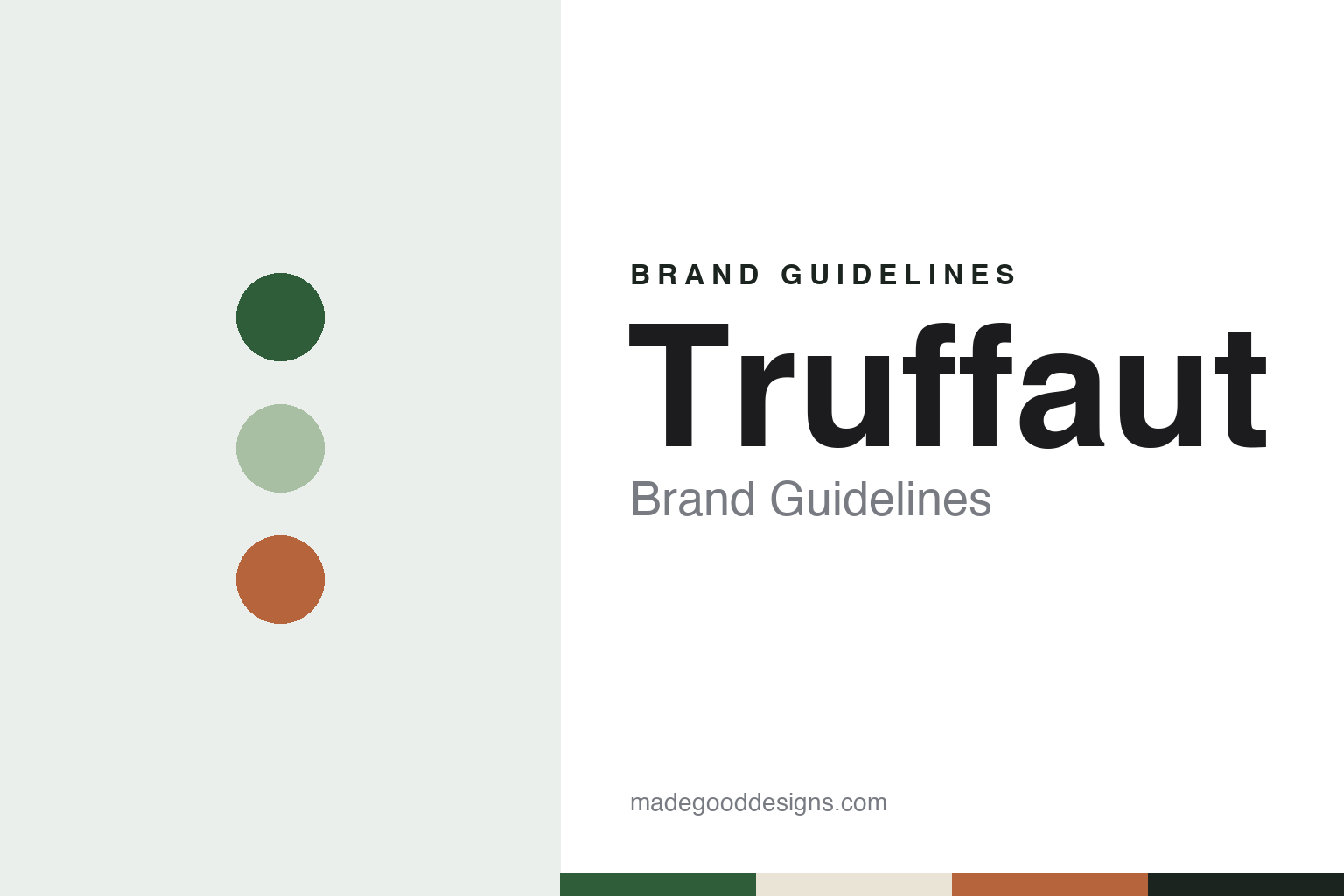
Truffaut Brand Guidelines
A Versailles horticultural family name turned French garden-centre chain.
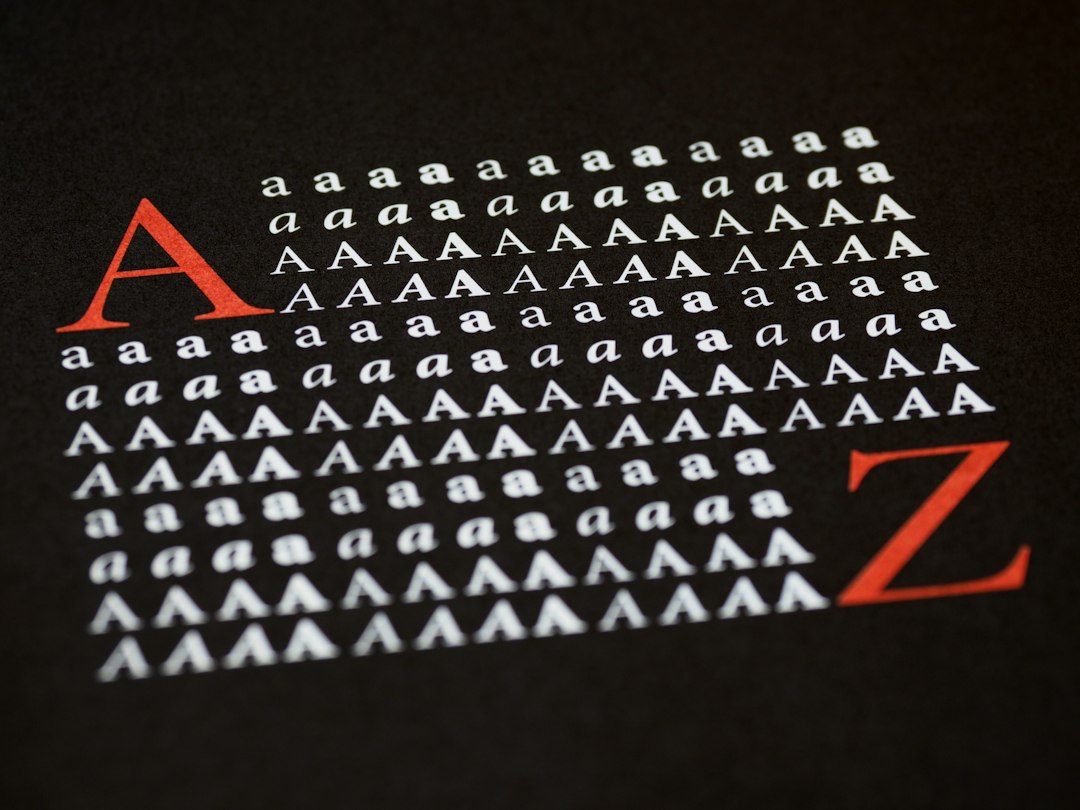
Aa
Two constants: a hedge green, stone and clay palette and a horticultural serif register. Abstract homage — not a Truffaut product or mark; no sign, logo or packaging is reproduced.
Versailles
Fruit, greenhouses and a family of growers.
Truffaut traces its name to 1824, when Charles Truffaut opened a horticultural business in Versailles specialising in rare vegetables and fresh fruit, according to French Wikipedia, which cites the trade magazine LSA. The business moved within the town in 1838, when the railway from Paris arrived, and over the following decades the family’s growers turned from fruit to bulbs, rhododendrons, azaleas and camellias, and then to palms and other greenhouse plants. By 1895, French Wikipedia says, the Versailles nursery had 27 greenhouses and specialised in orchids, bromeliads and forced flowering plants.
The company that carries the name today descends from another branch of the family. In 1897 Georges Truffaut, a son of the grower Armand-Albert Truffaut, opened his own business in Versailles, with laboratories and a factory for horticultural fertilisers. French Wikipedia names him as the founder of the present company and files it among firms founded in 1897; Toute la Franchise, a French franchise trade site, wrote in April 2016 that the chain was a family company created at the end of the 19th century by Georges Truffaut as a laboratory and horticultural factory.
Georges Truffaut built the name through publishing as much as through growing. In 1911 he launched Jardinage, a monthly gardening magazine that French Wikipedia describes as the first in France, and in 1914 a gardening encyclopaedia, Comment on soigne son jardin. A mail-order catalogue followed in 1923, the year the business became a limited company with him as chairman. In June 1924 the company marked the centenary of the first Versailles establishment at its rose garden, according to the July 1924 issue of Jardinage cited by French Wikipedia. In 1926 he presented a radio programme of gardening advice, and the first Truffaut shop opened in Paris — in 1926 according to French Wikipedia, in 1927 according to Toute la Franchise.
The sources used for this guide do not say how the company operated during the occupation of 1940–1944.
Colour
From branch shops to domed garden centres.
After the Second World War the chain spread across France. Toute la Franchise says the national expansion really began after the war, and French Wikipedia counts 18 branches and four shops in 1949. On 1 November 1964 Truffaut opened what French Wikipedia, citing a 2014 special issue of the trade magazine Jardineries, calls the first garden centre in France, at Le Chesnay next to Versailles. From 1970 the chain added pet supplies and home decoration, according to both sources.
Ownership changed in the 1970s. In 1973 a seed producer, the Société de Production Grainière, took control of the Georges Truffaut business; the seed company Clause then took over that producer and kept the plant research and seed side, while a new company ran the shops, the fertiliser plant and the Le Chesnay garden centre, French Wikipedia says. With only a few shops left in 1977, Truffaut turned to franchising: a pilot store opened near Blois in 1978, and Toute la Franchise counts Truffaut among the very first franchise networks in the trade.
Then came the domes. In 1987 Clause moved its Florélites garden centres, known for their dome-roofed buildings, under the Truffaut name, French Wikipedia says; the first had opened at Plaisir in 1967, and others followed around Paris and in Rennes, Laval and Le Mans, so that the dome became a symbol of the chain. The centre at La Ville-du-Bois, south of Paris, lost its dome when it was rebuilt in 2002, and Le Parisien then described it as the largest garden centre in France, according to French Wikipedia.
In 1990 Clause sold Truffaut to the Belgian retail group Louis Delhaize, owner of the Cora hypermarkets, French Wikipedia says, citing Les Echos; Toute la Franchise also dates the move to 1990. Under that owner the chain opened its first large garden centre inside Paris in April 1997, moved its head office to Lisses, in Essonne, in 1998, and entered Britain in 1997 under the name Garden & Leisure, a business it sold in 2013, French Wikipedia says. In November 2017 it opened an urban garden-centre format at Boulogne-Billancourt, west of Paris.
Typography
How garden-centre chains present themselves.
Garden-centre chains are retailers whose identity is read first from the road: a sign over a large site, repeated on carrier bags, catalogues, loyalty cards and websites. The chains in this series come from France, England, California, Ontario and New Zealand, and most of them publish their logos and colours on their own websites rather than in public brand manuals, so the palettes in these guides are our own interpretations.
Formats vary widely. At one end is the large out-of-town garden centre with plant halls, outdoor nursery areas and, where the company says it offers them, a café, a pet department and a Christmas shop. At the other are smaller town-centre plant shops: Truffaut, which French Wikipedia says opened a garden centre at Le Chesnay in 1964, opened an urban format at Boulogne-Billancourt in 2017.
Ownership is just as varied, and each guide states it as a dated fact. Some chains are family companies, such as Botanic, which Le Figaro described in 2017 as owned by its three founding families. Others belong to farmers’ cooperatives: Toute la Franchise wrote in 2016 that Gamm vert was the sign of the cooperative group InVivo. Others again have been owned by investment funds or listed groups, or have been sold, merged or closed, and their guides say plainly what happened and when.
The chains also present themselves through the calendar and through their own ranges: spring planting, summer outdoor living and Christmas each bring their own events, and many chains sell own-label products under names the companies choose themselves. Corporate pages on founders, owners and history complete the picture, and each guide marks clearly what rests only on the company’s own word.
Aa
A horticultural serif for a name from Versailles. (Specimen set in Fraunces, a serif STAND-IN; NOT the Truffaut logo.)
Truffaut
A family name over the door.
Truffaut has grown by taking over other garden centres as well as by opening its own. In March 2019 it reopened three former Jardiland centres, in Limoges, Poitiers and Montélimar, under its own sign: the Observatoire de la Franchise reported in April 2019 that InVivo Retail had agreed to sell six stores to competitors, under conditions set by the French competition authority, after buying Jardiland in 2017. In October 2019 Le Journal des Entreprises reported that Truffaut had bought the Jardinerie Petruccioli in Nice, founded in 1986, and that the chain then had 66 stores in France. In February 2023 staff went on strike over pay for the first time in the chain’s history, Libération reported, according to French Wikipedia.
French Wikipedia’s company entry, revised in November 2026, names the Bouriez family as shareholder through a holding company called FJCB Nature, and lists Nicolas Dewailly and Louis Bouriez as its leaders. French Wikipedia’s article on the Louis Delhaize group says members of the Bouriez family have led that group, with Philippe Bouriez becoming its president in 1975.
The name itself carries the identity. French Wikipedia shows three Truffaut logos: one used from 2000 to 2007, another from 2008 to 2017 and a new one from 2018. The founder’s name also became a range: in 2000 a line of products usable in organic farming was launched under the Georges Truffaut name, French Wikipedia says, and the company published Truffaut magazine from 2000 and a children’s magazine, Truffaut Kids, from 2017. In 1994 it launched a pet range called Paradisio.
For a design guide, Truffaut shows how a family name from Versailles horticulture became a national retail sign, carried by magazines, a mail-order catalogue and domed garden centres. Compare Jardiland, three of whose former centres now trade as Truffaut, and Botanic, another French garden-centre chain. For this guide we use a hedge green, stone, sage and a clay terracotta with a serif, an unofficial interpretation; no product or logo is reproduced.
Explore & save
Keep Truffaut’s identity on hand — save it to a board in the Made Good inspiration library.
Truffaut identity set
Pin the Truffaut hedge green, stone and clay palette and the horticultural serif register to your own board.
Source & notes
Frequently Asked Questions
What font can I use to match the Truffaut look?
This guide describes Truffaut’s type as “A horticultural serif for a name from Versailles”. Its type specimen is set in Fraunces from Google Fonts as a stand-in; Fraunces is not Truffaut’s own lettering.
What colours are in the Truffaut palette?
This guide’s Truffaut palette is Hedge green #2F5D3A, Versailles stone #E9E4D6, Glasshouse sage #A9BFA3, Clay pot #B5643C and Garden ink #1C2420. The tones are the guide’s own unofficial interpretation, not official Truffaut hex codes.
When was Truffaut founded?
Truffaut was founded in 1824 (Charles Truffaut), in Versailles, France.