Tula Brand Guidelines
Carriers as self-expression, sold for $73.8M.
Aa
Two constants: a print-berry palette and a print-sans register. Abstract homage — not a Tula product or mark; no carrier, child or logo is reproduced.
Carriers as self-expression
Tula is the print-forward carrier brand born in a Polish apartment that sold to Ergobaby for $73.8M — now under Highlander Partners.
Tula follows Ergobaby as the round’s print-forward node — a carrier brand born in a small Polish apartment, built on bold prints and self-expression, that sold to Ergobaby and now sits under the same private-equity owner. Its answer to a round about who owns the carriers and where they are made is a sibling one: a founder-built brand owned by Ergobaby, both under Highlander Partners.
Its identity is carriers as self-expression. The print-forward identity, the Ergobaby ownership and the founder origin are the story here. Wear your pattern. Carriers as self-expression, sold for 73.8 million dollars.
(Honest notes, so the founders, the ownership and the making are framed accurately, with one name corrected. Tula, or Baby Tula, sells soft-structured buckle carriers and ring slings famous for expressive prints as its heroes — the Explore, Free-to-Grow, Standard and packable Lite among them; we report its language as the brand’s own. On the founders, corrected: Tula was founded by Ula Tuszewicka and her husband Mike Pham, not a Kobos, and it started in late 2009 while the couple lived in Poland, with a goal of selling one carrier a day, before they moved to San Diego, California in 2011 and scaled the US business, with Ula staying on as founder and design lead. On ownership, the crux and a cross-link: Baby Tula was acquired by Ergobaby in May 2016 for 73.8 million dollars and became a wholly owned Ergobaby subsidiary, so it sat under Compass Diversified via Ergobaby, and when Compass Diversified sold Ergobaby to Highlander Partners at the end of 2024, Tula went with it, so the chain today is Highlander Partners, then Ergobaby, then Baby Tula, making Tula and Ergobaby siblings in this very round. On where it is made: Tula is reported to be made in China, consistent with Ergobaby, so we frame it as reported. On safety, attributed: multiple Tula carriers are acknowledged as hip-healthy by the International Hip Dysplasia Institute, which we attribute. Its designs and the Tula name are IP we describe but do not reproduce; there is no official brand hex, its colour story living in rotating fabric prints; these tones are an unofficial interpretation.)
Colour
Tula lives in a print berry. Click a swatch to copy the hex.
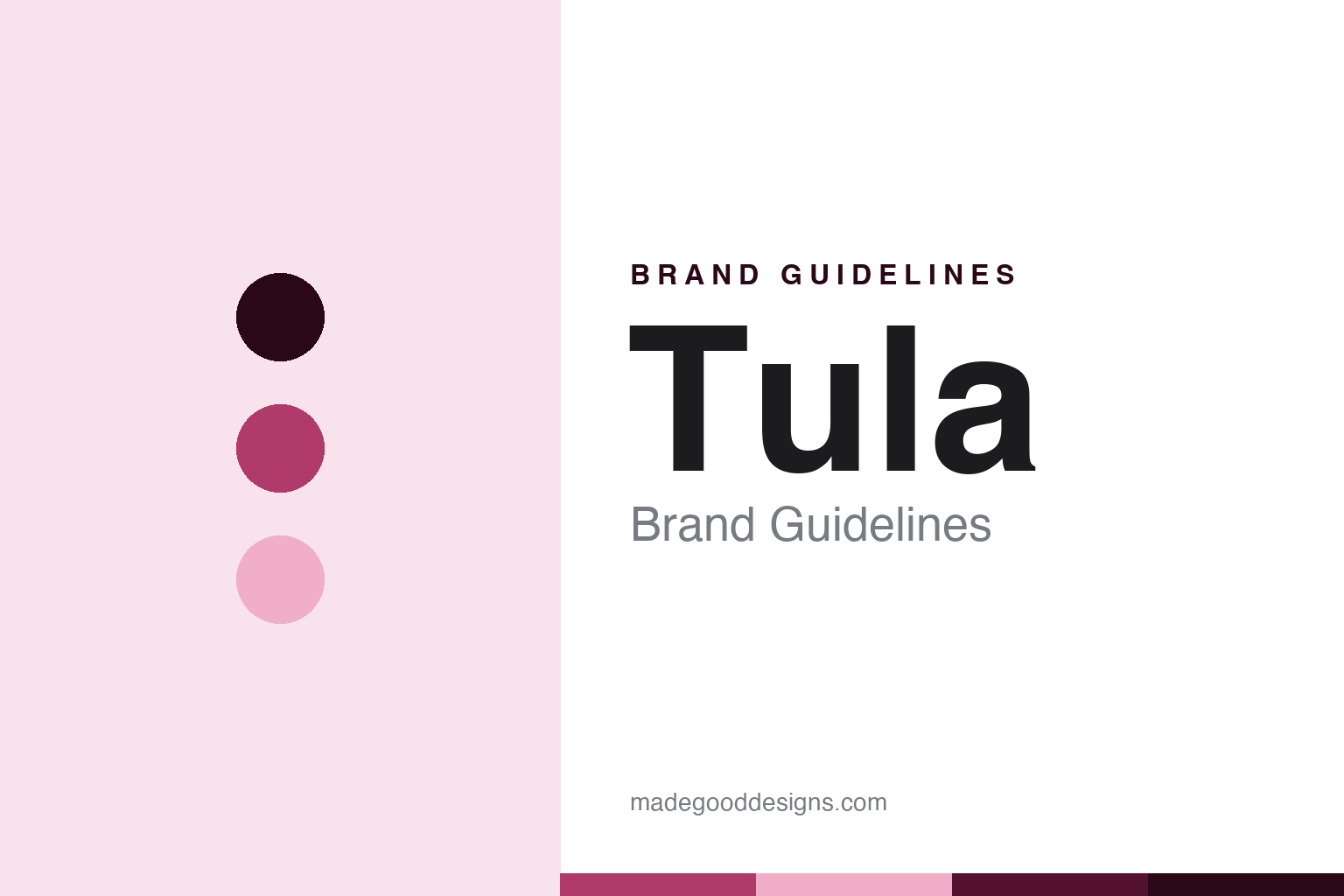
Tula’s identity is expressive, Ergobaby-owned and print-forward — a print berry, an ink, a pale pink, a deep berry, and a paper. The palette leans print berry and pale pink: a bold, expressive register that nods to vivid fabric prints and self-expression rather than a loud logo colour. It signals carriers as self-expression — expressive, Ergobaby-owned and print-forward. The honest caveat: with no official brand hex, and its colour story living in rotating prints, these values are a bold, unofficial interpretation, not first-party colours.
The lesson is a bold berry signals an expressive, print-led identity. Tula’s world is the carrier you wear as a pattern. For designers, it is a reminder that a bold berry and a soft pink can carry an expressive, print-forward brand — a vivid tone held as an accent, not a product shot. Because a bright hue can fail as small text, keep type dark and let the colour live in the accents, palette and band. The takeaways: credit the founders Ula Tuszewicka and Mike Pham and the Polish origin; drop the Kobos error; name the Ergobaby ownership and the Highlander cross-link; frame the making as reported China; and attribute the hip-healthy claim.
Typography
The register is a print sans — expressive, Ergobaby-owned, print-forward.
Tula’s identity carries an expressive, Ergobaby-owned, print-forward spirit — a self-expression brand inside a portfolio. A print sans captures the mood: clean, modern and lively, the register of a pattern-led brand. Set in a print-berry palette, the print sans feels expressive and bold — exactly the personality Tula carries. It behaves like a made, patterned thing rather than a loud logo, mirroring a weave-grid and a wrap-fold. (Tula’s real products and the name are things we describe but do not reproduce, and the exact typeface is not ours to use.) Because it is not ours to use, the honest description is “a print-sans brand,” shown here in a stand-in. The type behaves like the brand: expressive, Ergobaby-owned and print-forward.
Aa
A print-sans brand — expressive and bold. (Specimen set in Sora, a print-sans STAND-IN; NOT the Tula logo or products.)
The carrier node
Tula stands for carriers as self-expression.
Tula sits third in the round as its print-forward node. A print-berry palette, a print sans and a Polish origin make one thing — carriers as self-expression — the whole identity: expressive, Ergobaby-owned and print-forward. The print-forward identity is the pitch, the Ergobaby ownership is the frame, and the founder origin is the story. The point is a self-expression brand inside a portfolio, in a round about who owns the carriers and where they are made.
Put to work, the identity is the brand told straight, the founders corrected and the ownership named. A brand in this spirit would credit Ula Tuszewicka and Mike Pham and the Polish origin, drop the Kobos error, name the Ergobaby ownership and the Highlander cross-link, frame the making as reported China, and attribute the hip-healthy claim. A reader in this spirit would keep the facts right: Tula sells the Explore, Free-to-Grow and Lite carriers with expressive prints as its heroes; it was founded by Ula Tuszewicka and Mike Pham in Poland in 2009 and moved to San Diego in 2011; it was acquired by Ergobaby in 2016 for 73.8 million dollars, and both now sit under Highlander Partners; it is reported made in China; and multiple models are acknowledged as hip-healthy by the institute. Tula sits after Ergobaby and before LÍLLÉbaby. The honest editorial moves are to correct the founders, to name the ownership, to note the cross-link, and to attribute the safety.
For designers and brand-builders, Tula carries the carrier node: correct a founder name — and name a sibling ownership within the round. The lessons: a brand can differentiate on self-expression, here bold fabric prints; founders are corrected to Ula Tuszewicka and Mike Pham, not a Kobos; an ownership is named as Ergobaby, with the cross-link that both sit under Highlander Partners; a making is framed as reported China; and hip-healthy status is attributed to the institute. It is also a reminder to stay precise: Tula is the print-forward carrier brand owned by Ergobaby, under Highlander — with the palette here an unofficial interpretation. The hook is that ascent: a carrier line born in a small Polish apartment aiming to sell one a day, built on print-forward self-expression, sold to Ergobaby for 73.8 million dollars in 2016. Read that way, Tula is less a single carrier than carriers as self-expression: expressive, Ergobaby-owned, print-forward. The lesson for a brand is that correcting the founders and naming the sibling ownership reinforce each other, and attributing the safety keeps the story earned. Tula made carriers-as-self-expression the identity — proof that a print-led brand can anchor a node.
Explore & save
Keep Tula’s identity on hand — save it to a board in the Made Good inspiration library.
Tula identity set
Pin the print-berry palette and the print-sans register to your own board.