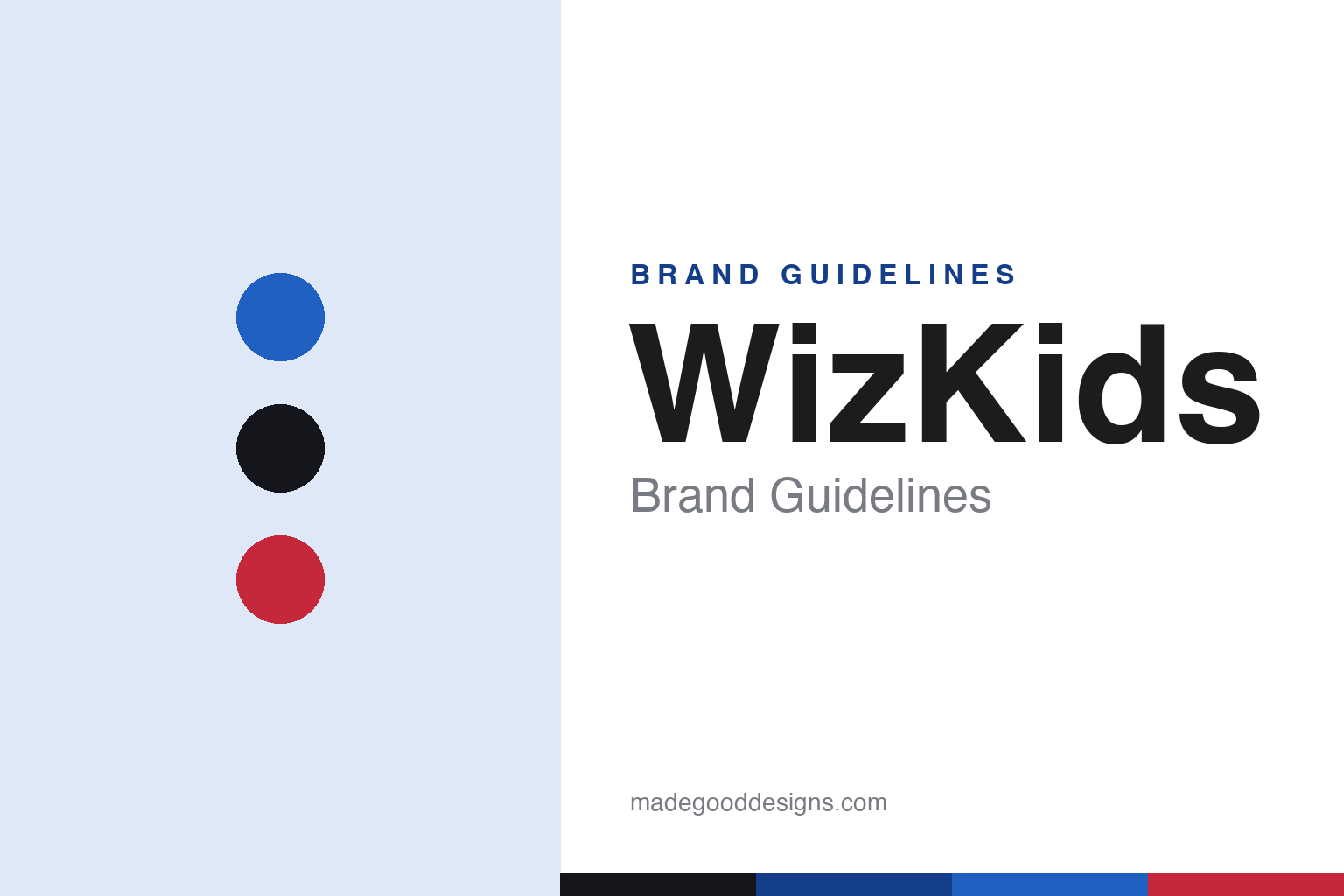
WizKids Brand Guidelines
The combat dial and the prepainted miniature — from Mage Knight to HeroClix.
Aa
Two constants: an electric-blue and hero-red palette and a bold hero sans. Abstract homage — not the WizKids wordmark or logo.
The dial in the base
WizKids invented the Clix miniature.
WizKids is a lesson in a single mechanical invention creating a category. It was founded in 2000 by Jordan Weisman — the FASA veteran behind BattleTech, Shadowrun and Mage Knight. Its whole identity springs from one clever idea: the ⭐⭐ “Clix” combat dial — a rotating dial built into a miniature’s base that shows the figure’s changing stats and abilities as it takes damage, so no separate stat cards or record-keeping are needed.
That system debuted with Mage Knight (2000), the first Clix game, and exploded with ⭐⭐⭐ HeroClix (2002) — the Marvel/DC collectible prepainted-miniatures superhero game that became a phenomenon. WizKids essentially popularised the prepainted plastic miniature: figures that come painted and game-ready out of the box, no hobby painting required. It applied the idea across MechWarrior, HorrorClix, Star Trek: Attack Wing and Dice Masters, and today makes the hugely popular D&D Icons of the Realms prepainted miniatures line, plus full board games (including the acclaimed Mage Knight: The Board Game, designed by Vlaada Chvátil).
Its corporate history is a rollercoaster: WizKids was bought by Topps (2003), shut down by Topps in 2008 during the downturn, and revived under NECA (National Entertainment Collectibles Association) in 2009, which owns it today. (Honest notes: HeroClix uses licensed Marvel/DC characters; the Mage Knight board game is Vlaada Chvátil’s design, distinct from the Clix game; the NECA-acquisition timeline (~2009) and the Topps era are best given with light hedging; and no official brand hex is published.)
Colour
WizKids lives in an electric-blue-and-red palette. Click a swatch to copy the hex.
WizKids’ identity is bold, heroic and energetic — an electric blue, ink black, and a hero red. The palette reads as HeroClix: the primary blue-and-red of comic-book superheroes, grounded by ink, crackling with action. It’s a comic-book, collectible world that signals heroes, energy and play-out-of-the-box fun. It’s an electric-blue-and-red palette that signals a prepainted-miniatures maker. The honest caveat: WizKids publishes no official brand hex, so the blue, ink and red here are an original, unofficial interpretation, not first-party values.
The lesson is an electric-blue-and-red palette signals heroic energy. WizKids’ world reads as bold and comic-book. For designers, it’s a reminder that primary comic colours (electric blue, hero red) instantly signal superheroes and action — right for HeroClix. The takeaways: use bold comic primaries for heroic energy; ground them with ink; and treat any single hex as unofficial when there’s no published spec.
Typography
The wordmark spirit is a bold hero sans — energetic and comic.
WizKids’ identity carries a bold, energetic, comic-book spirit — a “WizKids” wordmark whose heavy forms match superhero miniatures and collectible action. A bold hero sans captures the mood: it’s punchy and comic, matching a maker whose signature game is a Marvel/DC brawl in plastic. Set against an electric-blue palette, the bold sans feels heroic and energetic — exactly the HeroClix, Clix-dial personality WizKids carries. It’s heavy rather than delicate, mirroring a comic-book title. (WizKids’ real wordmark is a trademark we describe but don’t reproduce.) Because the exact mark isn’t ours to use, the honest description is “a bold hero sans spirit,” not the WizKids logo. The type behaves like the brand: bold, energetic and comic.
Aa
A bold hero sans spirit — energetic and comic. (Specimen set in Anton, a bold sans; NOT the WizKids logo, which is a trademark.)
An invention as the difference
WizKids removed the barrier.
WizKids is a lesson in lowering a barrier with a single invention. Miniatures gaming was traditionally gated by hobby painting — you bought bare plastic or metal figures and spent hours assembling and painting them before you could play. WizKids removed that barrier twice over: the prepainted, collectible plastic miniature (game-ready out of the box) and the Clix combat dial (stats built into the base, no bookkeeping). Together they made tactical miniatures gaming instantly accessible, and HeroClix turned that accessibility into a mass hobby. The lesson is classic: find the friction that keeps people out of a category and engineer it away, and you can open the category to a far bigger audience. WizKids didn’t make a better wargame; it made the wargame you could play the day you bought it.
For designers and brand-builders, WizKids offers a clear takeaway: removing a category’s biggest barrier can matter more than adding features. The lessons: identify the friction that excludes newcomers (here, painting and bookkeeping) and design it out (prepainted figures, the Clix dial); use a beloved licence (Marvel/DC) to bring the newly-lowered barrier to a mass audience; and keep the facts precise — WizKids is Jordan Weisman’s studio, inventor of the Clix dial, behind Mage Knight and HeroClix, now owned by NECA. It’s also a reminder to keep it honest: HeroClix uses licensed characters; the Mage Knight board game is Chvátil’s; the Topps-then-NECA ownership timeline is hedged; and no official brand hex is published, so the palette here is an interpretation. WizKids removed the barrier — proof that an invention can be the difference.
Explore & save
Keep WizKids’s identity on hand — save it to a board in the Made Good inspiration library.
WizKids identity set
Pin the electric-blue-and-red palette and the hero-sans spirit to your own board.