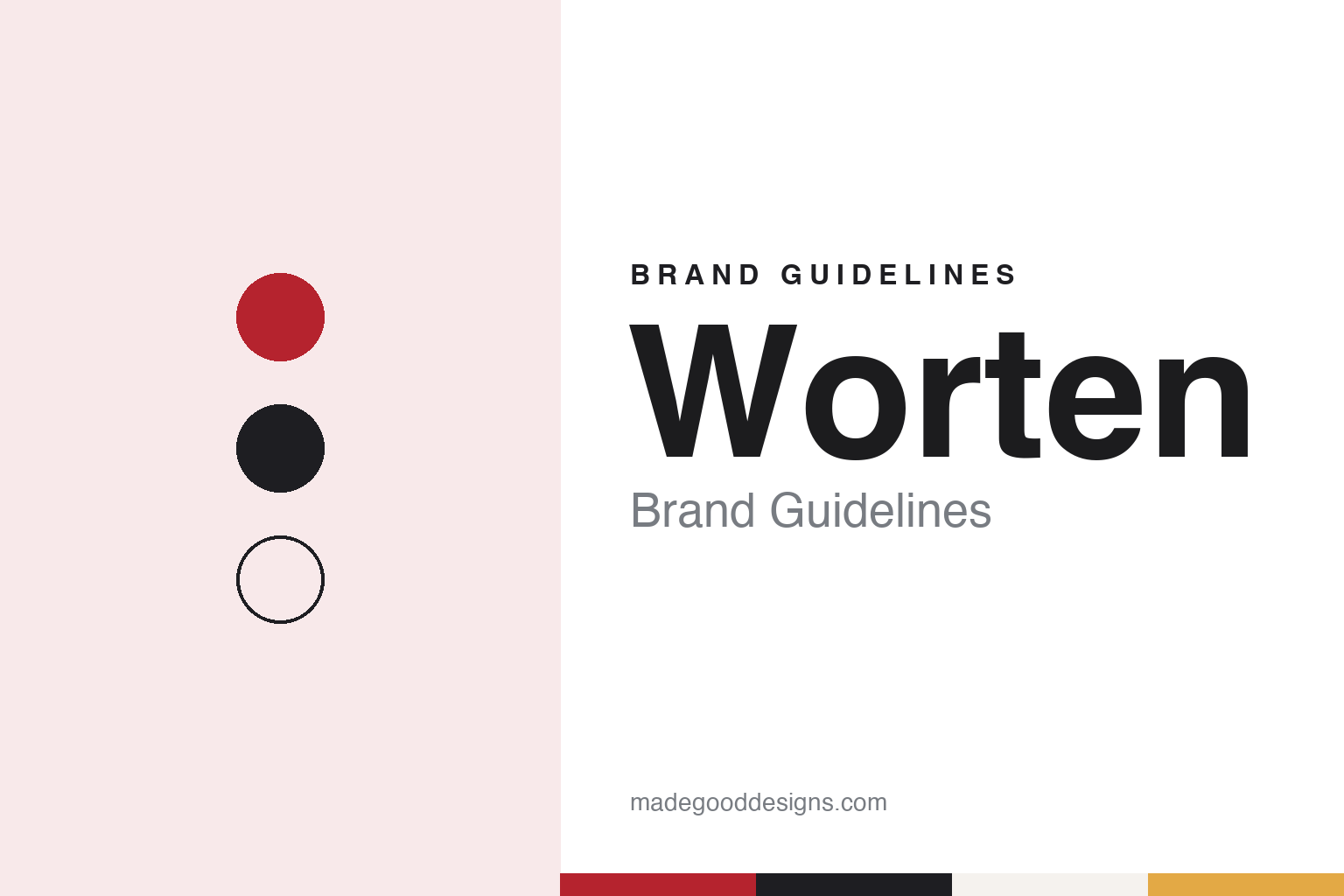
Worten Brand Guidelines
Sonae’s Portuguese electronics chain, from a Chaves shop to a marketplace.
Aa
Two constants: a red, ink and paper palette and a bold retail sans register. Abstract homage — not a Worten asset or mark; no logo, shopfront or product is reproduced.
A shop in Chaves
A Sonae chain that grew out of one Portuguese town.
Worten is the consumer-electronics and household-appliance chain of the Portuguese retail group Sonae, which owns all of it, Portuguese Wikipedia says. The chain dates from 12 March 1996, when its first shop opened in Chaves, in Portugal; the e-commerce trade title ChannelX gave the same date in July 2019. From there, Portuguese Wikipedia says, the network spread across mainland Portugal and out to the island regions of Madeira and the Azores. The company’s registered office is in Maia, with its central offices at Carnaxide in the municipality of Oeiras.
The online shop came early in the chain’s life. Portuguese Wikipedia dates worten.pt to 2001, and a separate format for phones and telecoms, Worten Mobile, to 2004. The same encyclopaedia records a run of identity changes: a first repositioning with a new logo in 2007, a second rebranding in 2016 that produced the logo in use today, and in 2021 a renewed logo together with a new colour for the services brand.
Spain was the chain’s first market abroad. In August 2008, Portuguese Wikipedia says, Sonae announced that Worten would buy nine stores in Spain from the French chain Boulanger, and the Spanish business opened in 2009; ChannelX also dates the nine Spanish stores to 2009. In 2011 Worten took over eight stores of PC City as the British group Dixons left the Spanish market. By July 2019 Worten had around 40 Spanish stores, ChannelX reported, and it had just opened its marketplace in Spain as well.
That Spanish chain was later sold or closed. On 13 January 2021 the trade title Alimarket Electro reported that MediaMarkt Iberia had signed an agreement to buy 17 Worten stores in Spain, keeping their staff and taking over the premises. Worten said it would close 14 other Spanish stores and keep its online shops, one store at San Sebastián de los Reyes near Madrid, and 15 stores in the Canary Islands run with its partner there. Spain’s competition authority, the CNMC, cleared the purchase in its first phase, Alimarket reported on 25 February 2021. Five years later the Portuguese business paper ECO reported on 6 July 2026 that Worten would stop online sales in mainland Spain from 31 July 2026; the company told ECO that its operations in Portugal and the Canary Islands were unchanged.
Colour
Shops, a marketplace and a repair brand.
Worten sells large and small household appliances, television, video and sound, mobile phones, computing, gaming and photography, Portuguese Wikipedia says. Alongside other makers’ goods it carries exclusive house labels: in July 2019 ChannelX named Goodis, Becken and Kunft as Worten’s own brands. The chain trades under the Worten and Worten Mobile names in Portugal, and in the Canary Islands through Worten Canarias, a joint venture with the local Grupo Número Uno, which runs its own online shop for the islands; Portuguese Wikipedia counted 23 Canary stores at the start of 2026.
The marketplace is the second pillar of the online business. Portuguese Wikipedia says Worten opened it on worten.pt in 2018, built on technology from the French firm Mirakl, so that outside sellers could list goods on the Worten site; by 2021 it had more than a thousand sellers. ChannelX described the model in 2019: buyers can order online and collect from their nearest Worten store, and sellers can deliver either to the buyer’s home or to a store for collection. Portuguese Wikipedia adds that marketplace orders can also be returned in store.
Services sit under a separate name. Portuguese Wikipedia says the Worten Resolve card was launched in 2013, and that in 2021 Worten Resolve became the umbrella brand for all of the company’s services, from repairs of appliances, phones, computers and consoles to installation and assembly of televisions, air-conditioning units and appliances. A Technical Service Center opened at Alfragide in 2017. In November 2019 Worten agreed to buy iServices, a Portuguese chain that repairs mobile devices, and the deal was completed after approval by the competition authorities, Portuguese Wikipedia says; in 2021 it added Zaask, a digital platform for hiring home services, and Satfiel, a repairer of large appliances and televisions based in Penafiel. ECO reported in July 2026 that iServices had opened about ten more shops in the first quarter of 2026, three in Portugal and seven outside the country.
Newer names have followed. In May 2025 Worten launched Flippers, a sub-brand for refurbished electronics, and in October 2025 it launched Worten Life, a loyalty programme tied to the Cartão Continente card, Portuguese Wikipedia says. On 12 March 2026 the company marked 30 years of trading with a commemorative visual identity, in-store and digital activity, and an online project called “Museu Worten”.
Typography
Design and documentation.
Consumer-electronics retailers present themselves first through the store. Many trade from large units on the edge of towns, with long aisles divided into product areas such as computing, television, sound, phones and kitchen appliances. Trade reports describe how these floors are laid out for trying things: in 2017 Tweakers described Coolblue’s first XXL store in Amsterdam as six product areas, and in 2026 Républik Retail described a Boulanger store near Lille with a playable gaming area and a seated space for watching projectors.
Delivery is part of the public face. Some chains run their own vans for large appliances and installation, and Coolblue says it added its own bicycle delivery service in cities in 2018. Online shops, click-and-collect counters and services for repair, trade-in, rental and refurbished goods are presented beside the shelves, often under names of their own that sit next to the shop name on signs and websites.
Naming follows a similar pattern. A chain usually keeps one short shop name and adds own-label ranges with separate names, so a single store can carry the retailer’s brand, its house labels and many outside makers side by side. French Wikipedia, for example, dates Boulanger’s Listo and Essentiel B labels to 2005. When a chain buys a rival abroad, it may keep the local name, as Boulanger did with Krëfel in Belgium after 2019.
Behind the shop fronts sit corporate pages. These usually give a founding story, the current owner and any stock-market listing or plan for one, and some owners publish their own announcements of changing stakes. This guide sets out what dated sources say about each company’s founders, owners and listings, and treats the companies’ own descriptions as their claims.
Aa
A bold retail sans for shop signs and price cards. (Specimen set in Archivo, a sans STAND-IN; NOT the Worten logo.)
Worten
One name, several sub-brands.
Worten’s identity works as a family of names rather than as a single sign. Portuguese Wikipedia records three logo changes in a quarter of a century — a repositioning in 2007, the rebranding of 2016 that set today’s logo, and a renewal in 2021 — and each time the services side was pulled closer to the main name. The shop network carries Worten and Worten Mobile; repairs and installation sit under Worten Resolve; device repair keeps its own name, iServices; refurbished goods trade as Flippers; and the loyalty scheme, Worten Life, links to the Continente card. For a designer, that is a useful case of a retail parent that keeps acquired names where they already mean something to customers and adds descriptive suffixes where it builds its own.
The company’s own pages are the place to see current signage, colours and type; the colour and typeface specifications are not set out in the sources used for this guide, so the tones here are our own. Its 2026 anniversary also shows how a retailer can treat its history as content: the commemorative identity and the online “Museu Worten” were presented as part of the brand rather than as a separate archive.
For a design guide, Worten shows how an electronics chain can stretch one short name across shops, a marketplace and a repair business while handing a foreign network to a rival and keeping its island stores. Compare MediaMarkt, which bought 17 of its Spanish stores in 2021, and Boulanger, whose nine Spanish stores started Worten’s move abroad. For this guide we use a strong red, ink, a warm paper and an amber with a sans, an unofficial interpretation; no product or logo is reproduced.
Explore & save
Keep Worten’s identity on hand — save it to a board in the Made Good inspiration library.
Worten identity set
Pin the Worten red, ink and paper palette and the bold retail sans register to your own board.