Mohito Brand Guidelines
Artman’s 2008 Kraków womenswear label, now part of LPP.
Aa
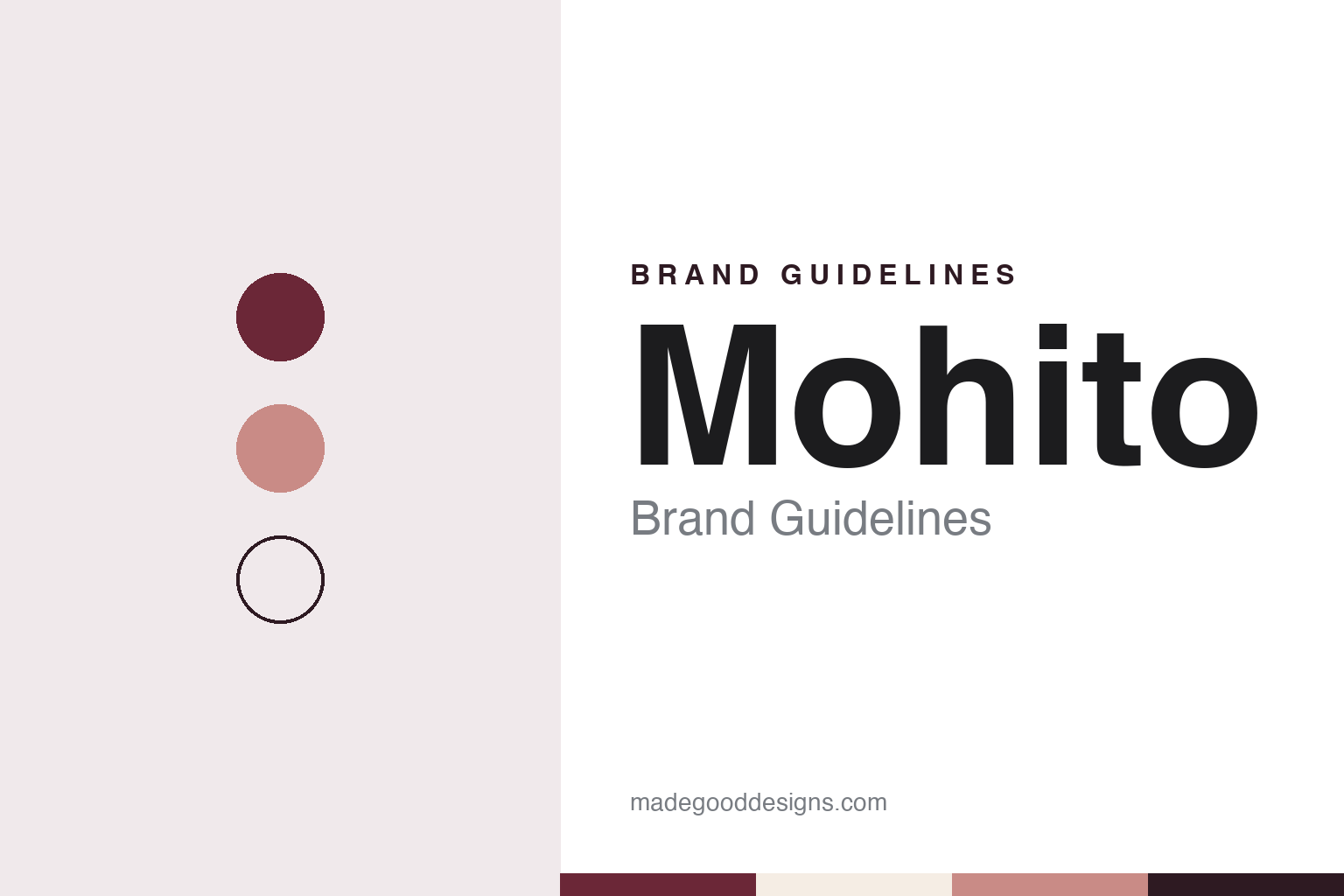
Two constants: a wine, rose and cream palette and a fashion serif register. Abstract homage — not a Mohito product or mark; no garment, logo or store sign is reproduced.
Artman
A Kraków label that LPP took on in 2008.
Mohito did not begin inside LPP. It was created in 2008 by Artman, a clothing company based in Kraków, Polish Wikipedia says. Artman was founded in 1991 and at first worked as a wholesale distributor of other labels. In 1997 it created its own brand, House of colours, for customers aged 18 to 30, put the first collection on sale in 1998, and began building its own shop network in 2001. It later narrowed the target group to 15-to-25-year-olds and renamed the line House. Artman listed on the Warsaw Stock Exchange in July 2004 and contracted its production out to other firms. Mohito was its brand for more mature customers.
The new brand was still being prepared when LPP, the Gdańsk group then owning Reserved and Cropp Town, moved to buy its maker. In April 2008 Rzeczpospolita reported that LPP had signed a letter of intent with Artman’s three main shareholders, who were also its founders, to take control of the company. Wirtualnemedia reported the same month that an Artman board member said work on Mohito would carry on regardless, with an official presentation around the turn of April and May and the opening stores in August. In June 2008 the companies signed an investment agreement aimed at combining them, the same site reported.
LPP’s own history records House and Mohito joining its portfolio in 2008 as a result of the merger with Artman. Polish Wikipedia says Artman ceased to exist on 1 July 2009, absorbed by LPP SA, which is why English Wikipedia dates Mohito to “2008; acquired in 2009.”
Colour
Dresses, colour and a bright store concept.
LPP writes the name in capitals, MOHITO, and presents it as a brand for women who love fashion. Polish Wikipedia says the range is clothing and accessories for women, with dresses, women’s suits and blouses as the key products. LPP’s brand page puts dresses first, from evening and cocktail styles to long maxi dresses and close-fitting classic cuts, for nights out, dates, galas and weddings, and says the brand works with influencers under the hashtag #MOHITOwomen on its social channels. House, the younger brand that came from Artman in the same deal, kept its own name and shops inside LPP.
Colour has been a visible part of its campaigns. For autumn–winter 2017/2018, Wirtualnemedia reported, the collection was dominated by two strong colours, a deep blue and a violet, worn both as total looks and as single accents, and the creative concept for the campaign came from Mohito’s own marketing department rather than an outside agency. The collection was sold in stores and through the brand’s web shop. LPP’s brand page now shows a campaign film for autumn 2026.
The shops follow a house concept that has been updated over time. In December 2022 dlahandlu.pl reported a new Mohito store of 342 square metres at the Platan shopping centre in Zabrze, opened on 30 November 2022 and fitted out in the brand’s newest concept, which the site described as bright and spacious. A member of Mohito’s marketing team told the site that the collections mix classic and modern cuts, a wide range of colours, the brand’s own prints and familiar patterns. At that point Mohito had more than 290 stores and sold its products in 18 European countries, dlahandlu.pl said.
Typography
Design and documentation.
Polish and Romanian retailers mostly present themselves through the places where people shop: the fascia above a corner-shop door, the sign on a discount supermarket at the edge of town, the campaign images in a fashion store window, the screens of a marketplace app and the long front of a DIY megastore. Each of these is a design surface the company controls, and the guides in this group read them as the companies publish them, on their own sites, stores and apps.
Store naming in the region is often plain and local. Several chains carry an ordinary Polish word, an animal or a short invented name, and the guides explain what each name means and where it came from, without reading more into it than the sources do. Where a chain changed its sign or colours, the guides give the date of the change and the source that records it.
The corporate pages matter as much as the shopfronts. Many of these businesses were started by founders in the 1990s, later sold to private-equity funds or foreign groups, and in several cases listed on the Warsaw Stock Exchange. The guides set out founders, owners and listings as dated facts, and they state pending takeovers as pending, with the date they were agreed.
What the guides do not do is rank retailers or judge them as better or worse. Store counts, country counts and formats are given only with the date and source that supplied them, and every palette and typeface shown is our own unofficial interpretation, chosen to describe a look rather than to copy one. No logo, fascia, product or campaign image is reproduced.
Aa
A high-contrast fashion serif for a womenswear brand. (Specimen set in Playfair Display, a serif STAND-IN; NOT the Mohito logo.)
Mohito
Still run from Kraków.
Mohito is still run from Kraków rather than from LPP’s Gdańsk head office. LPP’s brand page says the brand’s headquarters is in the city, in an office certified under the BREEAM building standard, and as of November 2026 it gives Mohito 252 stores in 22 European countries. In mid-November 2023 LPP launched a Mohito shopping app, built in-house by the Mohito team and Silky Coders, the group’s technology company, dlahandlu.pl reported that December. Its main feature is Mohito ID, a personal customer code that holds a shopper’s in-store and online purchase history and can be used for returns. After a scan of the ID, staff in a store can see an online order that is ready for collection, and returns without a receipt are possible in all of the brand’s stores, the site said; a tag scanner in the app lets shoppers look for a missing size or colour in another store or online.
The brand has also moved west. LPP says that in 2024, eighteen months after launching online sales in Italy, Mohito became the group’s third brand to open physical stores there, with two shops, one near Venice and one in Milan. Like the rest of the group, Mohito does not make its own clothes: Polish Wikipedia says LPP has no factories and that its brands’ clothing is made mainly in Asia, and also in Poland and other European countries including Italy, Portugal, Romania and Turkey. In September 2026 Wirtualnemedia reported that LPP, owner of Reserved, Cropp, House, Mohito and Sinsay, had opened its 4,000th store and was present in 47 countries.
For a design guide, Mohito shows how a brand acquired in a merger can keep its own city, team and dress-led image inside a larger group. Compare Cropp, LPP’s streetwear chain from 2004, and Reserved, the group’s original chain. For this guide we use wine, rose clay and cream with a serif, an unofficial interpretation; no product or logo is reproduced.
Explore & save
Keep Mohito’s identity on hand — save it to a board in the Made Good inspiration library.
Mohito identity set
Pin the Mohito wine, rose and cream palette and the fashion serif register to your own board.