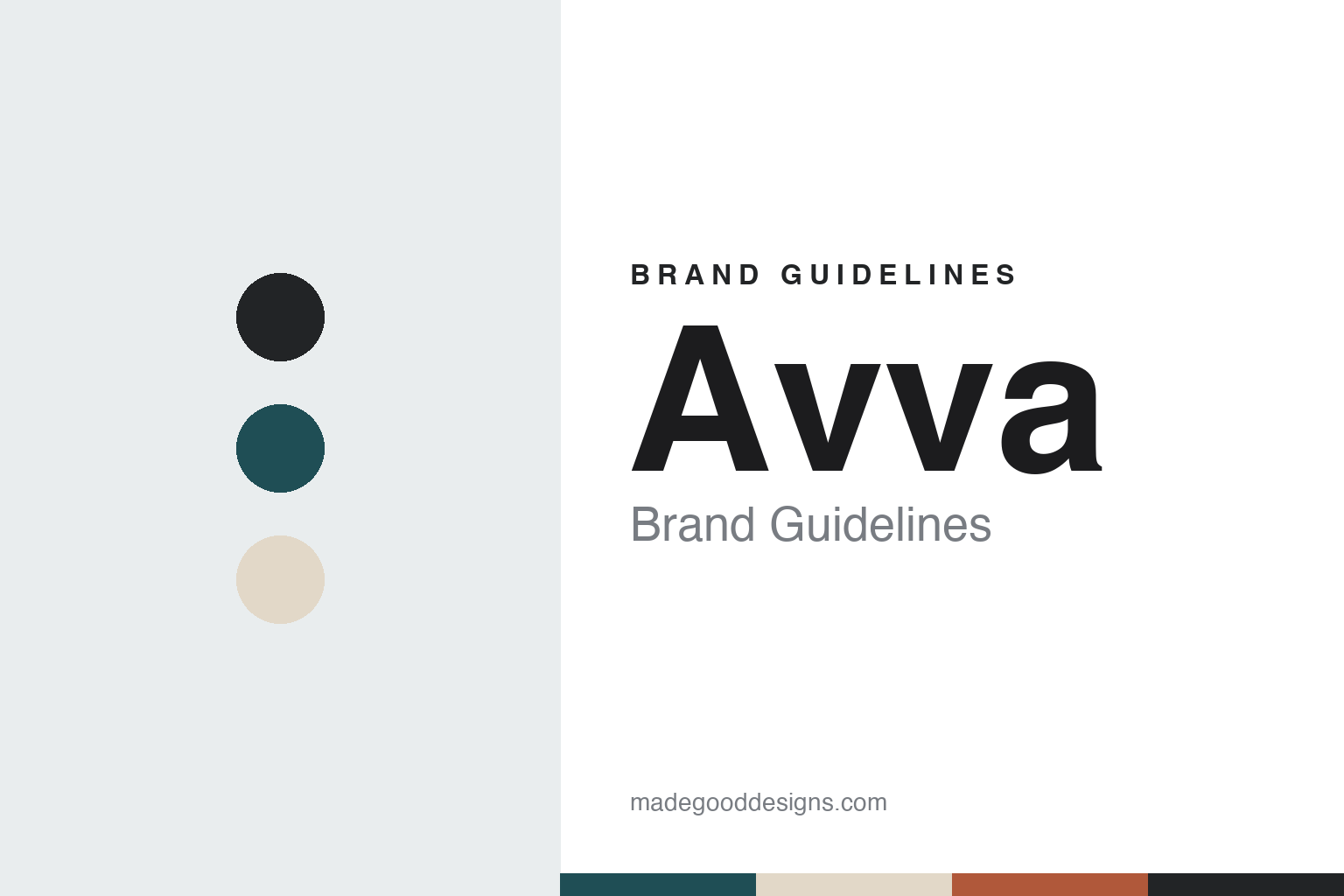
Avva Brand Guidelines
A 2000 Osmanbey menswear label built from its founder’s initials.
Aa
Two constants: a deep teal, graphite and sand palette and a geometric sans register. Abstract homage — not an Avva product or mark; no garment, logo or label is reproduced.
From Dido to Avva
A wholesale family, a menswear switch and a name from initials.
Avva is an Istanbul menswear brand founded in 2000 by Volkan Atik. Hürriyet reported in October 2014 that he came from a clothing family. His father, İsmail Atik, set up a women’s clothing wholesale business in Istanbul’s Mahmutpaşa market district in 1977, moved it to Osmanbey in 1980 and traded under the women’s brand Dido until 2001. Volkan Atik, a banking and finance graduate of Bilkent University in Ankara, joined that business straight after university rather than going abroad for a master’s degree, and stayed until 2000, when he decided that menswear was the sounder business.
The name is his own. Atik told Hürriyet that he made the word “Avva” from the initials of his name, read one way as Atik Volkan and the other as Volkan Atik. Like his father, he began with a wholesale shop in Osmanbey, the Istanbul garment district that Hürriyet called Turkey’s centre of brand-building. Sabah, profiling him in April 2011, described Atik as someone who had started his working life in the shirt trade before specialising in men’s ready-to-wear.
The brand went abroad almost at once. When Turkey’s 2001 economic crisis hit the home market just after the first collections were made, Hürriyet reported, Atik went to the United States, signed with a distributor and set up a warehouse and distribution system that started in Miami and spread to New York, selling under his own brand. Avva also set up sales in Russia, and that export-led phase lasted until about 2006. When the Turkish market recovered, the brand spread at home through corners in other stores, began trying its own shops in 2008, and at the end of 2011 decided to make a serious investment in retail.
Colour
Menswear only, smart casual in register.
Avva has kept to menswear. Milliyet reported in September 2009 that Atik, then chairman, described it as a brand concentrated on men’s clothing, with groupings for different price levels. At the time it had 16 stores in Turkey, and Atik told the paper the brand had sold about 1.2 million garments the previous year. It had also shown at Istanbul’s Fashion Days at the end of August 2009, an event that Atik told the paper helped present Avva as a design brand and brought requests from would-be dealers in Jordan, Lebanon and the Netherlands.
The register is smart casual. Retail & Leisure International (RLI), the British retail trade magazine, wrote in February 2021 that the company invests in particular product lines, naming its light-jacket collection and an AVVA sports line, and described the smart-casual concept as having shaped the brand’s positioning in the Turkish market. The magazine described the clothes as aimed at what it called the stylish, modern man, through young, sophisticated and current product lines. In its October/November 2024 issue the same magazine returned to the brand with a feature built around smart casual and an interview with board member Nihan Atik Gedikli, who spoke about the company’s store network and its digital channels.
The name is set in capitals. The company, RLI and much of the Turkish press write it as AVVA, and the sports line carries the same capitals. Online selling came early: Sabah reported in April 2011 that Avva, then a 40-store chain included in Turquality, the Turkish brand-support programme, had started selling through its own web shop to reach customers in places without a store.
Typography
Tailoring, retail and group ownership.
Turkish fashion and menswear brands tend to present themselves through the things they make and the places they sell them. Tailored suits, shirts, knitwear, leather goods and womenswear lead the product pages, and many labels describe made-to-measure or ceremonial ranges, such as tuxedos for weddings, alongside everyday clothes. Product names and fabrics are usually given plainly, with the collection season as the main organising idea.
Retail format carries much of the identity. Some names began as department stores and now run several store formats under one roof, from full-line stores and single-brand boutiques to outlets and online shops. Others began as menswear makers and grew into chains of their own stores in shopping malls and on high streets. Flagship stores in Istanbul districts such as Nişantaşı and along the Bosphorus are often named in company histories, and the international shops, franchise partners and showrooms that companies publish give a sense of how far a label has travelled.
Group ownership is part of the picture and needs dated sources. Several labels sit inside holding companies: Boyner Group, built on the Altınyıldız textile business, runs department stores and menswear labels, while Orka Holding owns a family of menswear names. Ownership has changed over time through partnerships with foreign investors and later splits or buybacks, so the date of any ownership statement matters as much as the statement itself.
Corporate pages are the usual starting point for founders, owners and store counts. Company “about” and history pages give founding years, founders’ names and milestones in the company’s own words; national newspapers, news agencies and business press add dated reports on openings, partnerships and changes of control. For a designer, that mix explains why these identities often rest on a group name, a flagship address and a type of garment rather than on a single logo.
Aa
A geometric sans — the register of a capitalised four-letter name. (Specimen set in Jost, a sans STAND-IN; NOT the Avva logo.)
Avva
Franchise stores at home and abroad.
Store growth followed the retail decision. Hürriyet counted 45 stores in Turkey and 20 abroad in October 2014, and Atik told the paper that Avva was also sold at about 3,500 points of sale outside Turkey, that the business made about two million pieces a year and that most of its output was exported. The newspaper itself reported that, with its design team and stores, the company employed about 250 people. He also said he had registered the trademark in 120 countries in the brand’s early years.
By February 2021 RLI reported 128 concept stores in 21 countries, 86 of them in Turkey and the rest in the Middle East, North Africa, the Turkic countries and Europe. Outside Turkey much of that network is run by franchise partners: Atik told the magazine that the company manages franchised stores in the same way as its own and receives daily information from partners on each of them. RLI also reported new openings in Tajikistan and Uzbekistan, and said the company had a working e-commerce operation in Turkey.
The Atik family runs the business. RLI interviewed Volkan Atik as chairman in 2021 and Nihan Atik Gedikli as a board member in 2024, and Hürriyet named another family member, Dilan Atik, as the company’s design and sourcing coordinator in 2014. As of the October/November 2024 RLI feature, the company was still adding stores in Turkey and abroad.
For a design guide, Avva shows how a wholesale label from Osmanbey can build a brand from its founder’s initials and grow through export, corners and franchise stores. Compare Network, another Istanbul ready-to-wear name, and Kiğılı, a Turkish menswear chain. For this guide we use deep teal, graphite, sand and a rust accent with a sans, an unofficial interpretation; no product or logo is reproduced.
Explore & save
Keep Avva’s identity on hand — save it to a board in the Made Good inspiration library.
Avva identity set
Pin the Avva deep teal, graphite and sand palette and the geometric sans register to your own board.
Source & notes
Frequently Asked Questions
What font can I use to match the Avva look?
This guide describes Avva’s type as “A geometric sans — the register of a capitalised four-letter name”. Its type specimen is set in Jost from Google Fonts as a stand-in; Jost is not Avva’s own lettering.
What colours are in the Avva palette?
This guide’s Avva palette is Deep teal #1F4E55, Graphite #222426, Chino sand #E2D8C8, Rust stitch #B0583A and Oxford white #F7F5F1. The tones are the guide’s own unofficial interpretation, not official Avva hex codes.
When was Avva founded?
Avva was founded in 2000, in Osmanbey, Istanbul. Avva is known for Smart-casual menswear, light jackets, AVVA sports line.
Who founded Avva?
Avva was founded by Volkan Atik in 2000. Avva is known for Smart-casual menswear, light jackets, AVVA sports line.