Cersaie Brand Guidelines
Bologna’s September fair for ceramic tile and bathroom furnishings.
Aa
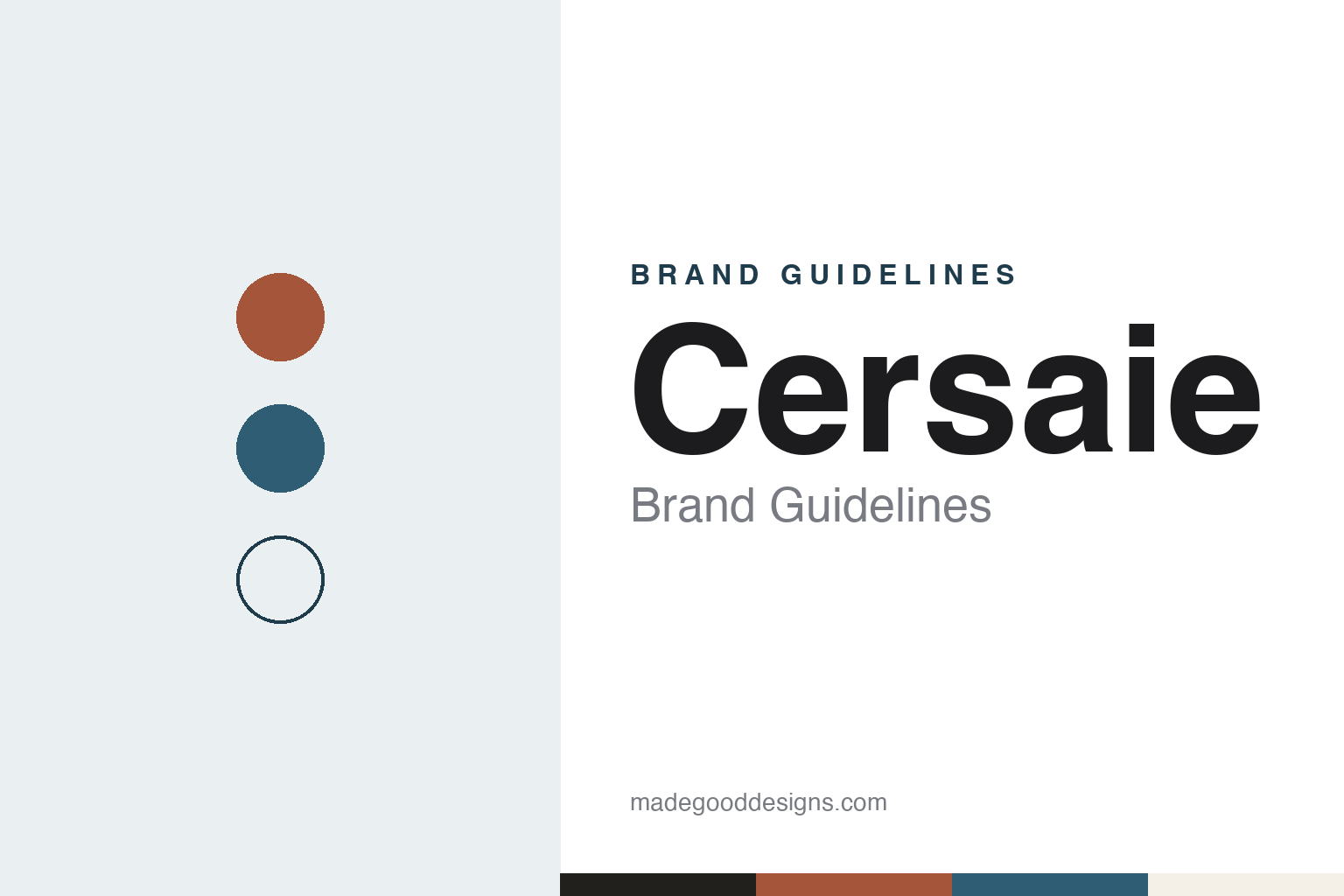
Two constants: a glaze blue, fired clay and bisque palette and an architectural sans register. Abstract homage — not a Cersaie asset; no logo, pictogram or key visual is reproduced.
A trade association’s fair
Tile makers, a publishing company and the Bologna fairground.
Cersaie is the International Exhibition of Ceramic Tile and Bathroom Furnishings, held every year in the exhibition centre in Bologna, in Emilia-Romagna. Its own pages set out how the show is run: it is promoted by Confindustria Ceramica, the national trade association of Italian ceramic makers, organised by EDI.CER., a company controlled by that association, and run in collaboration with BolognaFiere, the company behind the Bologna fairground. Both the association and EDI.CER. give their base as Sassuolo, in the province of Modena.
EDI.CER. is older than the fair. The company says it was set up in January 1979 to run publishing and information services for the ceramic industry, and that its purposes later came to include promotional activity for ceramic companies and the organisation of exhibitions in Italy and abroad. Although it began almost entirely in publishing, it says, since 1983 it has also organised Cersaie. Confindustria Ceramica, it adds, represents Italian makers of ceramic tiles, refractory materials, sanitaryware, household and ornamental porcelain and industrial ceramics.
The fair is counted in editions. The 2026 show, held from 21 to 25 September 2026 at BolognaFiere, was the 43rd, according to both Il Sole 24 Ore, which previewed it on 20 September 2026, and the Spanish trade publication Interempresas, which reported on the closing figures on 1 October 2026.
Cersaie also has a link across the Atlantic. EDI.CER. says it controls an American company that takes part in the joint venture organising Coverings, an annual exhibition of ceramic tile and natural stone in the Americas.
Colour
Sixteen halls of surfaces, bathrooms and installation.
The fair’s pages describe a show spread over 16 halls and about 145,000 square metres. Exhibitors show ceramic surfaces, wood floors, coverings in other materials and bathroom furnishings, together with fireplaces, saunas, taps, bathtubs and sanitary fixtures, and the organiser addresses architects, interior designers, retailers, contractors and tile layers in turn.
Interempresas gave the 2026 breakdown: 595 exhibiting companies, of which 314 came from ceramic tiles, 96 from bathroom furnishings and 185 from installation, raw materials, new surfaces and services. It counted 233 foreign exhibitors, 39 per cent of the total, from 24 countries, and 92,352 visitors over five days, 2.4 per cent fewer than in 2025; visitors from abroad made up 48.2 per cent. Il Sole 24 Ore had reported 94,577 visitors at the 2025 edition, from 158 countries, when 627 exhibitors took 155,000 square metres. It quoted Filippo Manuzzi, who chairs Confindustria Ceramica’s trade fair committee, describing Cersaie as a fair where the world shows itself to the ceramics industry, and said the 2026 floor space was fully booked.
Around the stands sits a programme of talks and training. The fair lists Building, Dwelling, Thinking, its architecture lecture series, alongside Press Cafés for journalists and designers and Tiling Town, a training area where tile layers learn laying techniques and the rules that govern them. In 2026 Interempresas reported lectures that drew more than 800 people, 684 accredited journalists and a Career Day linking companies with graduates. A visitor programme run with ICE, the Italian Trade Agency, brought more than 340 architects, designers, developers and contractors from 45 countries, Il Sole 24 Ore reported.
One strand faces the public directly. In Cersaie Designs Your Home, held on the last two days, designers from twelve Italian interior magazines give free advice to people planning to buy or renovate a home; the 2026 event was the thirteenth, the fair says. During the same week the Bologna Live Design programme spread installations through historic buildings in the city centre.
Typography
How the category presents itself.
Home, interiors and building trade fairs tend to go by short names. Some are a single word, some an acronym or a coined compound, and many are written entirely in lower case or entirely in capitals; a city name is often added, sometimes in its English form, sometimes in the local one. Behind each name stands an organiser: an exhibition company owned by a city or a region, a trade association that sponsors the event, or, in the case of some American furniture markets, a market authority.
Most of these fairs are held for the trade. Their visitors are retailers and buyers, architects, interior designers, installers, contract and hospitality buyers, and the purchasing groups that supply large chains. A few keep public days at the end of the run or are built for the public from the start, with show homes and room sets for people planning their own homes. Many follow a fixed calendar, annual or every two years, tied to the ordering seasons of their trade.
Inside the halls, the fairs are arranged by product group. One may cover tableware, kitchenware, gifts and home accessories; another furniture and lighting; others floor coverings, ceramic tiles, kitchens, bathrooms or heating and building systems. Most add trend areas, special shows and talk programmes, and several now group suppliers from abroad into sourcing sections or country pavilions.
The identity of such a fair usually rests on a wordmark that is kept from edition to edition, while a key visual, colour or theme changes each year. The guides in this collection describe those names, organisers, dates and formats as dated sources give them, and treat the colours and type shown here as our own interpretation rather than any fair’s official material.
Aa
An architectural sans for a fair named in capitals. (Specimen set in Archivo, a sans STAND-IN; NOT the Cersaie logo.)
Cersaie
A pictogram that changes, and a visual for each edition.
The fair writes its name in capitals, CERSAIE, on its own pages and press material, and uses the lower-case form in running text. Its identity has been handed to different authors over the years, and the organiser sets out that history itself. From 2000 to 2009, it says, the design of the Cersaie image was commissioned each year from one of ten well-known figures in architecture and design. From 2010 to 2018 the image was chosen through the Beautiful Ideas competition, open to students of Italian universities and schools of design, graphics and architecture. From 2019 the concept became Open Cersaie, which the fair describes as a pictogram able to evolve to reach new audiences.
The 2026 visual, as the organiser describes it, shows an abstract architectural landscape of volumes, arches and colour gradients mixed with trees, in a natural palette running from warm shades to cooler tones. For its fortieth anniversary the fair built Route40, an exhibition, now also a virtual tour, that walks through four decades of the show, starting with 1983–1992. At the closing of the 2026 edition Interempresas quoted Augusto Ciarrocchi, president of Confindustria Ceramica, and Gianpiero Calzolari, president of BolognaFiere, both describing a steady edition in a difficult year for international trade. The trade publication’s report of the show floor picked out surfaces with relief, incisions and earth tones, and bathrooms whose colours were coordinated with the rest of the home.
For a design guide, Cersaie shows how a trade association can run a long-lived fair with a fixed name in capitals and an image that changes author and method from decade to decade. Compare EuroCucina, the Milan kitchen biennial, and ISH, the Frankfurt fair for bathrooms and building services. For this guide we use glaze blue, fired clay and bisque with a sans, an unofficial interpretation; no product or logo is reproduced.
Explore & save
Keep Cersaie’s identity on hand — save it to a board in the Made Good inspiration library.
Cersaie identity set
Pin the Cersaie glaze blue, fired clay and bisque palette and the architectural sans register to your own board.
Source & notes
Frequently Asked Questions
What font can I use to match the Cersaie look?
This guide describes Cersaie’s type as “An architectural sans for a fair named in capitals”. Its type specimen is set in Archivo from Google Fonts as a stand-in; Archivo is not Cersaie’s own lettering.
What colours are in the Cersaie palette?
This guide’s Cersaie palette is Glaze blue #2F5D73, Fired clay #A4553A, Kiln ink #22201D, Grout grey #CFCAC2 and Bisque #F4EFE7. The tones are the guide’s own unofficial interpretation, not official Cersaie hex codes.