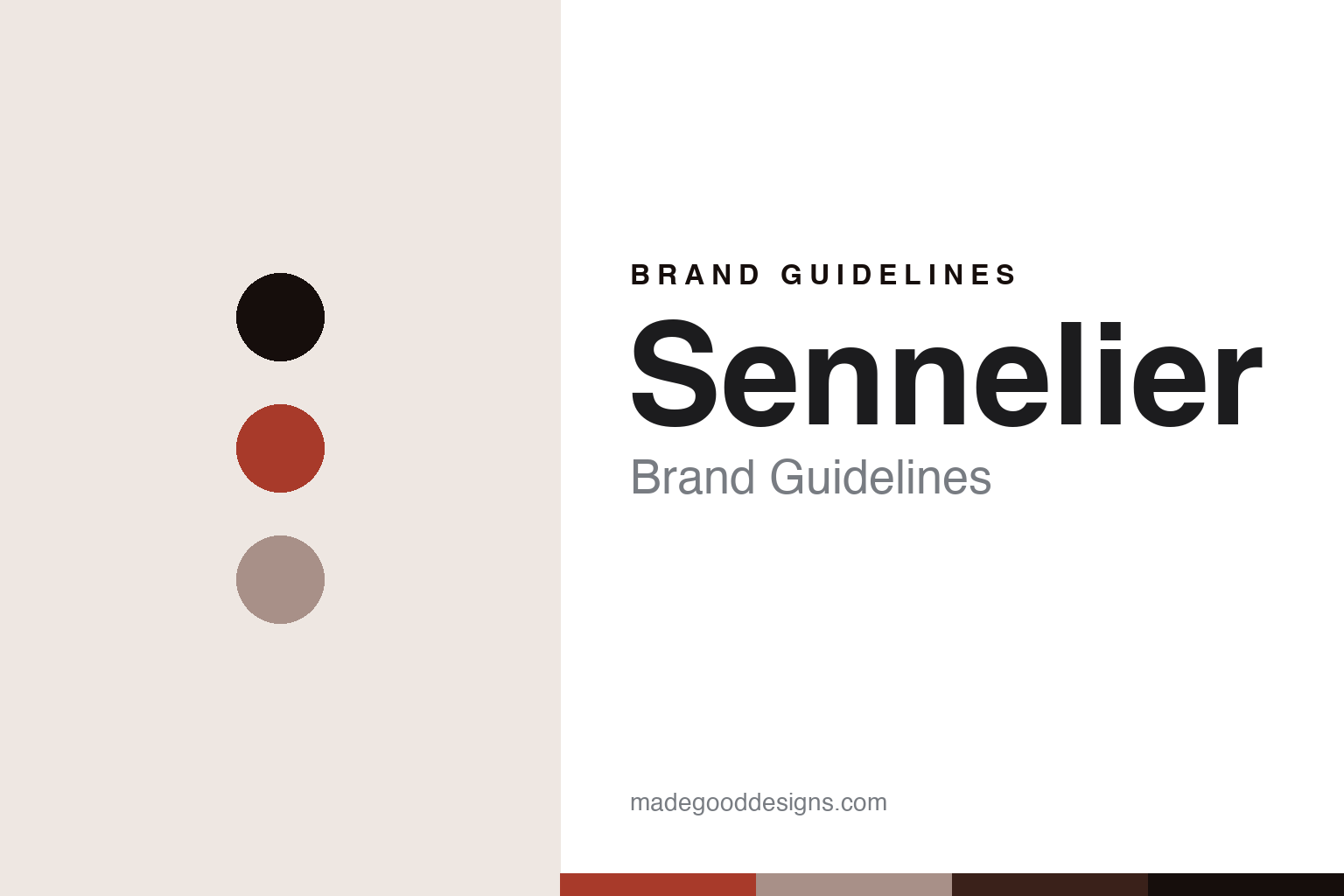
Sennelier Brand Guidelines
The colourman by the Seine.
Aa
Two constants: a vermilion palette and an atelier-sans register. Abstract homage — not a Sennelier colour, label or wordmark.
The colourman by the Seine
Sennelier is the Paris colourman by the Seine since 1887, whose oil pastel was created for Picasso and whose paint is made in France by Max Sauer.
Sennelier is a lesson in how a colour is made for the artist next door. From a shop on the Quai Voltaire, on the Left Bank of the Seine near the Beaux-Arts, this Paris colourman has, since 1887, ground colours for the painters who walked in — most famously the oil pastel it created at Picasso’s request. Its answer to how a colour is made is a colourman’s: keep a shop by the artists, grind fine pigments, and make what a painter actually asks for. A colour made to a great painter’s brief.
Its identity is the Paris colourman’s colour. Sennelier’s Seine-side shop, its oil pastel and its dry pigments are the work it is known for. A colourman, made a name. A house that made a colour because Picasso wanted one.
(Honest notes, so the story stays precise, and with historical associations kept factual. The historic Sennelier address on the Quai Voltaire is the colourman’s shop, by the Seine near the École des Beaux-Arts — a retail and heritage site, not the factory. The Sennelier paint brand is today owned and manufactured by the French company Max Sauer, so its colours are made in France by Max Sauer, though we do not name a specific factory town we could not confirm. It was founded by Gustave Sennelier — the brand dates itself to 1887, with a colourman lineage on the premises reaching back to the earlier Prévost house — so we present 1887 as the brand’s own founding date. Its most famous product, the oil pastel, was created in 1949 by Gustave’s son Henri Sennelier at the request of Pablo Picasso; we report that, and the shop’s historic clientele such as Cézanne, strictly as documented history, implying no endorsement by any artist or estate. Its logo, labels and colour names are its IP, described but never reproduced, and there is no official brand hex — these tones are an unofficial interpretation. This is design commentary and does not promote any product.)
Colour
Sennelier lives in a vermilion palette. Click a swatch to copy the hex.
Sennelier’s identity is Parisian, artistic and warm — a vermilion, an ink, a linen, a sienna, and a paper. The palette leans vermilion and linen: the register of a warm artist’s colour and a Left-Bank shop. It signals the painter’s studio over the laboratory. The honest caveat: with no published brand hex, these values are an original, unofficial interpretation, not first-party colours.
The lesson is a vermilion palette signals a colourman’s, made-in-France identity. Sennelier’s world is a hand-selected-pigment, artist-facing, French-made object. For designers, it is a reminder that a warm vermilion and a soft linen can carry a brand built on the painter next door — the red of an artist’s colour and the linen of a canvas. Because these tones can fail as small text, keep type dark and let the colour live in the accents, palette and band. The takeaways: stay close to the artist; grind fine pigments; keep shop and factory distinct; and treat any single hex as unofficial.
Typography
The register is an atelier sans — warm, human, Parisian.
Sennelier’s identity carries a warm, human, Parisian spirit — a colourman’s shop, not a corporation. An atelier sans captures the mood: even, friendly and artistic, the register of a Left-Bank colour house. Set in a vermilion palette, the atelier sans feels warm and human — exactly the personality Sennelier carries. It is artistic rather than clinical, mirroring a colourman’s pigment. (Sennelier’s real labels and marks are things we describe but do not reproduce, and the exact typeface is not ours to use.) Because it is not ours to use, the honest description is “an atelier-sans spirit,” shown here in a stand-in. The type behaves like the house: warm, human and Parisian.
Aa
An atelier-sans spirit — warm and human. (Specimen set in Manrope, an atelier-sans STAND-IN; NOT the Sennelier wordmark or any label.)
How a colour is made
Sennelier stands for the colourman by the artists.
Sennelier is a lesson in how a colour is made close to the painter. A vermilion palette, an atelier sans and a fine pigment make one thing — a colour ground for the artists next door — the whole house: Parisian, artistic and warm. The Seine-side colourman’s shop is the identity, and making what a painter asks for is the meaning. The point is a colour born of proximity: a house that ground pigments for the Beaux-Arts painters, and once made an entire new medium — the oil pastel — because Picasso asked for one.
Put to work, the identity is proximity to the artist as design. A colour house in this spirit would stay close to the people who use its colours, grind fine pigments, and be honest about the difference between its famous shop and where the paint is now made. It would treat its great historical associations as history, not as a current endorsement. A brand learning from it would see that being the artist’s colourman is a durable identity — that “the colour Picasso asked for” is a story no laboratory can manufacture — and that being precise, the Quai Voltaire is the shop, the paint is made in France by Max Sauer, and the artists were customers long ago, keeps the romance honest. A brand learning from it would also keep offering the raw material, loose pigment, that ties it to the craft’s roots. The lesson Sennelier teaches is that closeness to the artist can hold an identity: the pigments give it substance, and the shop by the Seine gives it meaning. The colourman is the personality, and the pigment is the proof.
For designers and brand-builders, Sennelier holds the colourman pole in this round about how a colour is made: stay close to the artist, and keep the shop and the factory honestly distinct. The lessons: grind fine pigments; serve the painter; treat history as history; and never reproduce a protected label or imply an endorsement. It is also a reminder to stay precise: Sennelier is the Paris colourman by the Seine since 1887, its oil pastel created for Picasso in 1949 and its paint now made in France by Max Sauer — with the palette here an unofficial interpretation. Sennelier made proximity the identity — proof that being the artist’s colourman can be the difference.
Explore & save
Keep Sennelier’s identity on hand — save it to a board in the Made Good inspiration library.
Sennelier identity set
Pin the vermilion palette and the atelier-sans register to your own board.