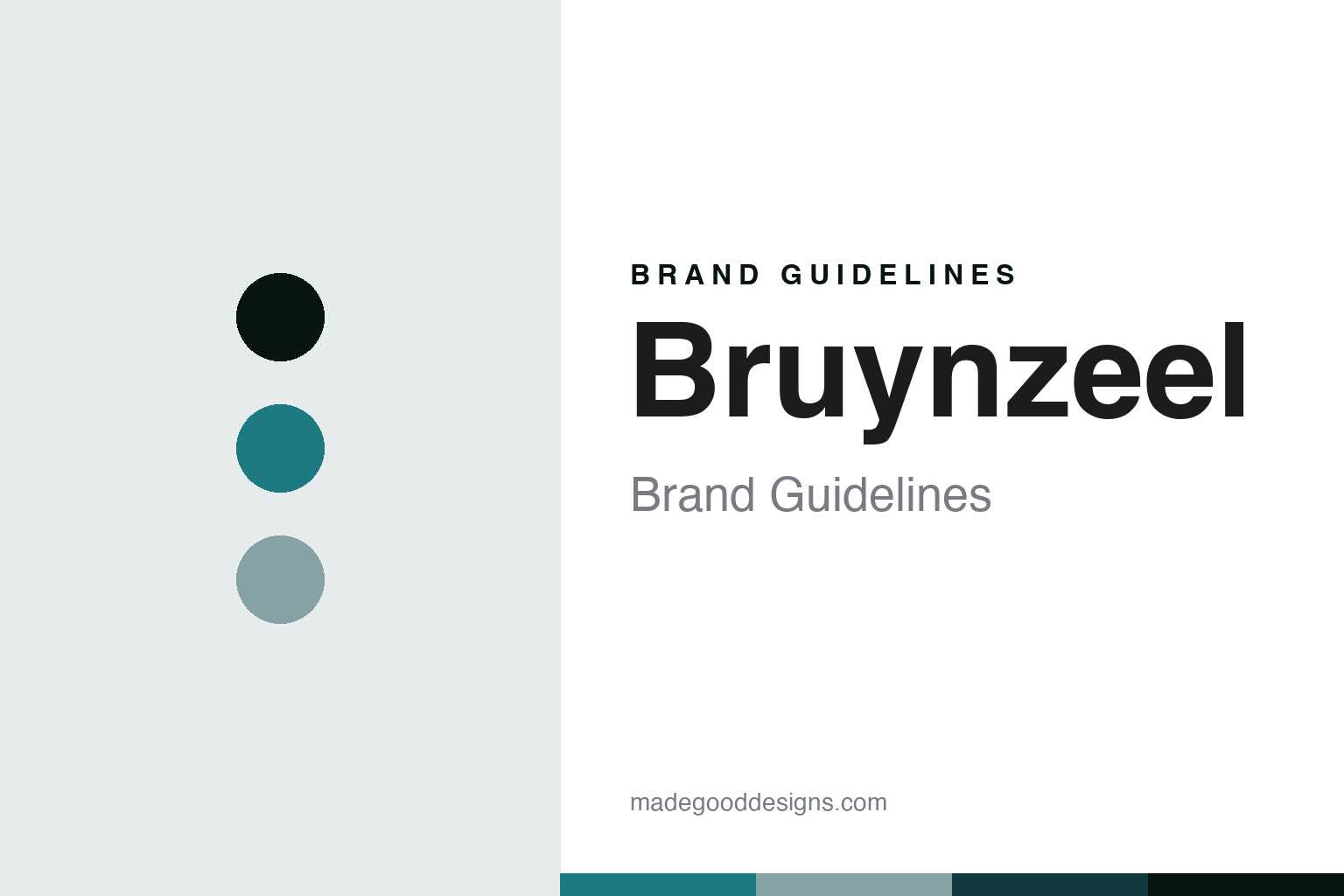
Bruynzeel Brand Guidelines
The Dutch schoolroom pencil.
Aa
Two constants: a turquoise palette and a schoolroom-sans register. Abstract homage — not a Bruynzeel colour, label or barrel.
The Dutch schoolroom pencil
Bruynzeel is the Dutch heritage coloured-pencil brand, making pencils since 1948 and now part of Royal Talens under Japan’s Sakura.
Bruynzeel is a lesson in how a colour core becomes a nation’s schoolroom staple. In the Netherlands it is the pencil generations grew up with — a Dutch household name for coloured and graphite pencils, from children’s colouring up to accessible artist grades. Its answer to how a colour is made a pencil is practical and Dutch: case a dependable colour core in cedar, and be the pencil in every schoolbag. A colour core made for a country’s classrooms.
Its identity is the Dutch schoolroom pencil. Bruynzeel’s Design range — colour, aquarel and pastel pencils — and its graphite are the work it is known for. A core, made familiar. A pencil woven into how the Netherlands learned to draw.
(Honest notes, so the story stays precise, because its origin and ownership are easy to get wrong. Bruynzeel began making pencils in 1948, when the post-war Dutch government asked Cornelis Bruynzeel — a wood expert whose family timber firm dated to 1897 — to produce pencils that had previously been imported. Its ownership has since moved abroad: the pencil business was bought by Japan’s Sakura Color Products in 1997, and in 2016 the brand was folded into the Royal Talens portfolio (Royal Talens itself has been Sakura-owned since 1991) — so it rolls up to Sakura, of Osaka, and is not Dutch family-owned. One honest gap: no official source states where the pencils are made today, so we do not claim “made in the Netherlands” (its wood is cedar, a material, not an origin). It is a mid-range, accessible brand; its flagship is Bruynzeel Design. We also avoid a common error — there is no Bruynzeel “Dutch Masters” pencil line (that theming belongs to the sibling Talens brands Rembrandt and Van Gogh) — and we keep it distinct from the separate Bruynzeel kitchens and storage businesses that share the family name. Its name and line names are its IP, described but never reproduced, and there is no official brand hex — these tones are an unofficial interpretation. This is design commentary and does not promote any product.)
Colour
Bruynzeel lives in a turquoise palette. Click a swatch to copy the hex.
Bruynzeel’s identity is friendly, bright and Dutch — a turquoise, an ink, an aqua, a teal, and a paper. The palette leans turquoise and aqua: the register of a cheerful schoolroom colour and an accessible design pencil. It signals familiarity and warmth over prestige. The honest caveat: with no published brand hex, these values are an original, unofficial interpretation, not first-party colours.
The lesson is a turquoise palette signals a schoolroom, accessible identity. Bruynzeel’s world is a friendly, everyday, Dutch-heritage object. For designers, it is a reminder that a bright turquoise and a soft aqua can carry a brand built on the classroom — the colour of a cheerful pencil and the calm of a school desk. Because these tones can fail as small text, keep type dark and let the colour live in the accents, palette and band. The takeaways: be familiar; stay accessible; be honest about ownership and origin; and treat any single hex as unofficial.
Typography
The register is a schoolroom sans — friendly, plain, warm.
Bruynzeel’s identity carries a friendly, plain, warm spirit — an everyday schoolroom brand, not a luxury house. A schoolroom sans captures the mood: approachable, clear and cheerful, the register of a pencil in every classroom. Set in a turquoise palette, the schoolroom sans feels friendly and plain — exactly the personality Bruynzeel carries. It is warm rather than exclusive, mirroring an accessible colour core. (Bruynzeel’s real labels and line names are things we describe but do not reproduce, and the exact typeface is not ours to use.) Because it is not ours to use, the honest description is “a schoolroom-sans spirit,” shown here in a stand-in. The type behaves like the house: friendly, plain and warm.
Aa
A schoolroom-sans spirit — friendly and plain. (Specimen set in DM Sans, a schoolroom-sans STAND-IN; NOT the Bruynzeel wordmark or any label.)
The coloured-pencil houses
Bruynzeel stands for the familiar pencil, honestly owned.
Bruynzeel is a lesson in how a colour core becomes a familiar friend. A turquoise palette, a schoolroom sans and an accessible core make one thing — the pencil a country grew up with — the whole house: friendly, bright and Dutch. The familiarity is the differentiator, and the schoolroom heritage is the meaning. The point is a pencil born when a nation needed to make its own after the war, and that became a household name by being dependable and everywhere.
Put to work, the identity is familiarity as design. A colour house in this spirit would win on being the trusted everyday choice, and be candid about a complicated ownership: a Dutch heritage brand now under Royal Talens and, above it, Sakura of Japan. It would decline to claim a manufacturing origin it cannot document, and it would not borrow a heritage — or a line name — that is not its own. A brand learning from it would see that being a nation’s familiar pencil is a durable identity — that the pencil a whole country first drew with earns a warmth no premium marque can buy — and that being precise, pencils since 1948, Sakura-owned since 1997, Royal Talens portfolio since 2016, country of manufacture undisclosed, keeps the story honest. A brand learning from it would also resist inventing product lines: there is no “Dutch Masters” Bruynzeel, and saying so plainly is better than repeating a myth. The lesson Bruynzeel teaches is that familiarity can hold an identity: the schoolroom heritage gives it warmth, and the honesty about ownership keeps it credible. The familiarity is the personality, and the everyday colour is the proof.
For designers and brand-builders, Bruynzeel holds the schoolroom pole in this vein of the coloured-pencil houses, from the Netherlands: be the familiar choice, and own the complicated facts honestly. The lessons: earn everyday trust; disclose the ownership chain; don’t claim an undocumented origin; don’t invent lines; and never reproduce a protected label. It is also a reminder to stay precise: Bruynzeel is a Dutch heritage coloured-pencil brand, making pencils since 1948 and now part of Royal Talens under Japan’s Sakura — with the palette here an unofficial interpretation. Bruynzeel made familiarity the identity — proof that being a country’s pencil, honestly owned, can be the difference.
Explore & save
Keep Bruynzeel’s identity on hand — save it to a board in the Made Good inspiration library.
Bruynzeel identity set
Pin the turquoise palette and the schoolroom-sans register to your own board.