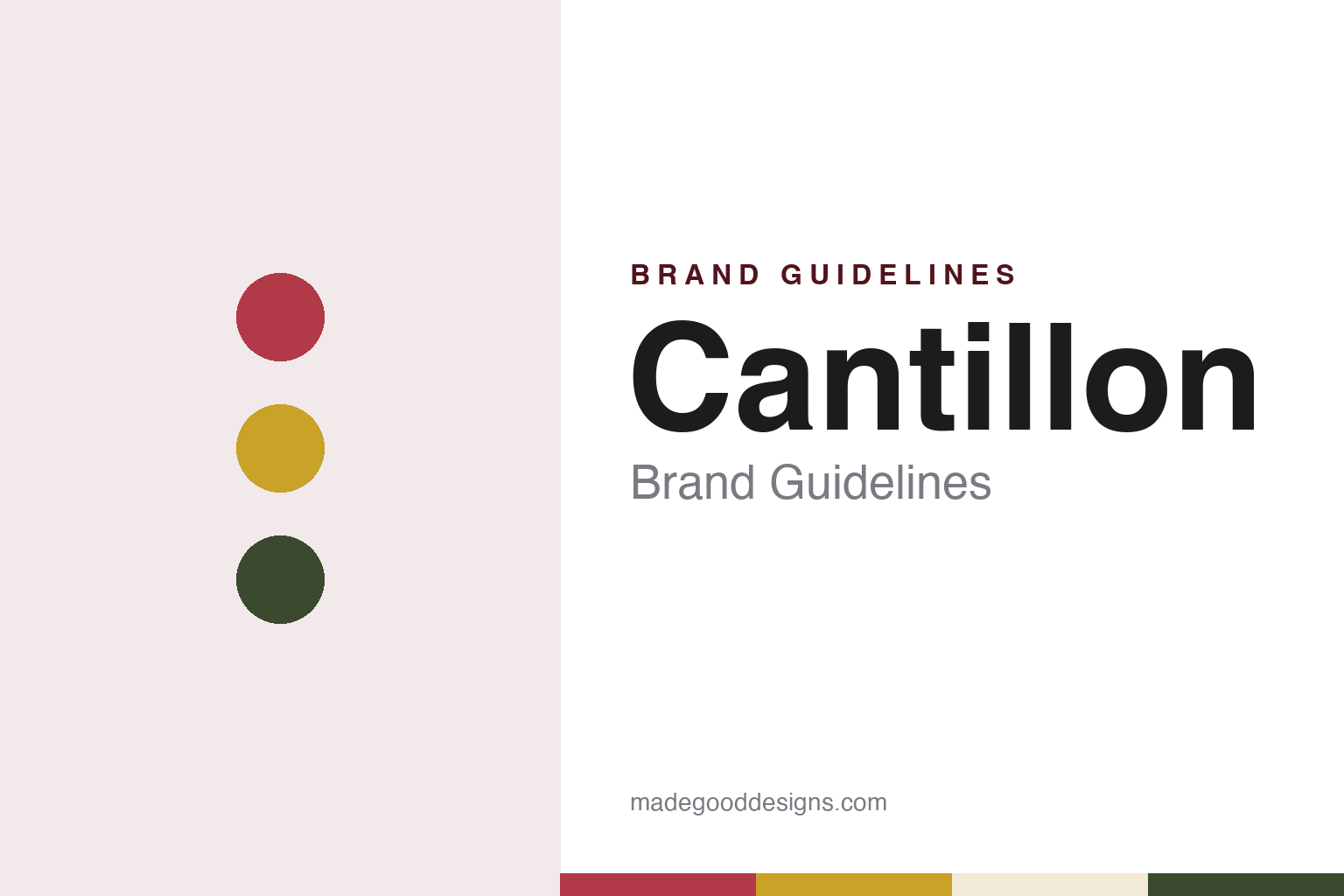
Cantillon Brand Guidelines
The Van Roy family’s lambic brewery in Anderlecht, founded 1900.
Aa
Two constants: a kriek red, gueuze gold and barrel green palette and a Belle Époque display serif register. Abstract homage — not a Cantillon product or mark; no label, logo or bottle is reproduced.
A family brewery in Cureghem
From the Cantillon family to the Van Roys.
Cantillon is a small family brewery in Anderlecht, in the Cureghem district of Brussels, that makes only lambic and the beers blended from it. English Wikipedia, citing Ben McFarland’s World’s Best Beers (2009), says it was founded in 1900 by Paul Cantillon, whose father was also a brewer, and his wife Marie Troch. The company describes itself as a family brewery making lambic, gueuze, faro and kriek “where nothing has changed since 1900 when it was founded,” with red copper kettles and barrels, some more than a century old.
The Van Roy name arrived by marriage. The Brussels beer historian Eoghan Walsh, writing on his site Brussels Beer City in 2023, says Jean-Pierre Van Roy met Claude Cantillon in 1962, that her father Marcel owned the brewery, and that before the end of the 1960s Jean-Pierre had agreed with Marcel to take it over and keep it going while other breweries were disappearing. French Wikipedia places his succession in the early 1970s and says business was poor at the time.
The times were against him. Walsh describes how sweetened, pasteurised lambic, made on an industrial scale by Belle-Vue, had pushed most of the city’s traditional producers out. French Wikipedia says that after steadying the business, Jean-Pierre Van Roy chose to return to traditional methods and recipes. English Wikipedia, citing The Oxford Companion to Beer (2011), says the one major change since the brewery’s founding has been a switch to organic ingredients in 1999.
The next generation took over in turn. Walsh writes that by 2004 Jean-Pierre’s son Jean Van Roy had taken over from his father, and that Cantillon was by then the only commercial brewery left in Brussels. The company today signs its website as the Cantillon–Van Roy family and calls itself the last lambic brewery in Brussels.
Colour
A working museum and beer that ferments on its own.
Cantillon’s best-known product is a process. Lambic is not pitched with cultivated yeast; English Wikipedia, citing The Oxford Companion to Beer, says Cantillon’s wort is left to ferment spontaneously in open, shallow vessels in the attic called coolships, then aged in oak or chestnut casks, blended from batches of different ages, bottled and conditioned in the bottle. The grist, McFarland wrote, is about two-thirds malted barley to one-third unmalted wheat. Half of the brewery’s output is gueuze, the Oxford Companion says, the blend of young and old lambic that referments in the bottle.
Fruit is added to lambic rather than to wort. The brewery describes its Kriek as lambic blended with sour cherries and its Rosé de Gambrinus as lambic with raspberries; Grand Cru Bruocsella is a vintage lambic from a single brewing season; Iris, the company says, is a spontaneously fermented beer brewed only with pale-ale malt. Cuvée Saint-Gilloise, the company says, is two-year-old lambic in which fresh Hallertau Mittelfrüh hops have been steeped.
The museum is part of the brand’s story. The company says the non-profit Brussels Gueuze Museum was founded in 1978 at the initiative of Jean-Pierre Van Roy, with a few friends, with the plain aim of saving the brewery from bankruptcy at a time when spontaneously fermented beers were seen as old-fashioned. Guided tours, exhibitions and public brewing sessions turned Cantillon into a working museum, the company says, and carried its name well beyond Belgium; the next public brewing session listed on its site is on 14 November 2026. The museum also publishes a quarterly newsletter, Grummelinkske, written by Jean-Pierre Van Roy.
Typography
Design and documentation.
The seven brands in this group are all Trappist, lambic and craft brewers: Rochefort, Westvleteren, La Trappe, Cantillon, Boon, 3 Fonteinen and Russian River Brewing Company. Beer brands in general sit at many different points in the trade, from breweries run inside monastic communities to family businesses that still carry a founder’s name and companies that now belong to much larger drinks groups, and a single beer can be poured everywhere from a village café to a city bar.
A beer brand’s identity is usually carried less by a single bottle than by a label, a name and the place it promises, because the company behind the name may have changed hands, moved its brewing or grown far beyond the place where it started. That makes the questions behind each name worth asking plainly: who started it, who owns it now, and where its beer is actually brewed and bottled.
Each guide separates what independent sources record from what the brewery says about itself — its founding story, its owners over time, where its beer is made and how its labels have changed — and marks plainly what rests only on the brewery’s own word.
Aa
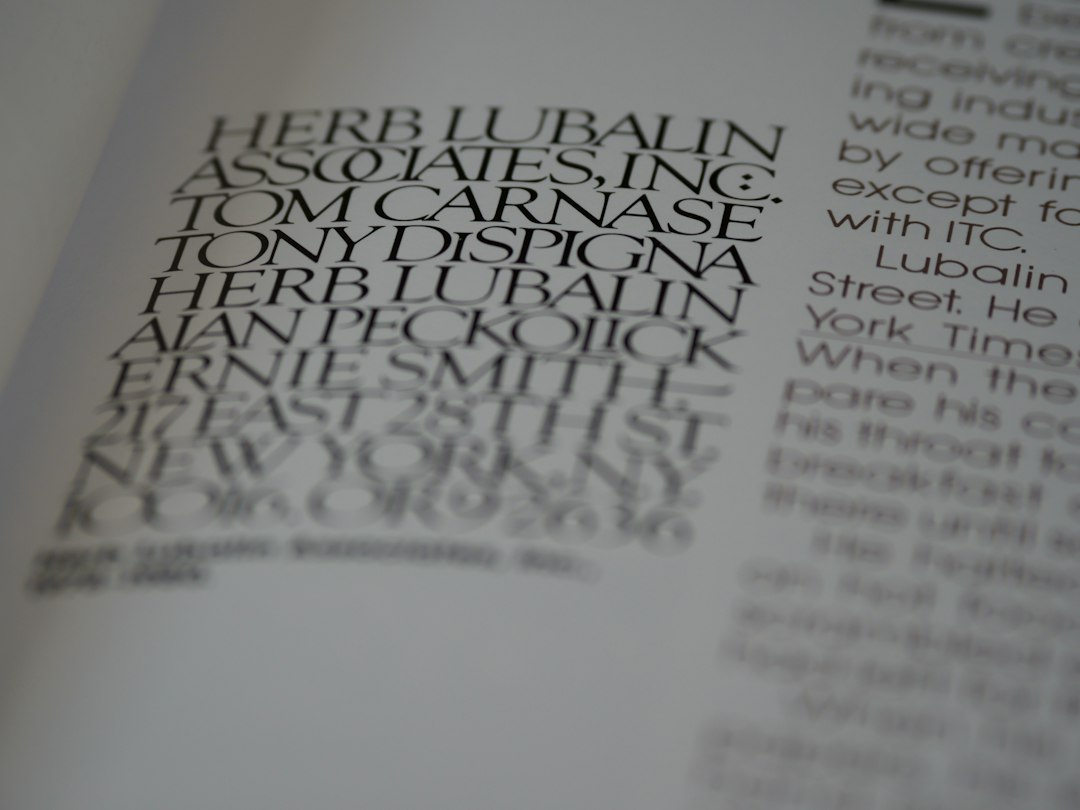
A high-contrast display serif for a Belle Époque Brussels brewery. (Specimen set in Playfair Display, a serif STAND-IN; NOT the Cantillon logo.)
Cantillon
A brewery that grows by adding cellars, not brands.
Demand has outrun supply. The museum’s own history says the brewery can no longer keep up with demand and has become an international tourist attraction, and quotes Jean-Pierre Van Roy recalling that he once almost had to break down doors to sell his beer. BeerPulse reported in August 2014 that Van Roy had announced extra maturation space in a new building, which English Wikipedia says was expected to double production by 2016–17. Its beer page lists a Gueuze 125, made to commemorate the brewery’s 125th anniversary.
The brewery’s ties to its city run through its labels and collaborations. Walsh reports that Cantillon long had an advertising board beside the pitch at Union Saint-Gilloise, that in 2021 it brewed a special edition of its Cuvée des Champions to mark the club’s promotion, and that in January 2022 it joined the Brussels brewery En Stoemelings and the club on a beer called “1897,” after the year the club was founded. The brewery also lists collaborations with wine producers, among them Cascina degli Ulivi, Cantina Giardino and Domaine Stéphane Tissot.
The name needs a little care online. Cantillon is also the surname of the eighteenth-century economist Richard Cantillon; the brewery’s own site is cantillon.be, which it shares with the Brussels Gueuze Museum.
For a design guide, Cantillon shows how a brewery can make its premises, its process and its family history the brand, with a museum where other companies might have an advertising campaign. Compare two fellow lambic producers, Boon and 3 Fonteinen. For this guide we use kriek red, gueuze gold and barrel green with a display serif, an unofficial interpretation; no product or logo is reproduced.
Explore & save
Keep Cantillon’s identity on hand — save it to a board in the Made Good inspiration library.
Cantillon identity set
Pin the Cantillon kriek red, gueuze gold and barrel green palette and the Belle Époque display serif register to your own board.