Boon Brand Guidelines
The Lembeek lambic brewery Frank Boon built from a geuze blendery.
Aa
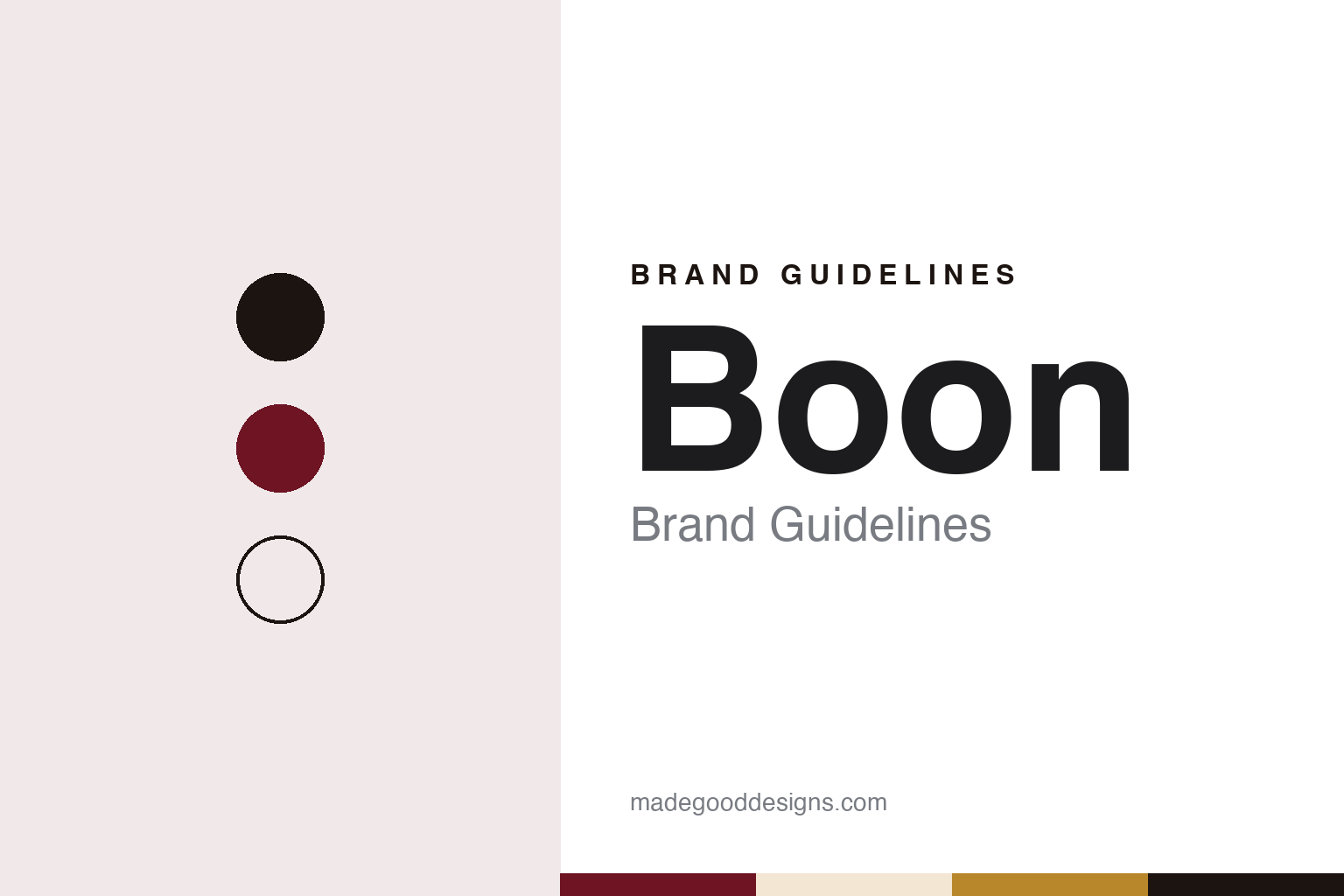
Two constants: a kriek red, geuze gold and cellar black palette and an old-style serif register. Abstract homage — not a Boon product or mark; no bottle, label or logo is reproduced.
A blender in Halle
From René De Vits’s cellar to the village that gave lambic its name.
Boon began with a blender rather than a brewery. The company’s own history says that in 1972 Frank Boon, then a young man travelling around Belgium, became attached to geuze and lambic and started blending geuze in a small cellar in Halle, inspired by René De Vits, whom it describes as the last geuze blender there. In 1975, the company says, De Vits saw little future in geuze and Frank Boon took over his business as an independent blender, the date Boon treats as its starting point.
The Belgian public broadcaster VRT, writing in November 2021, gave the same outline: Frank Boon started as a lambic blender in 1975 and in 1978 took over the company of René De Vits, the last blender in Lembeek. English Wikipedia lists 1978 as the year the brewery opened and says Boon bought the De Vits brewery, café and geuze blendery when René De Vits and his sister Jeanne decided to retire. The company dates its best-known blend, the Oude Geuze Mariage Parfait, a geuze made from lambics of different ages, to 1977, and says the blendery moved to Hondzocht, part of Lembeek, in 1978.
Lembeek matters to the story. Boon’s history notes that the word lambic is said to come from the village, which sits in the Pajottenland south-west of Brussels, an area VRT describes as known for its many lambic makers. Until its first brew in 1990, the business the company describes was a blendery: it aged and blended lambic rather than brewing it.
Colour
A brewhouse, a partner and a cellar of foeders.
The company says Frank Boon started building his own brewhouse on a new site in the centre of Lembeek in 1986, and that the first brew took place in the autumn of 1990 on second-hand equipment. VRT also dates the start of brewing to autumn 1990. English Wikipedia says the move to Lembeek was made in partnership with Palm, which took a 50 per cent stake, and that in 2014 this stake passed to Palm’s parent company, Diepensteyn; it adds that Boon was not part of Palm’s 2016 sale to the Dutch brewer Bavaria, and that the distribution arrangement between Palm and Boon ended in 2016. Boon’s own timeline names Jan Toye as having supported the brewhouse as a cultural project and working with the family for 32 years, and says he returned his shares to the Boon family in 2021.
The brewery’s growth is measured in oak. The company says a second foeder warehouse in 2000 added 19 large oak vats to the 17 already in place, a third in 2011 took the count to 130, and a fourth across the River Zenne in 2018 brought it to 161 foeders holding about 2.1 million litres of lambic. A new brewhouse opened in April 2013, which the company says more than tripled capacity; it marked the occasion with its first single-vat “Monoblend,” Oude Geuze Boon VAT 44, drawn from foeder number 44. In 2014 Boon set up its own coopers’ workshop to maintain its vats, and in 2021, it says, it bought ten Belgian oak logs about 250 years old for the same purpose.
The line-up stays close to the old categories. Wikipedia describes Boon’s output as mainly geuze and kriek, alongside a faro and the Duivelsbier traditionally associated with Halle. The company points to the European Union’s 1997 Traditional Speciality Guaranteed protection for traditional lambic beers, including Oude Geuze and Oude Kriek, which ties the “Oude” name to traditional methods and refermentation in the bottle. It launched Oude Geuze Boon Black Label in 2015 for its fortieth anniversary and, in 2019, says it made Oude Kriek Boon with Schaarbeek cherries for the first time since 1989.
Typography
Design and documentation.
The seven brands in this group are all Trappist, lambic and craft brewers: Rochefort, Westvleteren, La Trappe, Cantillon, Boon, 3 Fonteinen and Russian River Brewing Company. Beer brands in general sit at many different points in the trade, from breweries run inside monastic communities to family businesses that still carry a founder’s name and companies that now belong to much larger drinks groups, and a single beer can be poured everywhere from a village café to a city bar.
A beer brand’s identity is usually carried less by a single bottle than by a label, a name and the place it promises, because the company behind the name may have changed hands, moved its brewing or grown far beyond the place where it started. That makes the questions behind each name worth asking plainly: who started it, who owns it now, and where its beer is actually brewed and bottled.
Each guide separates what independent sources record from what the brewery says about itself — its founding story, its owners over time, where its beer is made and how its labels have changed — and marks plainly what rests only on the brewery’s own word.
Aa
An old-style serif — a stand-in for a cellar-and-label register. (Specimen set in Fraunces, a serif STAND-IN; NOT the Boon logo.)
Boon
A family brewery again, run by the next generation.
The handover was gradual. The company says Jos Boon, Frank’s eldest son and a bio-engineer, joined the brewery in 2012, and that his brother Karel Boon joined full time in 2017. Boon’s own timeline says Frank retired on 1 January 2021 and that Jos and Karel took over; VRT reported on 6 November 2021 that Frank Boon had officially handed the keys of the business to his two sons the previous day, that Boon remained a family business with eighteen employees, and that he planned to keep giving input on the brews. The family marked the change with L’Apogée, a geuze that VRT said was blended from lambics matured in both the oldest and the newest foeders.
Ownership followed the same line. The company says Jan Toye returned his shares to the Boon family in 2021, and VRT described Boon that year as a family business; the beers are brewed and blended at the brewery in Lembeek. In 2018, the company says, Boon joined the Belgian Family Brewers association. The brand’s core is the brewery itself: an independent blender’s surname that became the name of a brewery in the village most closely linked to lambic.
For a design guide, Boon shows how a producer can build a brand on age, wood and place rather than on reinvention: the blend names, the foeder numbers and the “Oude” designation do much of the work. Compare Cantillon, the Brussels lambic brewery, and 3 Fonteinen, the Beersel blender that also began brewing its own lambic. For this guide we use kriek red, geuze gold and cellar black with a serif, an unofficial interpretation; no product or logo is reproduced.
Explore & save
Keep Boon’s identity on hand — save it to a board in the Made Good inspiration library.
Boon identity set
Pin the Boon kriek red, geuze gold and cellar black palette and the old-style serif register to your own board.