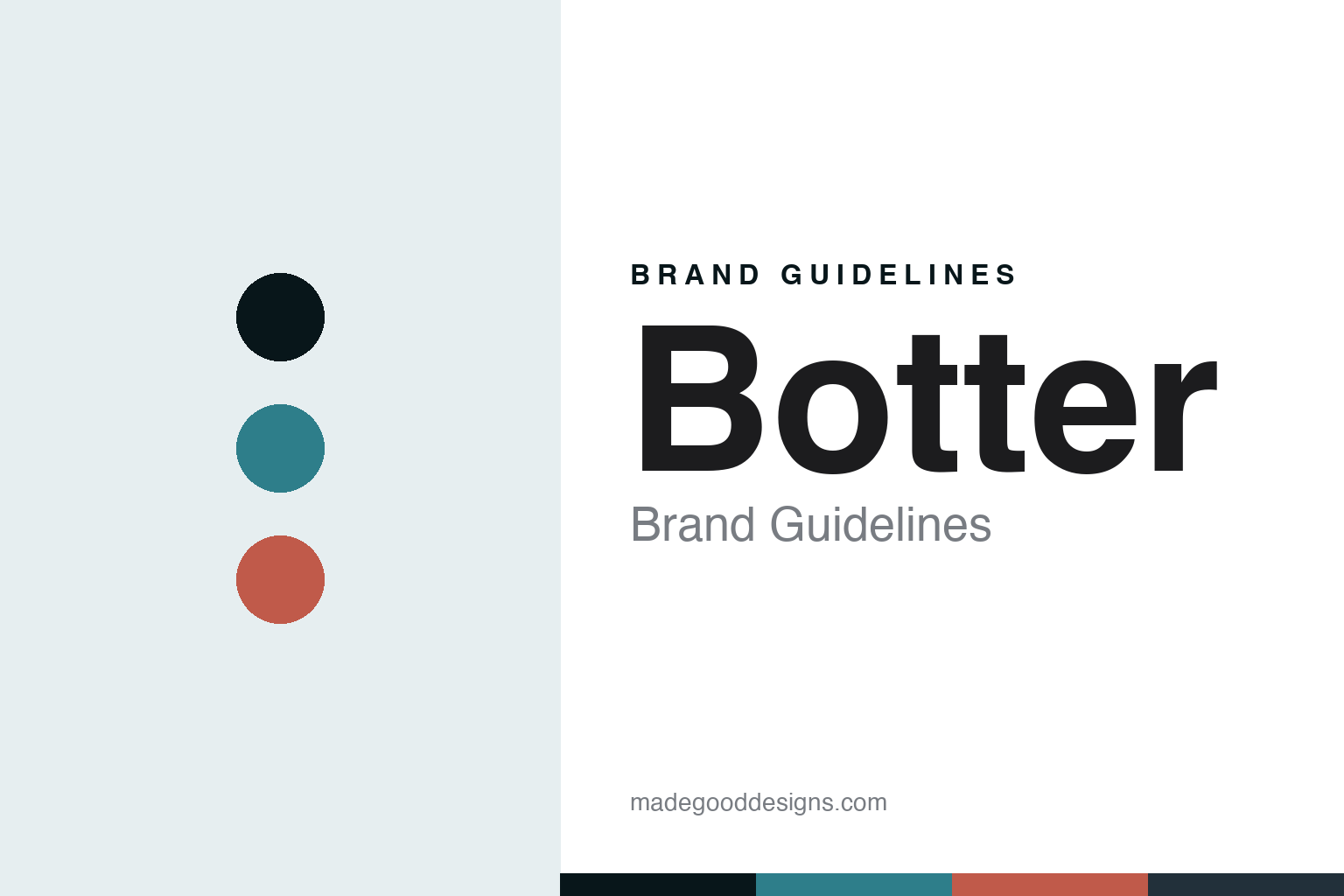
Botter Brand Guidelines
Caribbean couture.
Aa
Two constants: a marine-and-coral palette and a conceptual sans register. Abstract homage — not a Botter piece, motif or wordmark.
Caribbean couture
Botter fuses Caribbean culture with European couture technique.
Botter is a lesson in a heritage and a technique as the identity. An Antwerp-based, Paris-showing house, it built its name on a single, self-coined idea: “Caribbean Couture,” fusing Caribbean culture — music, food, literature, diaspora — with rigorous European tailoring and couture craft.
Its identity is Caribbean couture. Botter’s inventive tailoring, its nautical and marine motifs and its ocean-conservation ethos are the work it is known for. Heritage, made couture. A brand built by a duo on their own lived culture.
(Honest notes, because the framing and the facts both need care. Botter is the label of the design duo Rushemy Botter, born in Curaçao in the Dutch Caribbean, and Lisi Herrebrugh, who is Dutch-Dominican; both trained at the Royal Academy of Fine Arts in Antwerp, and the house is Antwerp-based but shows in Paris, so “a Dutch label” or flatly “a Belgian brand” are both imprecise — it is most honest to call it an Antwerp-based, Paris-showing house founded by a Dutch-Caribbean duo, around 2017. Its signature is “Caribbean Couture,” the duo’s own concept fusing Caribbean culture with European couture technique, with nautical and windsurf motifs and an ocean-conservation ethos, including a coral-regeneration project reported in Curaçao — which we attribute as the brand’s stated initiative. A prize point to get right: Botter was an LVMH Prize finalist in 2018, not a winner — the win people forget is the ANDAM Grand Prize in 2022. The pair were creative directors of Nina Ricci and left in early 2022; Nina Ricci is owned by Puig, but Puig does not own Botter, and their 2026 appointment as creative directors of G-Star RAW is an employment role, not ownership of their own label, which remains independent. On production, the manufacturing country is not publicly disclosed, so we do not assert one. The Caribbean heritage is the founders’ own lived culture, described with respect rather than as exotica; the wordmark and collaborators’ marks are IP we describe but never reproduce, and there is no official brand hex — these tones are an unofficial interpretation. This is design commentary and does not promote any product.)
Colour
Botter lives in a marine-and-coral palette. Click a swatch to copy the hex.
Botter’s identity is oceanic, warm and inventive — a marine, an ink, a coral, a graphite, and a sea foam. The palette leans marine and coral: the register of the sea and a reef, echoing the brand’s nautical motifs and ocean ethos. It signals heritage and nature over gloss. The honest caveat: with no published brand hex, these values are an original, unofficial interpretation, not first-party colours.
The lesson is a marine-and-coral palette signals a Caribbean, oceanic identity. Botter’s world is an oceanic, warm, inventive object. For designers, it is a reminder that a palette can carry both heritage and ethos — that a brand about the Caribbean and the sea can use marine and coral to hold its culture and its conservation message at once. Because a mid marine can fail as small text, keep type dark and let the colour live in the accents, palette and band. The takeaways: fuse a heritage and a craft; let the palette hold both; carry your ethos; and treat any single hex as unofficial.
Typography
The register is a conceptual sans — inventive, precise, modern.
Botter’s identity carries an inventive, precise, modern spirit — a conceptual object, not a plain one. A conceptual sans captures the mood: clean, contemporary and a little unexpected, the register of couture technique meeting a fresh idea. Set in a marine-and-coral palette, the conceptual sans feels inventive and precise — exactly the personality Botter carries. It is considered rather than decorative, mirroring engineered tailoring. (Botter’s real garments, motifs and wordmark are things we describe but do not reproduce, and the exact typeface is not ours to use.) Because it is not ours to use, the honest description is “a conceptual-sans spirit,” shown here in a stand-in. The type behaves like the brand: inventive, precise and modern.
Aa
A conceptual-sans spirit — inventive and precise. (Specimen set in Sora, a conceptual-sans STAND-IN; NOT the Botter wordmark.)
A heritage as identity
Botter stands for Caribbean couture.
Botter is a lesson in making a heritage and a technique the identity. A marine-and-coral palette, a conceptual sans and the “Caribbean Couture” idea make one fusion the whole brand — oceanic, warm and inventive. The fusion is the differentiator. The differentiator is joining two things fully — the founders’ Caribbean culture and rigorous European couture — into a single, ownable concept carried through tailoring, motif and ethos.
Put to work, the identity is a fusion as design. A house building in this spirit would take a heritage that genuinely belongs to it and a craft it has truly mastered, then fuse them into one clear idea, so the customer buys into a culture and a technique at once, not a trend. The lesson Botter teaches is that a lived heritage plus real couture skill can build a brand: the culture gives it meaning, and the craft gives it credibility. The heritage is the personality, and the couture is the proof — treated as the founders’ own culture, not decorative exotica.
For designers and brand-builders, Botter offers a clear takeaway: fuse a heritage you live with a craft you master. The lessons: build one honest concept; ground it in real culture and real skill; carry your ethos; and be honest about the story. It is also a reminder to stay accurate: Botter is an Antwerp-based, Paris-showing house founded around 2017 by Rushemy Botter and Lisi Herrebrugh, it was an LVMH Prize finalist in 2018 (its actual win was the ANDAM Grand Prize in 2022), Puig owns Nina Ricci and not Botter, and its manufacturing country is undisclosed — the palette here is an unofficial interpretation. Botter made Caribbean couture the brand — proof that a heritage can be the difference.
Explore & save
Keep Botter’s identity on hand — save it to a board in the Made Good inspiration library.
Botter identity set
Pin the marine-and-coral palette and the conceptual-sans register to your own board.