Aarong Brand Guidelines
The village fair that became a craft and fashion chain.
Aa
Two constants: an indigo, madder and jute palette and a craft serif register. Abstract homage — not an Aarong product or mark; no logo, textile or shop sign is reproduced.
Village fair
A shop opened so that artisans were paid on delivery.
Aarong is Bengali for “village fair.” The name belongs to the retail chain of BRAC, the Bangladeshi development organisation, and its origins lie in a payment problem rather than a fashion idea. In a history published for the chain’s fortieth year, the Dhaka business site Future Startup reported on 28 October 2018 that in 1976 BRAC had organised groups of women in Manikganj and Jamalpur, trained them in sericulture and in making handmade goods such as block-printed and embroidered cushion covers and bed covers, and begun supplying shops in Dhaka.
Those shops paid only once the goods were sold, so the women could wait months for their money, Future Startup reported. BRAC’s answer was a shop of its own, opened in 1978. Future Startup places it on Mirpur Road in Dhanmondi; Aarong’s own history places its opening outlet in Shukrabad, the neighbourhood beside that road, and in 2025 The Daily Star quoted the company recalling its “modest beginnings in Shukrabad, Dhanmondi.”
The craft range grew from work begun in 1976 by Ayesha Abed, the wife of BRAC’s founder Fazle Hasan Abed, who identified and tried out crafts that women could make at home, including Nakshi Kantha quilts, embroidery, baskets, mats and goods in cane, bamboo and jute, according to Future Startup. The payment rule stayed at the centre of the model. Tamara Hasan Abed, then a senior director at BRAC, told the site in January 2018 that from its opening day Aarong paid its artisans and producers when products were delivered, taking on the risk of financing and selling the stock itself.
Colour
Workshops, a foundation and a fashion label.
The late 1970s and early 1980s were spent building the product range, Future Startup reported. BRAC studied and catalogued the designs and motifs of traditional crafts, experimented with local forms and materials, hired master craftspeople to train village women, and set up a textile design and service workshop in Manikganj to work on stitching, weaving and dyeing. It also began making garments that had previously been imported, such as the men’s panjabi.
In 1982 BRAC set up the Ayesha Abed Foundation to give women in the craft programme a workplace, finance, technical help and training. Its Manikganj centre opened on 3 September 1983, and in the same year Aarong ran four shops and began exporting a small share of its goods to fair-trade organisations, according to Future Startup. Aarong says the foundation today runs 15 craft production centres and more than 820 hand-embroidery sub-centres in rural and semi-urban areas, and that it also buys from independent producers, mostly small family workshops that often specialise in a single skill such as woodwork.
During the 1990s Aarong began to present itself as a fashion brand, staging photo shoots, fashion shows and exhibitions, and it took part in an international fashion show in 1999. A difficult period followed: Future Startup reported management problems in the late 1990s and early 2000s, and a restructuring between 2001 and 2004 that covered costing, pricing, design, marketing and new products.
By its fortieth year in 2018, Future Startup counted 21 shops in Dhaka, Chittagong, Comilla, Khulna, Sylhet, Narayanganj, Bogra and Mymensingh, plus an online store, more than 65,000 artisans supplying the chain and a staff of over 3,800. Crafts such as Nakshi Kantha and Jamdani weaving sit at the centre of its ranges, alongside clothing, jewellery, leatherwork, pottery, baskets and home goods.
Typography
Signs, formats and owners.
Pakistani and Bangladeshi fashion and retail brands present themselves through a few recurring touchpoints: the shop sign over a mall unit, the logo on a carrier bag, the seasonal look-book and the corporate page that names a founder or a parent company. Some marks point back to craft — Khaadi, for example, says the hands in its logo symbolise its heritage in handloom craft — while others set a short name in plain capitals, as Sapphire does.
The formats vary widely. Some of the brands in this group began as a single shop and grew into mall flagships at home and abroad; others are the retail arms of textile mills, and can draw on a parent’s own spinning, weaving and printing before cloth reaches a store, as Sapphire describes. Alongside them sit supermarket chains, craft-led lifestyle stores and online marketplaces, each with its own way of showing a name on a shopfront, a shelf or a screen.
Collections are named in the companies’ own terms. Lawn, prêt and unstitched fabric appear again and again in their catalogues, and the balance between them has shifted: Profit by Pakistan Today reported in 2017, from Pakistan Bureau of Statistics data, that ready-made clothes took 13 percent of household clothing spending in 2002 and 33 percent in 2016, while unstitched cloth and accessories fell from more than 68 percent to 50 percent.
Ownership is set out plainly in each guide: family-owned, founder-owned, mill-owned or group-owned, with dates where a dated source gives them. Each guide separates what independent press and official filings record from what the company says about itself, and the palettes and type pairings shown are an unofficial interpretation rather than a reproduction of any brand’s colours or marks.
Aa
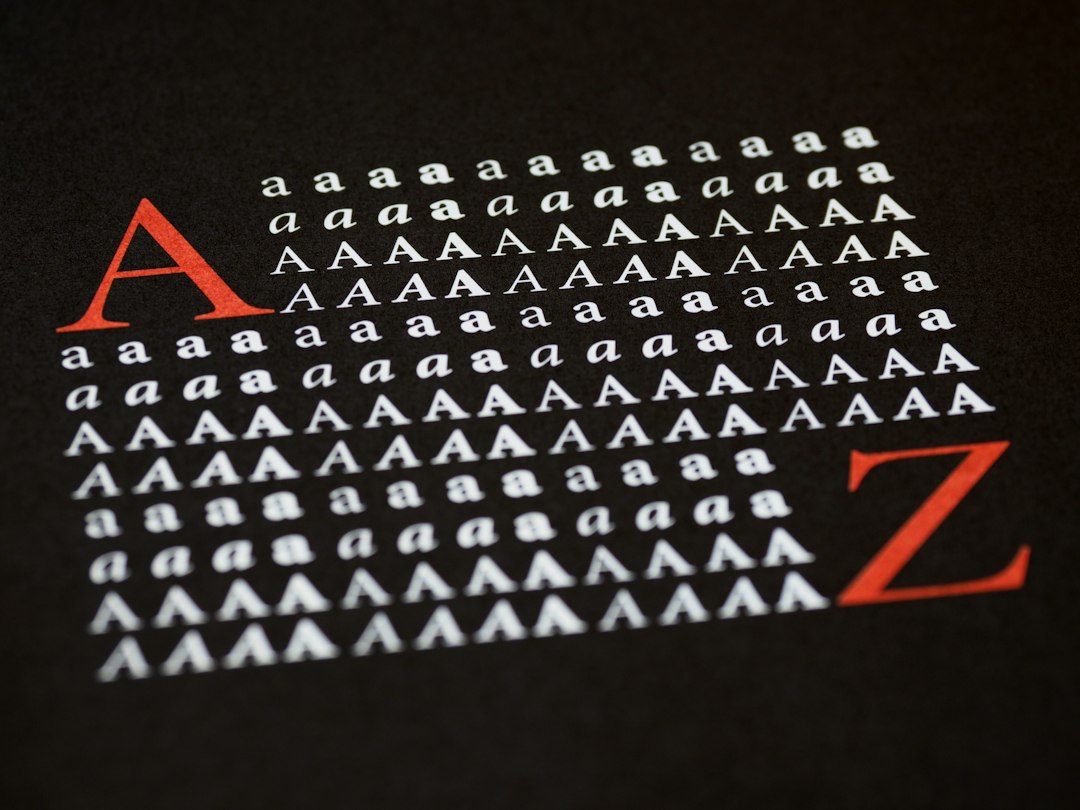
A soft, crafted serif for a heritage retailer. (Specimen set in Fraunces, a serif STAND-IN; NOT the Aarong logo.)
Aarong
One parent, several labels.
Aarong belongs to BRAC, which presents it as one of its social enterprises, and in March 2024 Bangladesh Post named Tamara Hasan Abed as managing director of BRAC Enterprises when she opened the chain’s outlet in Barishal, a four-storey, 13,000-square-foot shop that the company described as its 29th and as completing its presence in every division of Bangladesh.
The chain now trades under several names. In 2018 it launched the TAAGA and HERSTORY labels, and in July 2018 TAAGA opened a separate shop on Saat Masjid Road in Dhanmondi aimed at young men, Future Startup reported. The Barishal shop carried TAAGA, TAAGA MAN, Aarong Earth and the Grassroots Café, alongside women’s, men’s and children’s clothing, home décor, footwear and jewellery. Aarong also runs a loyalty scheme, My Aarong Rewards, and says it launched its e-commerce platform in 2014.
The most visible change to the shop estate came in March 2025. The Daily Star reported that Aarong was opening a flagship in Dhanmondi of more than 60,000 square feet over eight floors, replacing its Dhanmondi 2 outlet about 400 metres away. The store was built around craft installations, including a four-storey Nakshi Kantha and a wall of clay pottery, with a children’s wear section and the TAAGA, TAAGA MAN and HERSTORY labels; the paper put the chain at 30 outlets at that point. Aarong’s own pages now give 33 stores across Bangladesh and more than 87,000 artisans, figures that rest on the company’s word.
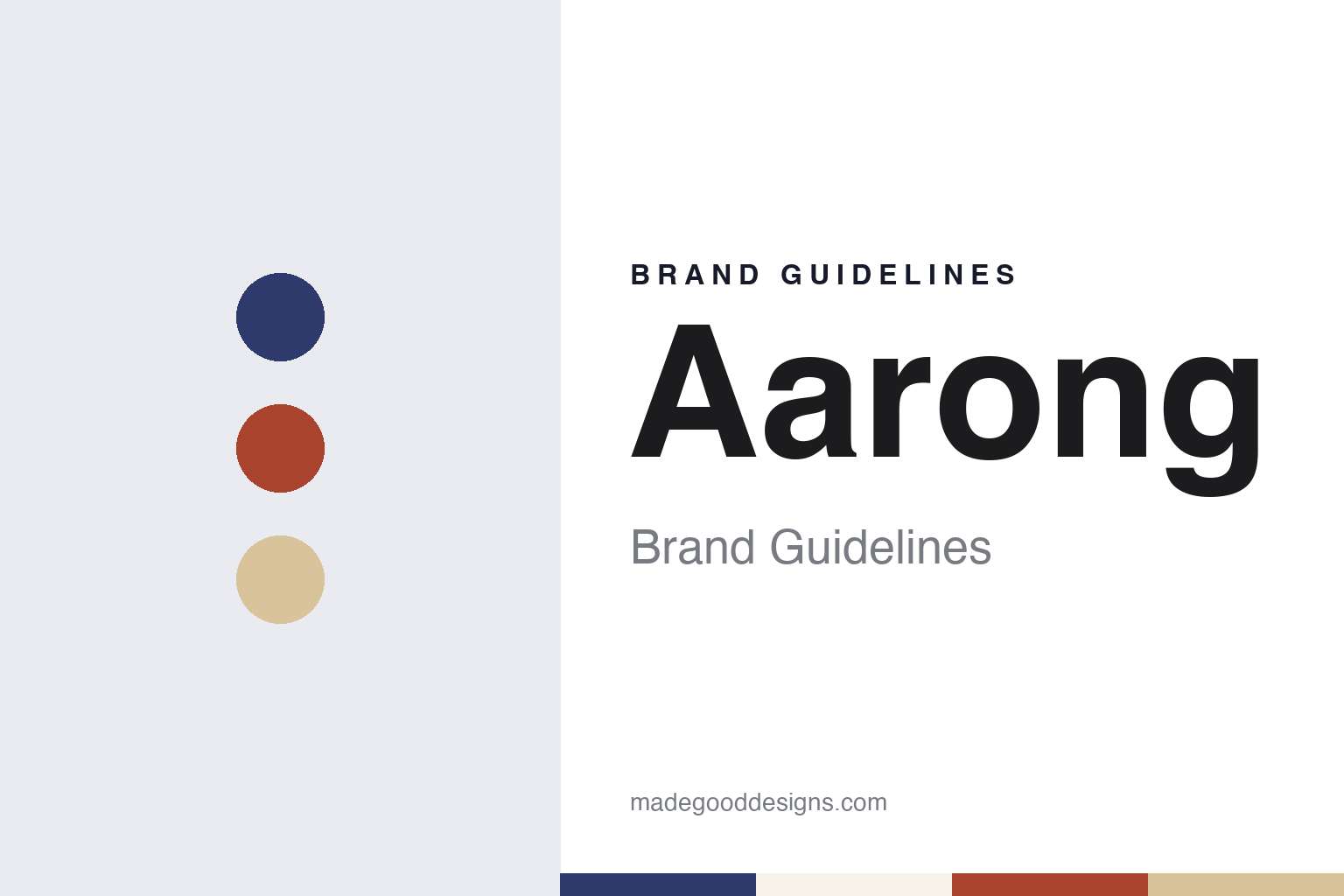
For a design guide, Aarong shows how a retailer can take its look from the crafts it sells, with quilted, woven and printed surfaces doing the work that signage does elsewhere. Compare Khaadi, a Pakistani fashion and textile retailer, and Nishat Linen, the retail brand of Pakistan’s Nishat Group. For this guide we use an indigo, a madder red and a jute tone with a serif, an unofficial interpretation; no product or logo is reproduced.
Explore & save
Keep Aarong’s identity on hand — save it to a board in the Made Good inspiration library.
Aarong identity set
Pin the Aarong indigo, madder and jute palette and the craft serif register to your own board.
Source & notes
Frequently Asked Questions
What font can I use to match the Aarong look?
This guide describes Aarong’s type as “A soft, crafted serif for a heritage retailer”. Its type specimen is set in Fraunces from Google Fonts as a stand-in; Fraunces is not Aarong’s own lettering.
What colours are in the Aarong palette?
This guide’s Aarong palette is Kantha indigo #2E3A6B, Ink #161A2B, Madder #A8442E, Jute #D8C39A and Cotton #F7F3EA. The tones are the guide’s own unofficial interpretation, not official Aarong hex codes.
When was Aarong founded?
Aarong was founded in 1978, in Dhaka, Bangladesh. Aarong is known for Nakshi Kantha, Jamdani, panjabis, home goods.
Who owns Aarong?
Aarong is owned by BRAC. Aarong is known for Nakshi Kantha, Jamdani, panjabis, home goods.