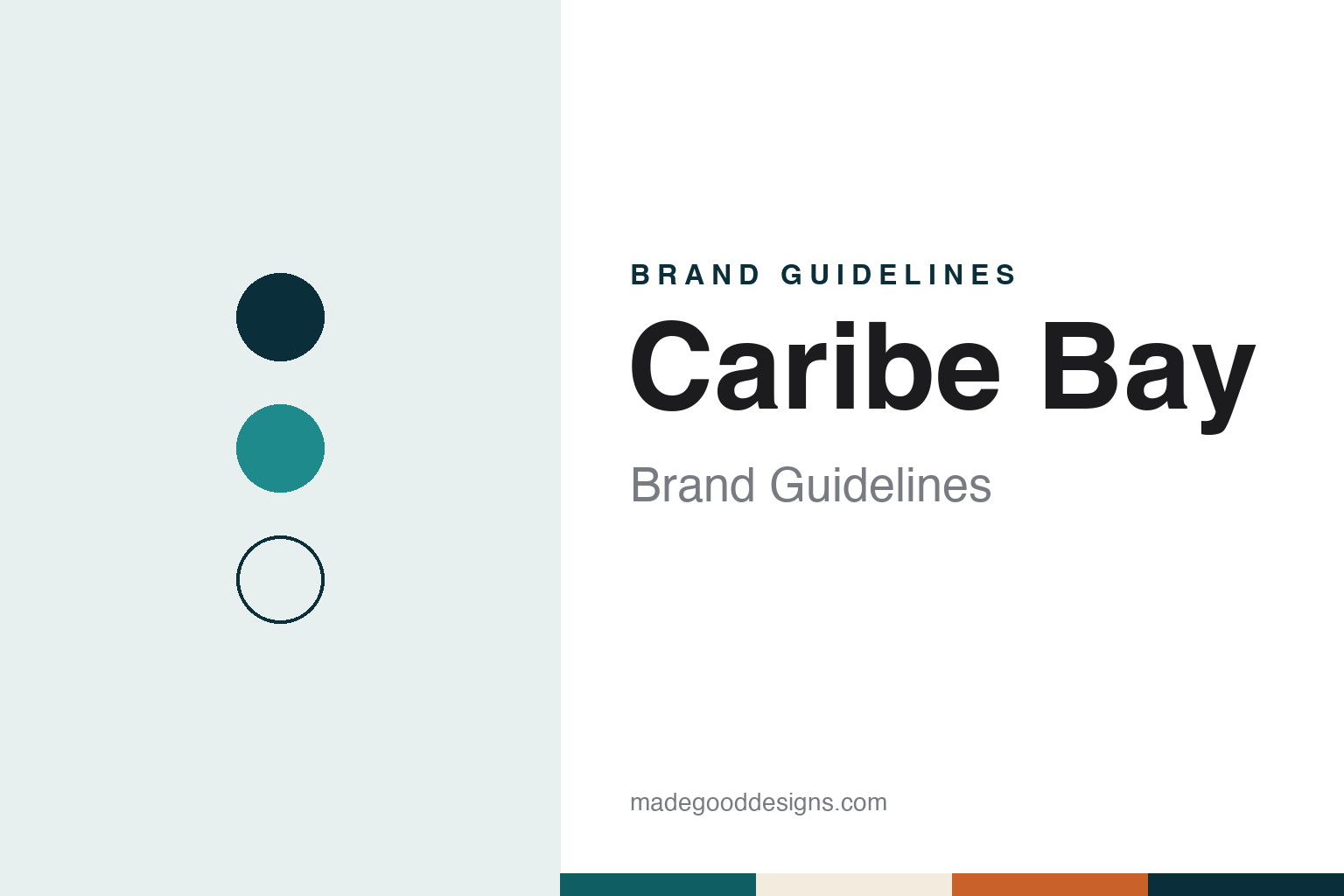
Caribe Bay Brand Guidelines
The Jesolo water park that opened as Aqualandia in 1989.
Aa
Two constants: a Caribe Bay teal, sand and sunset palette and a Sunlit slab serif register. Abstract homage — not a Caribe Bay asset or mark; no logo, map or sign is reproduced.
Aqualandia
A Jesolo water park with an older name.
Caribe Bay is a themed water park at Lido di Jesolo, the beach resort on the Adriatic coast in the metropolitan city of Venice. It opened in 1989 under another name, Aqualandia. The travel trade magazine Quality Travel reported in July 2026 that the park was founded that year by Luciano Pareschi, an entrepreneur from Padua, and Italian Wikipedia names Pareschi and Carla Cavaliere as the pair who opened it. In March 2024 the same magazine described Pareschi as the park’s chief executive and founder and reported that he still owned it together with his family.
The park’s own history page sets out the early years. It lists the Crazy River and a pair of tube slides among the rides that Aqualandia added in the 1990s, and it says the stage later used for radio broadcasts had served the Festivalbar music show at the start of that decade. Quality Travel dated the Crazy River to 1992, and Italian Wikipedia describes it as a ride built to give visitors a taste of rafting. In 1999, the park says, it opened Spacemaker, a slide it gives as 42 metres high with a drop angle of 60 degrees, followed in 2002 by Scary Falls, which it describes as a “black hole,” an enclosed slide ridden in the dark.
The company that runs the park today is L’Ancora S.r.l. The park’s website describes it as a single-shareholder company under the direction and coordination of Oceano Blu S.r.l., with its registered office in Padua. The site is open in summer: the official Italian tourism portal, italia.it, lists the park as open daily from May to September, and the park’s own press list shows the 2026 season opening on 30 May.
Colour
From Aqualandia to the Caribbean.
The Caribbean look arrived gradually. From the early 2000s, the park says, it began to theme the grounds, with new planting and Caribbean-style umbrellas, and it replaced its old entertainment programme with live shows. A pirate galleon followed in 2004, moving the shows into the middle of the park, with acrobatic dives from the ship. From 2005, the park says, national radio stations including Radio 105 and RDS broadcast live from studios inside the grounds.
In 2011 the park brought in white sand, which it says was laid inside the pools as well as around them. The adrenaline slides were rethemed in 2014 to match the rest of the park. In the summer of 2019, thirty years after the opening, Aqualandia became Caribe Bay, a date given by both the park and Italian Wikipedia. The park says the change came with more than 2,500 tonnes of sand, 500 new palms and Roatan, a slow river more than 350 metres long. Pirates’ Bay, a themed area for families, opened in 2021 and Playa Paraiso, a reserved zone with private cabanas, in 2022.
The tourism portal italia.it describes a park “inspired by the colours and architecture of the Caribbean” and built as a kind of tropical island, with colonial ruins, a Spanish galleon and a coral-sand beach around a wave pool called Shark Bay, next to a calmer lagoon called Laguna de Oro. It also lists a semi-covered arena for acrobats, dancers and entertainers and a 24-hole themed mini-golf course, Caribbean Golf. The park’s own count is 27 attractions on about 80,000 square metres.
The work has continued inside the existing boundary. In March 2024 Quality Travel reported that an embankment was being built around the supports of Captain Spacemaker and the other tall slides to create Silver Cove, a 4,000-square-metre relaxation area with white sand and palms, and that the Crazy River was being restyled and renamed Silver Waterfalls, set among waterfalls and Maya ruins. The park’s current map lists Silver Waterfalls and a Silver Cove kiosk.
Typography
Design and documentation.
Water parks and indoor waterpark resorts sell a day out, a short break or a family holiday, and their identities are built for that job. A park name, a logo and often a mascot or a theme carry across tickets, wristbands, park maps, signage, towels and shop merchandise, and the same marks appear on the operator’s website, booking pages and advertising. On Tenerife, Blooloop reported in 2022, advertising for one family’s parks runs from bus stops and billboards to taxis and litter bins.
Much of the look comes from architecture. Some parks borrow a whole setting, such as a historic kingdom or a myth tied to a host hotel, and build their entrances, shops and restaurants to match. Others are organised around slide towers, whose shapes, names and colour schemes act as landmarks visible from across the site. Indoor resorts put the water park, hotel rooms and restaurants under one roof and one name, so the identity has to work in corridors and rooms as well as at the poolside.
Ownership varies widely. Some parks belong to family companies that also run zoos, aquariums or hotels; others belong to hotel and resort groups, to listed leisure companies or to investment owners that have bought and sold parks over time. Ride makers such as ProSlide and WhiteWater are often credited for the slides, and industry reports such as the Themed Entertainment Association’s annual index publish attendance figures that the trade and national press repeat.
The guides in this group set out what dated sources say about each brand: when and where it opened, who owns and operates it, how it has changed its name or its sites, and how its theme, naming and visual material are presented to visitors. Where a fact rests only on the operator’s own word, the guide says so.
Aa
A sunlit slab serif — Caribe Bay. (Specimen set in Bree Serif, a slab serif STAND-IN; NOT the Caribe Bay logo.)
Caribe Bay
Scenery painted by hand.
The park’s design is credited to an in-house team. Quality Travel reported in July 2026 that Carla Cavaliere, the park’s artistic director, led the creation of its immersive setting, and that each scene starts from sketches drawing on art history, film, literature and travel before it becomes a village, a waterfall or a statue. The turquoise of the lagoons, the magazine reported, comes not from plain blue linings but from colouring the pool floors in natural tones and textures meant to suggest the clear water of tropical beaches and to make the pools look deeper.
The same report gave further details. Some of Leonardo da Vinci’s studies of faces informed the expressions, postures and gestures of the statues in the pirate village and other themed areas. More than 700 litres of water-based paint are used each year to keep the scenery fresh against sun, chlorine, sand and salt. A resident cast of 25 performers works in the shows, and the creative team designs the costumes, props and sets itself. A small chapel in the pirate village has hosted civil weddings.
Quality Travel put the park’s attendance at about 300,000 visitors a year; in 2024 Pareschi told the magazine the park had passed 300,000 visitors in 2023, in a season of a little over three months. He named Austria, Germany and Slovenia as the main foreign markets for park-and-hotel packages, and Germany, Austria and Hungary for park tickets alone. The park sells those packages with hotels, apartments and camping villages around Jesolo, and its shop, the Caribe Bay Store, sits on the park map.
For a design guide, Caribe Bay shows how a regional water park can rebuild its identity around one theme and one change of name, with palms, sand and painted ruins carrying the brand as much as any logo. Compare Siam Park, another themed European water park, and Aqualand, a water-park brand with sites across southern Europe. For this guide we use a reef teal, coral sand and a sunset orange with a serif, an unofficial interpretation; no product or logo is reproduced.
Explore & save
Keep Caribe Bay’s identity on hand — save it to a board in the Made Good inspiration library.
Caribe Bay identity set
Pin the Caribe Bay teal, sand and sunset palette and the Sunlit slab serif register to your own board.
Source & notes
Frequently Asked Questions
What font can I use to match the Caribe Bay look?
This guide describes Caribe Bay’s type as “A sunlit slab serif — Caribe Bay”. Its type specimen is set in Bree Serif from Google Fonts as a stand-in; Bree Serif is not Caribe Bay’s own lettering.
What colours are in the Caribe Bay palette?
This guide’s Caribe Bay palette is Reef teal #0F5E63, Deep lagoon #0B2F3A, Coral sand #F3EBDD, Sunset orange #C8612A and Paper #FBF8F2. The tones are the guide’s own unofficial interpretation, not official Caribe Bay hex codes.
When did Caribe Bay open?
Caribe Bay opened in 1989 (as Aqualandia), in Lido di Jesolo, Venice.
Who founded Caribe Bay?
Caribe Bay was founded by Luciano Pareschi in 1989 (as Aqualandia).