Dachstein Brand Guidelines
Named for the massif.
Aa
Two constants: an alpine-blue-and-tan palette and an alpine sans register. Abstract homage — not the Dachstein footwear.
Named for the massif
Dachstein takes its name — and its models — from the mountains.
Dachstein is a lesson in a mountain as identity. Founded in 1925 in Molln, Upper Austria, by shoemaker Anton Lintner, it took its name from the Hoher Dachstein massif — a century of Austrian mountain footwear.
Its identity is Austrian mountain heritage: leather ski and mountain boots from the 1950s, a pioneering plastic-shell ski boot around 1970, and today a line of GORE-TEX hiking, trekking and outdoor-lifestyle footwear. The naming carries the identity — the models are named for Alpine peaks and regions (Wildspitze, Silvretta, Similaun, Serles, Sölden), with a “1925” heritage suffix on centenary models and LC/MC (low/mid-cut) and GTX cues.
(Honest notes: Dachstein isn’t independent or Austrian-owned any more — since 2019 it’s been 100% owned by the Finnish group Luhta (Icepeak, Rukka). It was founded in Molln (not Schladming or the Salzkammergut). And we don’t claim the boiled-wool footwear or famous-expedition stories — the boiled-wool “Dachstein” is a separate knitwear tradition, and the expedition claims are unverified. There’s no official brand hex, so these tones are an unofficial interpretation.)
Colour
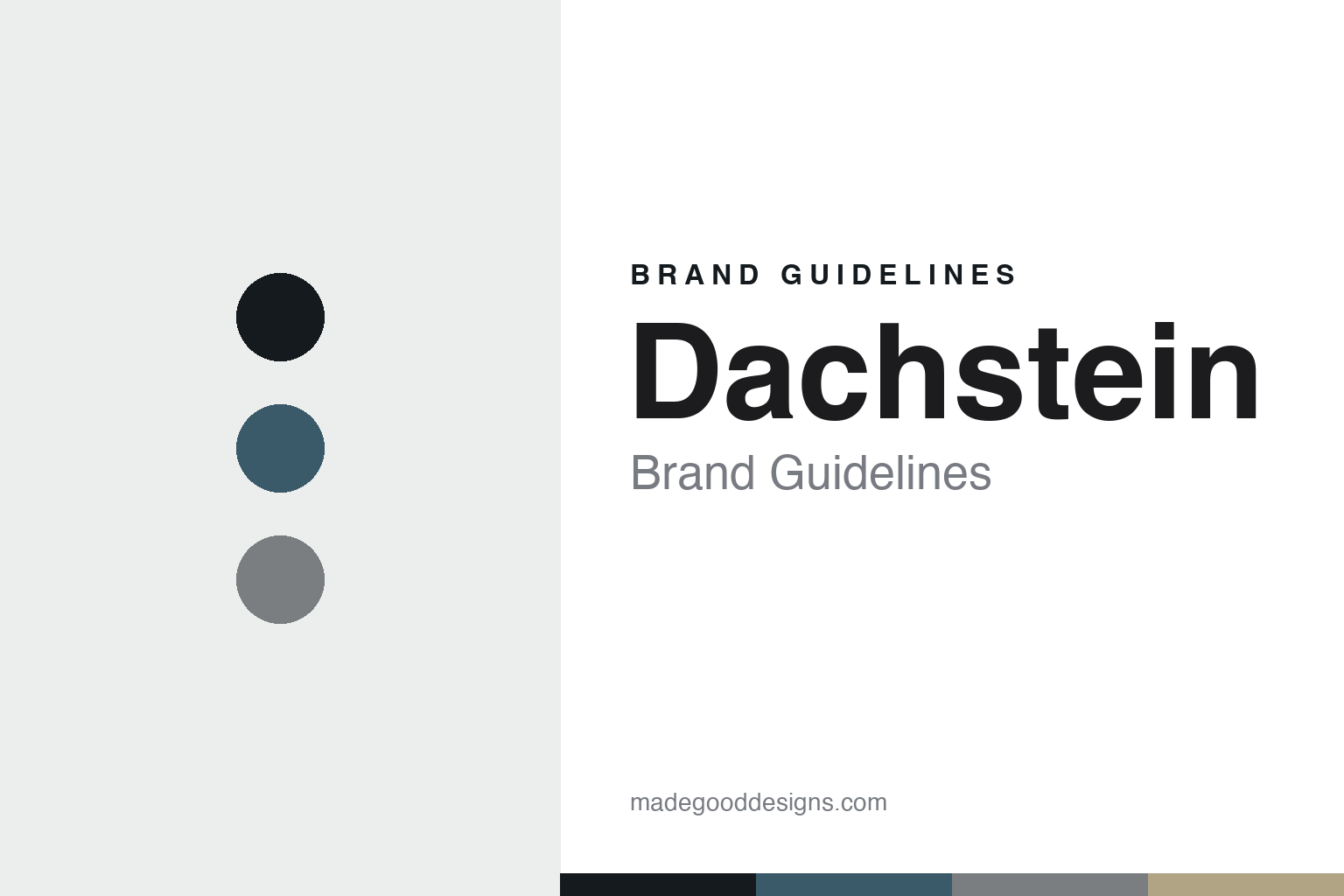
Dachstein lives in an alpine-blue-and-tan palette. Click a swatch to copy the hex.
Dachstein’s identity is alpine, heritage and clean — an ink, an alpine blue, a rock grey, a peak tan, and a snow. The palette pairs an alpine blue with a peak tan — the register of an Austrian mountain brand. It signals the massif and the trail rather than fashion. The honest caveat: with no published brand hex, these tones are an original, unofficial interpretation, not first-party values.
The lesson is an alpine blue with a peak tan signals an Austrian mountain brand. Dachstein’s world is a peak and a snowfield. For designers, it is a reminder that a cool, alpine palette reads as mountain-rooted and clean — right for a brand named after a massif. The takeaways: source the palette from the mountain (alpine blue, rock, snow); keep it clean and alpine; let the naming carry the identity (the peaks); and treat any single hex as unofficial.
Typography
The register is an alpine sans — clean, modern, mountain-rooted.
Dachstein’s identity carries a clean, modern, mountain-rooted spirit — Austrian heritage and Alpine-peak names. An alpine sans captures the mood: it is crisp and current, the register of a modern outdoor brand. Set in an alpine-blue-and-tan palette, the alpine sans feels clean and mountain-rooted — exactly the personality Dachstein carries. It is modern rather than nostalgic, mirroring a GORE-TEX hiking line. (Dachstein’s real footwear is work we describe but do not reproduce, and the exact typeface is not ours to use.) Because it is not ours to use, the honest description is “an alpine sans spirit,” shown here in a stand-in. The type behaves like the brand: clean, modern and mountain-rooted.
Aa
An alpine sans spirit — clean and mountain-rooted. (Specimen set in Albert Sans, a clean modern sans STAND-IN; NOT the Dachstein footwear.)
A mountain as identity
Dachstein stands for a century on the massif.
Dachstein is a lesson in making a mountain the identity. An alpine-blue-and-tan palette, an alpine sans and a peak-named line make the massif the whole brand — alpine, heritage, clean. The mountain is the differentiator. The differentiator is an Alpine-heritage, peak-named identity.
For designers and brand-builders, Dachstein offers a clear takeaway: anchor the identity to a place, then name from it. The lessons: take the name from the landmark (the massif); name the range from the peaks (Wildspitze, Silvretta); keep the look clean and modern; and be honest about ownership and heritage. It is also a reminder to stay accurate: it’s Finnish-Luhta-owned now, founded in Molln, and the palette here is an unofficial interpretation. Dachstein made a mountain the brand — proof that a place can be the difference.
Explore & save
Keep Dachstein’s identity on hand — save it to a board in the Made Good inspiration library.
Dachstein identity set
Pin the alpine-blue-and-tan palette and the alpine-sans register to your own board.