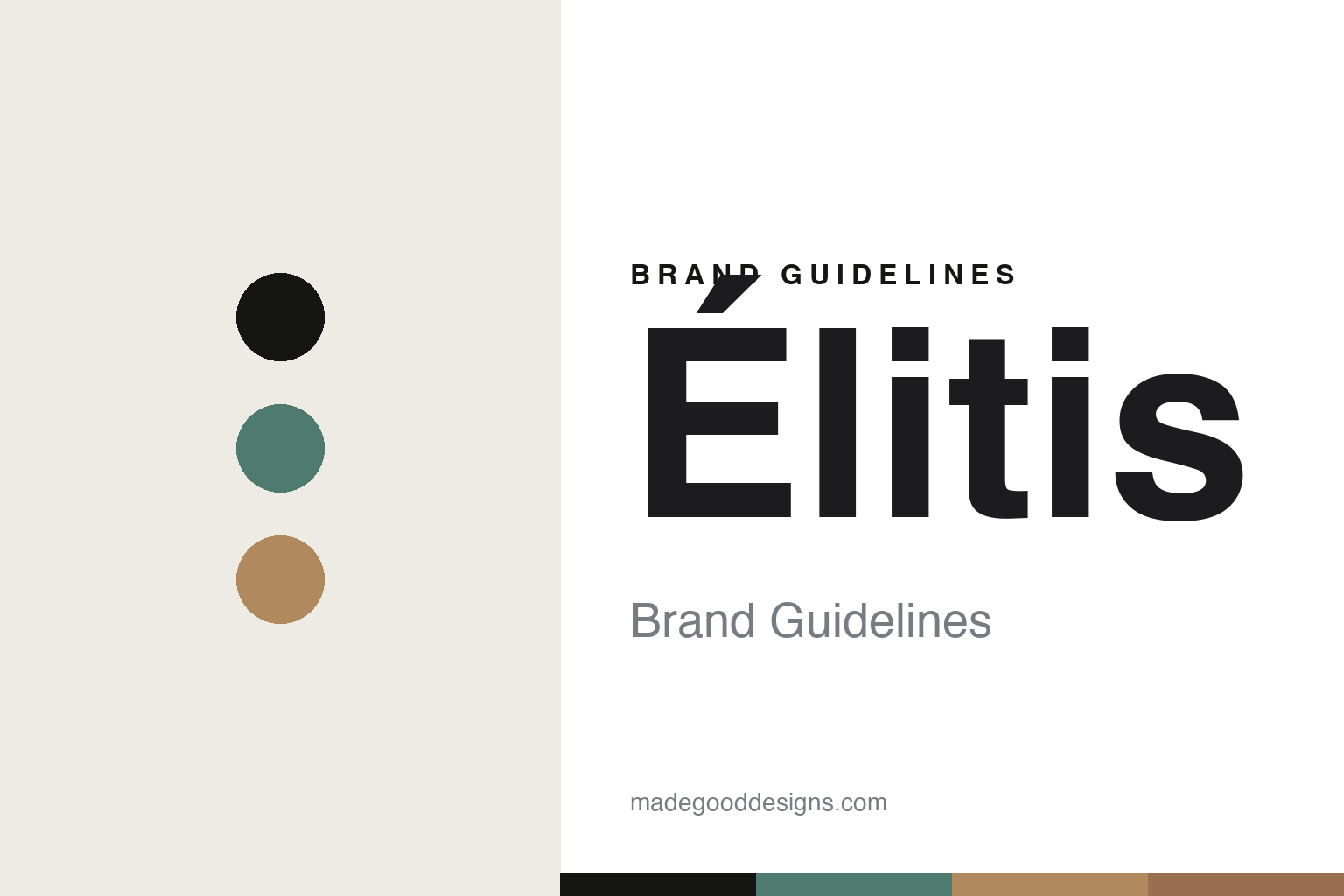
Élitis Brand Guidelines
The textured wallcovering.
Aa
Two constants: a teal-and-linen palette and a tactile sans register. Abstract homage — not the Élitis wallcoverings, fabrics or packaging.
The textured wallcovering
Élitis makes materials you want to touch.
Élitis is a lesson in the material as the design. A French éditeur of high-end wallcoverings and fabrics, it is built around texture — linen, natural fibres and unconventional materials turned into surfaces you want to touch.
Its identity is the textured wallcovering. Élitis edits wallcoverings, furnishing fabrics, in-and-outdoor materials and panoramic murals, best known for tactile, materials-led surfaces — linen, natural and textured fibres, plus leather, rope, metallic and embossed effects — in an eclectic, contemporary spirit, developed with designers and interior architects. Material, made the message.
(Honest notes: Élitis describes itself, on its own site, as a French éditeur of high-end fabrics and wallpapers, and that materials-led identity is verified. Its founding — reported as 1988 in Toulouse, by Patrice Marraud des Grottes, as a family business, with a name drawn from the poet Odysseas Elytis — rests on a single trade source, so we hedge it (“according to the brand’s account”). As an éditeur it likely outsources production, so we don’t claim “made in France,” and we don’t name specific collections or collaborators we couldn’t confirm. There’s no official brand hex, and we reproduce no actual design — these tones are an unofficial interpretation. This is design commentary and does not promote any product.)
Colour
Élitis lives in a teal-and-linen palette. Click a swatch to copy the hex.
Élitis’ identity is tactile, natural and French — a muted teal, an ink, a linen tan, a clay, and a chalk. The palette pairs a teal with a linen — the register of textured, materials-led surfaces. It signals texture and touch rather than novelty. The honest caveat: with no published brand hex, these tones are an original, unofficial interpretation, not first-party values.
The lesson is a teal with a linen signals a materials-led éditeur. Élitis’ world is a tactile, natural surface. For designers, it is a reminder that material and texture — not just print — can be the whole identity. Because a mid teal can fail as small text, keep type dark and let the colour live in the accents, palette and band. The takeaways: lead with material; make it tactile; edit rather than manufacture; and treat any single hex as unofficial.
Typography
The register is a tactile sans — natural, textured, French.
Élitis’ identity carries a natural, textured, French spirit — a tactile wallcovering. A clean, warm sans captures the mood: it is calm and contemporary, the register of a materials-led house. Set in a teal-and-linen palette, the tactile sans feels natural and textured — exactly the personality Élitis carries. It is understated rather than loud, mirroring natural fibres. (Élitis’ real wallcoverings, fabrics and wordmark are works we describe but do not reproduce, and the exact typeface is not ours to use.) Because it is not ours to use, the honest description is “a tactile sans spirit,” shown here in a stand-in. The type behaves like the brand: natural, textured and French.
Aa
A tactile sans spirit — natural and textured. (Specimen set in Hanken Grotesk, a clean warm sans STAND-IN; NOT the Élitis packaging.)
The material as the design
Élitis stands for the textured wallcovering.
Élitis is a lesson in making material the identity. A teal-and-linen palette, a tactile sans and a textured surface make the material the whole brand — natural, textured, French. The material is the differentiator. The differentiator is texture — linen, natural fibres, unconventional surfaces — over pure pattern.
For designers and brand-builders, Élitis offers a clear takeaway: let the material lead. The lessons: lead with material; make it tactile; edit rather than manufacture; and be honest about the story. It is also a reminder to stay accurate: it’s a French éditeur (reportedly founded 1988 in Toulouse), best known for textured wallcoverings, and it likely outsources production — the palette here is an unofficial interpretation. Élitis made material the brand — proof that texture can be the difference.
Explore & save
Keep Élitis’s identity on hand — save it to a board in the Made Good inspiration library.
Élitis identity set
Pin the teal-and-linen palette and the tactile-sans register to your own board.