Experimentarium Brand Guidelines
A Danish science centre in a red-brick bottling hall, with a copper staircase.
Aa
Two constants: a brick red, copper and aluminium grey palette and a workshop sans register. Abstract homage — not an Experimentarium mark or artwork; no logo, sign or building image is reproduced.
Hellerup, 1991
A Danish idea, tested in 1988 and housed in a brewery’s bottling hall.
Experimentarium is a science centre in Hellerup, on the harbour just north of Copenhagen, Denmark. Danish Wikipedia records that it opened on 9 January 1991. The centre’s own history traces the idea to Esben Dragsted, then chairman of the Egmont Foundation, who visited a series of large science centres in the United States in the 1980s and came home asking why Denmark had none.
According to Experimentarium, Dragsted began working with a schools inspector in 1984, and in 1986 a small group set out the case in a report titled “Et Dansk Science Center?” (“A Danish Science Center?”). To test whether visitors would come, a trial interactive exhibition, “Menneske – her er din krop” (“Human – here is your body”), opened in Copenhagen in 1988 and ran for three months; the centre says it drew 71,900 visitors. The Tuborg brewery then offered a soft-drink bottling hall in Hellerup on a twenty-year loan, the first director, Asger Høeg, raised the money for the building work, and the project took the name Experimentarium.
The building is older than the centre. Experimentarium describes it as Tuborg’s former bottling halls from the 1880s, and the Danish Architecture Centre’s magazine calls it a historic red-brick building that had served as a bottling hall for the Tuborg Brewery. The loan was due to run until 2011, but the centre says it bought the building in 2008, becoming the owner of its own home for the first time.
Today Experimentarium is run as a foundation. Its website lists a board of four independent members from business and two staff representatives, and gives the board’s posts as the foundation and a property company, Experimentarium Ejendomme A/S. Danish Wikipedia notes that it is one of Denmark’s state-supported science-learning activity centres, known in Danish as videnspædagogiske aktivitetscentre, and records more than 220,000 visitors in 2021. Høeg led the centre from 1991 until 2014, Danish Wikipedia says.
Colour
A competition win, a temporary home and a copper helix.
The centre was rebuilt in the 2010s. The Danish practice CEBRA won an international competition for the project in 2011, Dezeen reported in April 2017, and Experimentarium gives the same year. Work began in 2014, and while it went on the centre moved into central Copenhagen: Danish Wikipedia records that Experimentarium City was open in a former paper warehouse on Papirøen, the “Paper Island” of Christiansholm, from 7 February 2014 to 16 May 2016, with a smaller selection of exhibitions. The rebuilt Experimentarium in Hellerup opened on 26 January 2017.
The design keeps the old and adds the new. Dezeen described a cluster of staggered rectilinear volumes set over a brick plinth preserved from the original building, with large areas of glazing on the main facade to open it towards the city. The upper volumes are clad in lightweight aluminium panels whose perforated pattern is based on how air and fluids behave when they meet resistance; Experimentarium says the facade was developed in close cooperation with the architects. CEBRA founding partner Kolja Nielsen told Dezeen that the aim was to turn an introvert building into an extrovert, engaging one.
Inside, two staircases carry the scientific theme. The Helix staircase stands just inside the entrance and can be seen from the street. Dezeen reported that it is 100 metres long, rises through four floors and was made from 160 tonnes of steel clad with 10 tonnes of copper, its form an abstract version of the DNA strand that came out of a workshop with a professor at the Technical University of Denmark. The Danish Architecture Centre’s magazine describes a second, the Vector staircase at the back of the building, which links the two new exhibition floors and is based on the idea of the shortest distance between two points.
The rebuild doubled the exhibition area. Experimentarium says that on the opening day visitors found 16 interactive exhibitions on light, water, soap bubbles, the body, energy and more. The Danish Architecture Centre adds that the two open exhibition floors have technical levels so that sets can be changed like a stage, and names a Tunnel of Senses and an interactive cinema developed with the Canadian science centre Science North. The house also has a roof terrace with outdoor activities, a restaurant, a conference centre, teaching rooms and workshops, according to Dezeen and the centre.
Typography
How science centres present themselves.
Science centres in Europe, Asia and Oceania tend to introduce themselves first through the body that runs them. Some are foundations, such as Experimentarium in Denmark, which its own website describes as governed by a foundation board; some belong to a bank’s foundation, as CosmoCaixa in Barcelona belongs to the “la Caixa” Foundation; others are run by a city, a national agency or a charity. That name usually sits close to the centre’s own on signs and in print.
The building is often the second introduction. Several centres occupy reused sites: Experimentarium has used a former Tuborg bottling hall in Hellerup since 1991, and CosmoCaixa keeps part of an early twentieth-century modernist asylum in Barcelona. Some stand in new buildings on rivers, harbours or former industrial land, and their architects are part of the story they tell about themselves.
Inside, the vocabulary is shared. Hands-on galleries invite visitors to touch and try exhibits; some add a planetarium, a dome or a giant-screen theatre; and some keep living collections, such as the indoor Amazon forest at CosmoCaixa or rainforest and aquarium zones elsewhere. Programmes for schools and families sit beside the galleries: the Catalan government’s heritage pages say CosmoCaixa runs activities for state schools and families, and Experimentarium lists teaching rooms in its rebuilt house.
Names change too. CosmoCaixa took its present name when the Museu de la Ciència reopened in 2004, and Experimentarium ran a temporary branch, Experimentarium City, while its Hellerup building was rebuilt before reopening in 2017. This guide sets out, for each centre, who runs it, where it stands, what is inside and how its name has changed, using dated sources, and treats its colours and type as an unofficial interpretation.
Aa
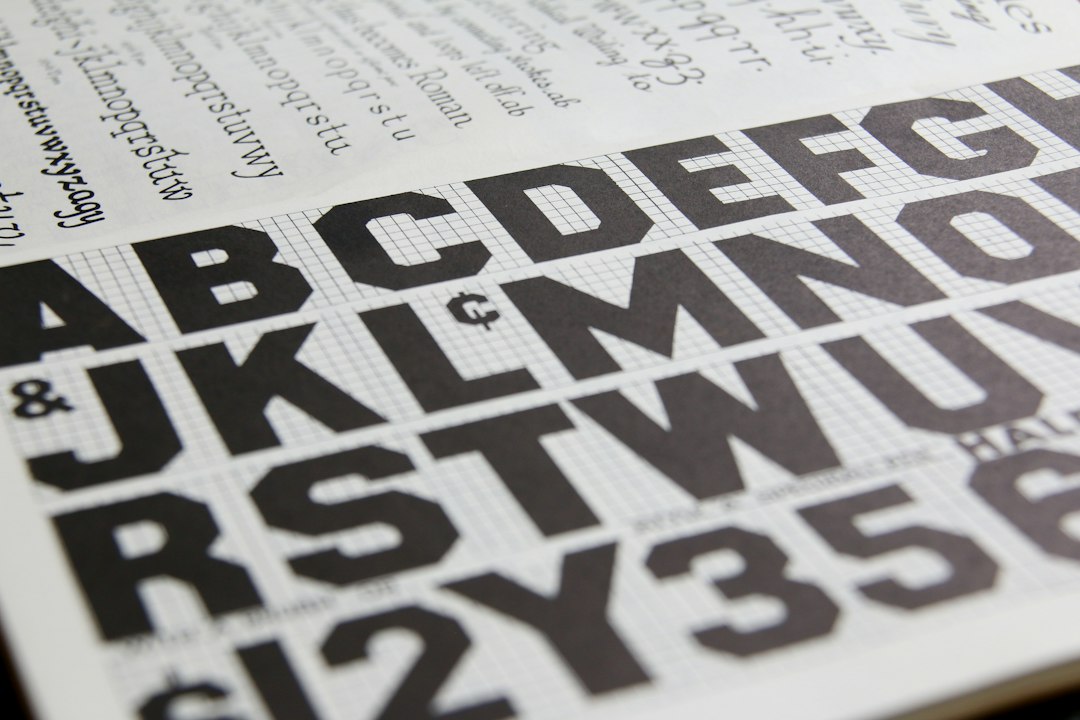
A plain workshop sans for labels and wayfinding. (Specimen set in Archivo, a sans STAND-IN; NOT the Experimentarium logo.)
Experimentarium
Brick below, perforated metal above, copper in between.
Experimentarium describes itself as the science centre for all of Denmark, and its own pages lead with the building and the visit rather than a single emblem. The house appears in photographs of the copper staircase and the perforated facade, and the centre’s text returns to one date, 1991, the year it opened. Its exhibition workshop builds displays in-house and offers that work to other organisations, the website says.
Schools are part of that picture. The Danish Architecture Centre’s magazine describes the centre as an extension of science and technology teaching in primary schools, and Experimentarium lists teaching facilities among the rooms of the rebuilt house. Everything on the exhibition floors may be touched, the centre says, so that learning and play go together.
The building supplies the materials for this guide. Red brick from the old bottling halls, copper on the Helix staircase and pale perforated aluminium on the new volumes are the three surfaces that Dezeen and the centre both describe, and our palette takes its tones from them without copying any official colour. The two dates in the house’s life, the 1991 opening and the 2017 reopening, give a simple sequence for any timeline.
For a design guide, Experimentarium shows how a science centre can let a reused industrial building, and one sculptural staircase, carry its name. Compare NEMO Science Museum in Amsterdam and Universeum in Gothenburg, two other European science centres. For this guide we use brick red, stair copper and aluminium grey with a sans, an unofficial interpretation; no product or logo is reproduced.
Explore & save
Keep Experimentarium’s identity on hand — save it to a board in the Made Good inspiration library.
Experimentarium identity set
Pin the brick red, copper and aluminium grey palette and the workshop sans register to your own board.
Source & notes
Frequently Asked Questions
What font can I use to match the Experimentarium look?
This guide describes Experimentarium’s type as “A plain workshop sans for labels and wayfinding”. Its type specimen is set in Archivo from Google Fonts as a stand-in; Archivo is not Experimentarium’s own lettering.
What colours are in the Experimentarium palette?
This guide’s Experimentarium palette is Brick red #7F3324, Ink #1C1F22, Stair copper #B8733D, Aluminium grey #C9CCCF and Paper #F5F2EC. The tones are the guide’s own unofficial interpretation, not official Experimentarium hex codes.
When did Experimentarium open?
Experimentarium opened on 9 January 1991, in Hellerup, Denmark. Experimentarium is known for Helix staircase, 16 exhibitions.