Felchlin Brand Guidelines
The Schwyz honey trader that became a Grand Cru couverture house.
Aa
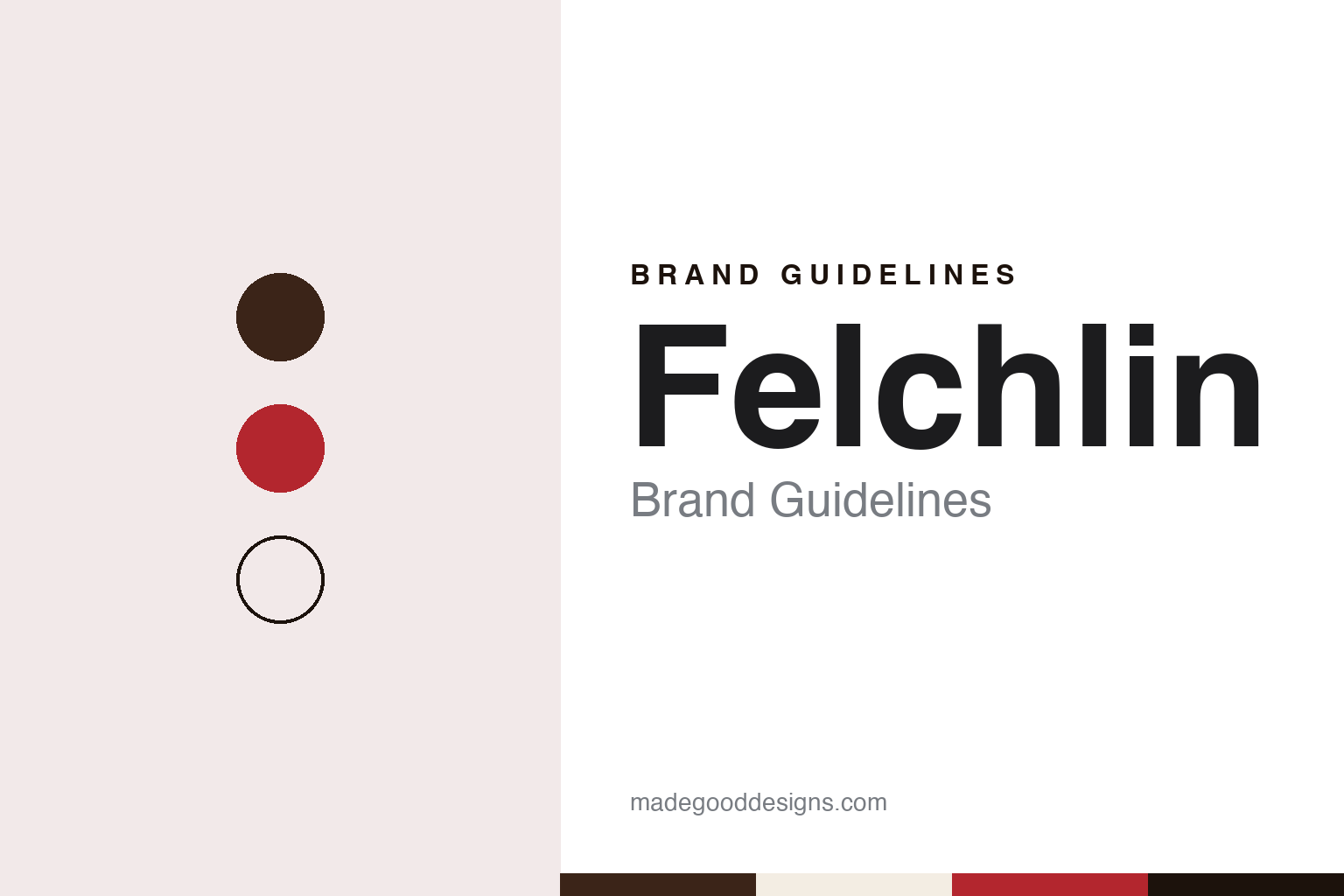
Two constants: a Felchlin brown, cream and red palette and an Alpine serif register. Abstract homage — not a Felchlin product or mark; no packaging, logo or wrapper is reproduced.
Honigzentrale Schwyz
A honey business in central Switzerland.
Felchlin did not start with chocolate. In 1908 the merchant Max Felchlin began trading honey in Schwyz, the small capital of the canton that gave Switzerland its name, according to the company and to English and German Wikipedia. In 1913 he renamed the business Honigzentrale Schwyz, the Schwyz honey centre — German Wikipedia treats that as the company’s foundation, while the company itself dates its history to 1908.
The first product Felchlin made himself, the company says, was “Herbst 1924,” an artificial Swiss honey based on herbs, which it still sells. In the 1920s the business opened its first manufactory and added chocolate of its own, German Wikipedia says, and in 1928 it moved to a rural estate called Liebwylen at Seewen, also in the municipality of Schwyz, according to English Wikipedia.
In the 1930s Felchlin created Pralinosa, a praline and nougat mass for bakers and pastry chefs that the company still sells; the company dates it to 1935 and English Wikipedia to 1937. During the Second World War the firm made Sowiso, which the company describes as a cream powder and dates to 1943, and which German Wikipedia says became known across the country.
The founder handed the management to his son, Max Felchlin junior, in 1962 and died in 1970, aged 87, the company says. In 1974, with production at Seewen out of space, the son built a new factory at Ibach, a village within the municipality of Schwyz, and the sole proprietorship became a company limited by shares, Max Felchlin AG. Exports to Japan began in 1973, according to the company, followed later by a sales representative in the United States; English Wikipedia gives 1980 for the first exports to both. A Swiss newspaper, Blick, reported in 2015 that the United States and Japan were its largest customers abroad.
Colour
Grand Cru couvertures for the trade.
Felchlin is a supplier to professionals rather than a chocolate-bar brand. It makes couvertures — chocolate for further processing — as well as fillings, baking masses and other semi-finished products for confectioners, bakeries, caterers, hotels and industrial customers, the company says. In his 2006 book on chocolate the American journalist Mort Rosenblum described it selling wholesale to confectioners such as Sprüngli, according to English Wikipedia. The company says it delivers to more than 40 countries through distribution partners.
Its turn towards fine cocoa came in 1999, when it introduced its Grand Cru couvertures. German and English Wikipedia, citing NZZ Folio, say Felchlin was the first Swiss chocolate maker to use the term “Grand Cru” for couvertures, meaning chocolate made only from fine cocoa of a defined origin. The company works mainly with beans from regions where the Criollo and Trinitario varieties grow, German Wikipedia says, and its chief buyer travels to those regions to buy cocoa directly; a 2016 release by the Swiss development foundation Swisscontact described a joint project with Felchlin on fine cocoa in Colombia.
The best-known of the Grand Cru line is Maracaibo Clasificado 65%, named after the Venezuelan region. In 2004 it was named “world’s best chocolate” by the Accademia Maestri Pasticceri Italiani, according to Wikipedia; the company calls the award a gold medal for the world’s best chocolate. The range also includes milk and white chocolates made with milk from the Entlebuch Biosphere in the canton of Lucerne, sold as Grand Cru Opus Lait de Terroir, English Wikipedia says, citing foodaktuell. In 2020 Felchlin launched what it calls a Cacao Fruit Couverture, made from the cacao fruit without added sugar.
Training is part of the business. English Wikipedia says the company has run courses for pastry chefs at its Condirama centre since 1988; the company says a new Condirama training centre opened in 2019. Its project on health care for cocoa-growing communities in Ghana, Venezuela and Ecuador won the Swiss Ethics Award in 2025, the company and the Schwyz newspaper Bote der Urschweiz reported.
Typography
Couverture and documentation.
The seven brands in this group all make chocolate, and they come from four countries: Valrhona, Michel Cluizel and Pralus from France, Amedei from Italy, Felchlin from Switzerland, and Guittard and Askinosie from the United States. They sit at different points in the chocolate trade, from names known mainly to pastry kitchens to small makers known mainly by the bar on the shelf.
At one end are couverture houses, whose chocolate is sold in blocks, pistoles and callets to chefs, chocolatiers and bakers as much as to shoppers, and whose brand often reaches the public second-hand, through a restaurant dessert or a patisserie window. At the other end are bean-to-bar makers, who buy cocoa beans, roast and grind them in their own workshop and sell finished bars, and whose identity rests on the farm, the origin and the maker’s name. Many firms sit somewhere between the two, selling to professionals and to the public at once.
Each guide separates what independent sources record from what the company says about itself — who founded it, who owns it now, where its beans come from and where its chocolate is made — and marks plainly what rests only on the company’s own word.
Aa
An Alpine serif for a century-old Schwyz house. (Specimen set in Playfair Display, a serif STAND-IN; NOT the Felchlin logo.)
Felchlin
Independent, and still in Schwyz.
Felchlin has stayed independent. English Wikipedia, citing Rosenblum’s book and the company’s own history, says that in 1991 Max Felchlin junior arranged for an association of local Schwyz residents to take majority ownership after his death; German Wikipedia says he settled the succession in 1990 with the aim of keeping the company independent in the long term. He died in 1992, and Christian Aschwanden led the company from that year, the company says. Aschwanden handed over in 2023 after some 30 years, and Thomas Truttmann became chief executive in August 2023, Bote der Urschweiz reported. We found no acquisition by a larger group in the sources we checked.
The company has kept building in Ibach. It moved into a new production plant there around 2000, according to Wikipedia; built a new cocoa-roasting plant between autumn 2012 and 2014; bought a neighbouring property in 2014; and in 2018 moved into a new headquarters that brought its four sites under one roof, the company says. In November 2025 it opened a 16-million-franc extension with dispatch, cold and warm rooms, storage and space for more production equipment, the trade magazine foodaktuell reported. German Wikipedia, citing the company, says it makes everything in Schwyz, from cocoa bean to finished chocolate; we give that as the company’s description. It says it employs about 190 people.
For the centenary in 2008 the gastronomy journalist Paul Imhof wrote a book on the company, the Neue Zürcher Zeitung reported. We found no published account of who designed Felchlin’s logo or packaging, and no official colours.
For a design guide, Felchlin shows how a trade supplier can build a brand on origin names and a long local history rather than on consumer advertising. Compare Valrhona, the French couverture house built for chefs, and Bonnat, another maker that built its name on single-origin “grand cru” chocolate. For this guide we use cocoa brown, cream and a deep red with a serif, an unofficial interpretation; no product or logo is reproduced.
Explore & save
Keep Felchlin’s identity on hand — save it to a board in the Made Good inspiration library.
Felchlin identity set
Pin the Felchlin brown, cream and red palette and the Alpine serif register to your own board.