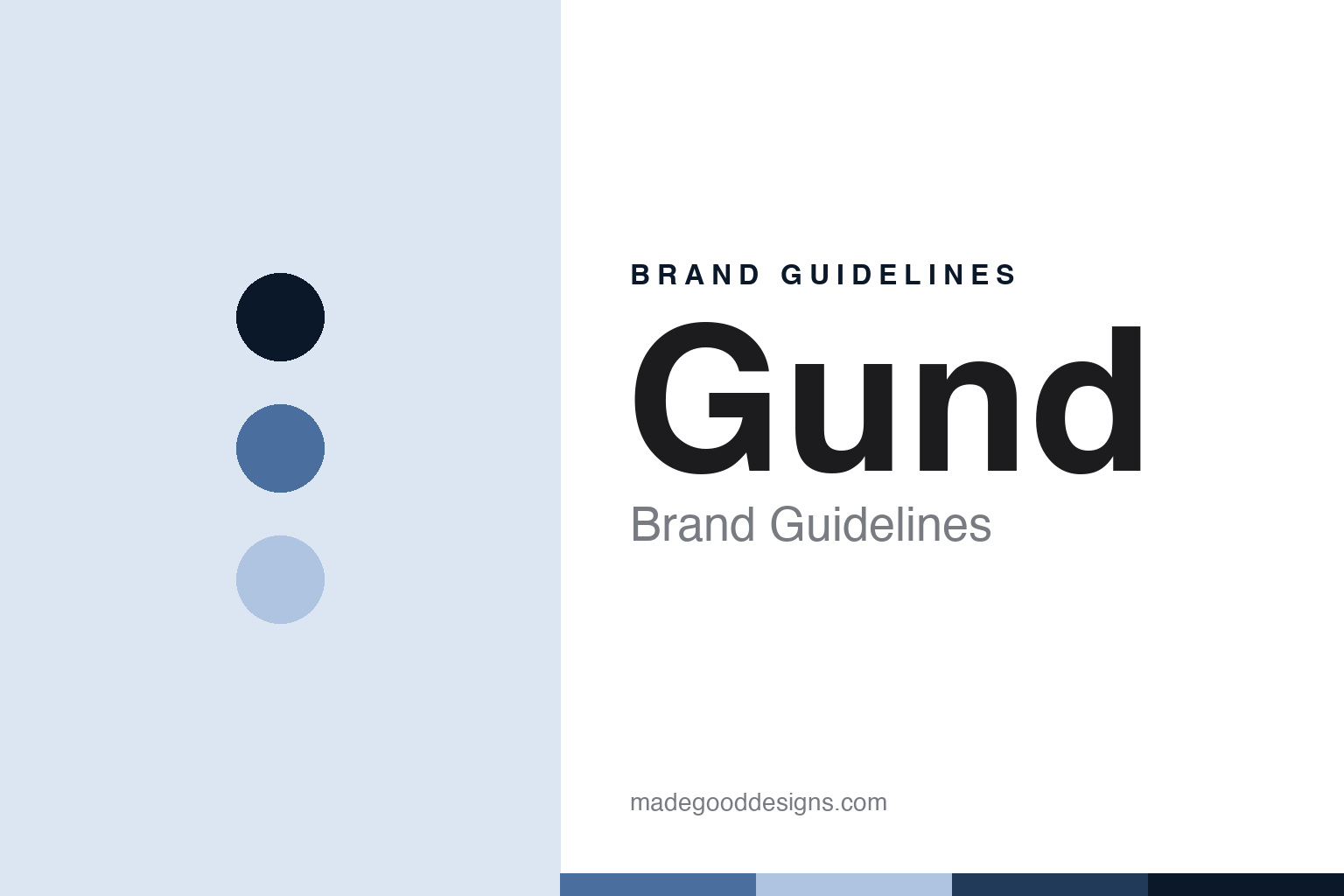
Gund Brand Guidelines
America’s oldest plush house.
Aa
Two constants: a huggable-blue palette and a huggable-sans register. Abstract homage — not a Gund product or mark; no bear, character or logo is reproduced.
America’s oldest plush house
Gund is America’s oldest plush house (1898), maker of the Snuffles bear — now a brand of Canada’s Spin Master and made in China.
Gund follows Merrythought as the round’s American-heritage node — the oldest plush house in the United States, maker of a best-selling teddy bear, now a brand of a Canadian toy company and made in China. Its answer to a round about who owns the soft toys and where they are made is a heritage-and-ownership one: an 1898 American name under a Canadian owner, made overseas.
Its identity is America’s oldest plush house. The 1898 founding, the Snuffles bear and the Spin Master ownership are the story here. Old US name, Canadian owner. America’s oldest plush house.
(Honest notes, so the founding, the ownership and the making are framed accurately, with a correction and a licence flagged. Gund sells plush as its heroes — the Snuffles bear and its huggable soft toys; we report its language as the brand’s own. On origin: Gund was founded in 1898 by Adolph Gund, a German immigrant, in Norwalk, Connecticut, later moving to New York, and it describes itself as America’s oldest plush maker, which we attribute as a claim. On ownership, corrected: Gund is a brand of Spin Master, the Canadian toy and entertainment company, which acquired it in 2018 from Enesco, so we correct the assumption of a 2023 deal, which was an unrelated sale of Enesco itself, and name Spin Master as the current owner. On where it is made: designed and marketed in the US but manufactured in China. On a licence to flag: Gund’s well-known Pusheen plush is a third-party licence, created and owned by others, that Gund only manufactures, alongside licences for Sesame Street, Bluey and Disney, so we do not imply Gund owns Pusheen. On a documented, dated recall: in 2006 and 2007 Gund recalled about eighteen thousand nine hundred Baby Gund Woodles activity toys over a small-parts choking hazard, with no injuries reported, which we attribute to the CPSC. Its name and the Snuffles design are IP we describe but do not reproduce; there is no official brand hex; these tones are an unofficial interpretation.)
Colour
Gund lives in a huggable blue. Click a swatch to copy the hex.
Gund’s identity is heritage-American, Canadian-owned and China-made — a huggable blue, an ink, a pale sky, a deep navy, and a paper. The palette leans huggable blue and deep navy: a soft, dependable register that nods to a huggable, long-lived brand rather than a loud logo colour. It signals America’s oldest plush house — heritage-American, Canadian-owned and China-made. The honest caveat: with no official brand hex, these values are a soft, unofficial interpretation, not first-party colours.
The lesson is a huggable blue signals a soft, heritage identity. Gund’s world is the huggable bear. For designers, it is a reminder that a soft blue and a pale sky can carry a heritage, huggable brand — a gentle tone held as an accent, not a reproduced character. Because a mid hue can fail as small text, keep type dark and let the colour live in the accents, palette and band. The takeaways: date the founding to 1898 and Adolph Gund; attribute the oldest-plush claim; correct the ownership to Spin Master since 2018, not 2023; say made in China; keep Pusheen as a third-party licence; and keep the 2007 Woodles recall dated and attributed.
Typography
The register is a huggable sans — heritage-American, Canadian-owned, China-made.
Gund’s identity carries a heritage-American, Canadian-owned, China-made spirit — an old US name under a Canadian owner. A huggable sans captures the mood: soft, friendly and rounded, the register of a plush brand. Set in a huggable-blue palette, the huggable sans feels warm and approachable — exactly the personality Gund carries. It behaves like a soft, made thing rather than a loud logo, mirroring a tuft-gradient and a plush-nap. (Gund’s real products, the name and the Snuffles design, and its licensed characters, are things we describe but do not reproduce, and the exact typeface is not ours to use.) Because it is not ours to use, the honest description is “a huggable-sans brand,” shown here in a stand-in. The type behaves like the brand: heritage-American, Canadian-owned and China-made.
Aa
A huggable-sans brand — warm and approachable. (Specimen set in Archivo, a huggable-sans STAND-IN; NOT the Gund logo, Snuffles or licensed characters.)
The soft-toy node
Gund stands for America’s oldest plush house.
Gund sits third in the round as its American-heritage node. A huggable-blue palette, a huggable sans and an 1898 founding make one thing — America’s oldest plush house — the whole identity: heritage-American, Canadian-owned and China-made. The 1898 founding is the pitch, the Snuffles bear is the icon, and the Spin Master ownership is the twist. The point is an old American name under a Canadian owner, made overseas, in a round about who owns the soft toys and where they are made.
Put to work, the identity is the brand told straight, the ownership corrected and the licence flagged. A brand in this spirit would date the founding to 1898 and Adolph Gund, attribute the oldest-plush claim, correct the ownership to Spin Master since 2018, say made in China, and keep Pusheen as a third-party licence. A reader in this spirit would keep the facts right: Gund sells the Snuffles bear and huggable plush; it was founded in 1898 by Adolph Gund in Norwalk, Connecticut; it is a brand of Canada’s Spin Master, acquired in 2018 from Enesco, not in 2023; it is made in China; and its Pusheen plush is a licence it manufactures rather than owns. Gund sits after Merrythought and before Jellycat. The honest editorial moves are to date the founding, to correct the ownership, to flag the licence, and to attribute the recall.
For designers and brand-builders, Gund carries the soft-toy node: correct an ownership year — and flag a licence you only make. The lessons: a brand can be a country’s oldest maker under a foreign owner, here America’s oldest plush house under Canada’s Spin Master; a founding is dated to 1898 and Adolph Gund, with the oldest-plush billing attributed as a claim; an ownership is corrected to Spin Master since 2018, acquired from Enesco, rather than the outdated 2023 assumption, which was an unrelated sale of Enesco itself; a making is said plainly as China; and a licence is flagged, since Gund’s famous Pusheen plush is created and owned by others and only manufactured by Gund. It is also a reminder to stay precise: Gund is the Spin Master-owned, China-made American heritage plush brand — with the palette here an unofficial interpretation, the licensed characters never reproduced, and the 2007 Woodles recall dated and attributed. The hook is that pairing: Gund is America’s oldest plush house and the maker of the best-selling Snuffles bear, yet the 127-year-old US name is now owned by Canada’s Spin Master, and its most famous face, Pusheen, is a licence it only manufactures. Read that way, Gund is less a single bear than America’s oldest plush house: heritage-American, Canadian-owned, China-made. The lesson for a brand is that correcting the ownership and flagging the licence reinforce each other, and dating the founding keeps the story earned. Gund made America’s-oldest-plush-house the identity — proof that a heritage claim, corrected and attributed, can anchor a node.
Explore & save
Keep Gund’s identity on hand — save it to a board in the Made Good inspiration library.
Gund identity set
Pin the huggable-blue palette and the huggable-sans register to your own board.