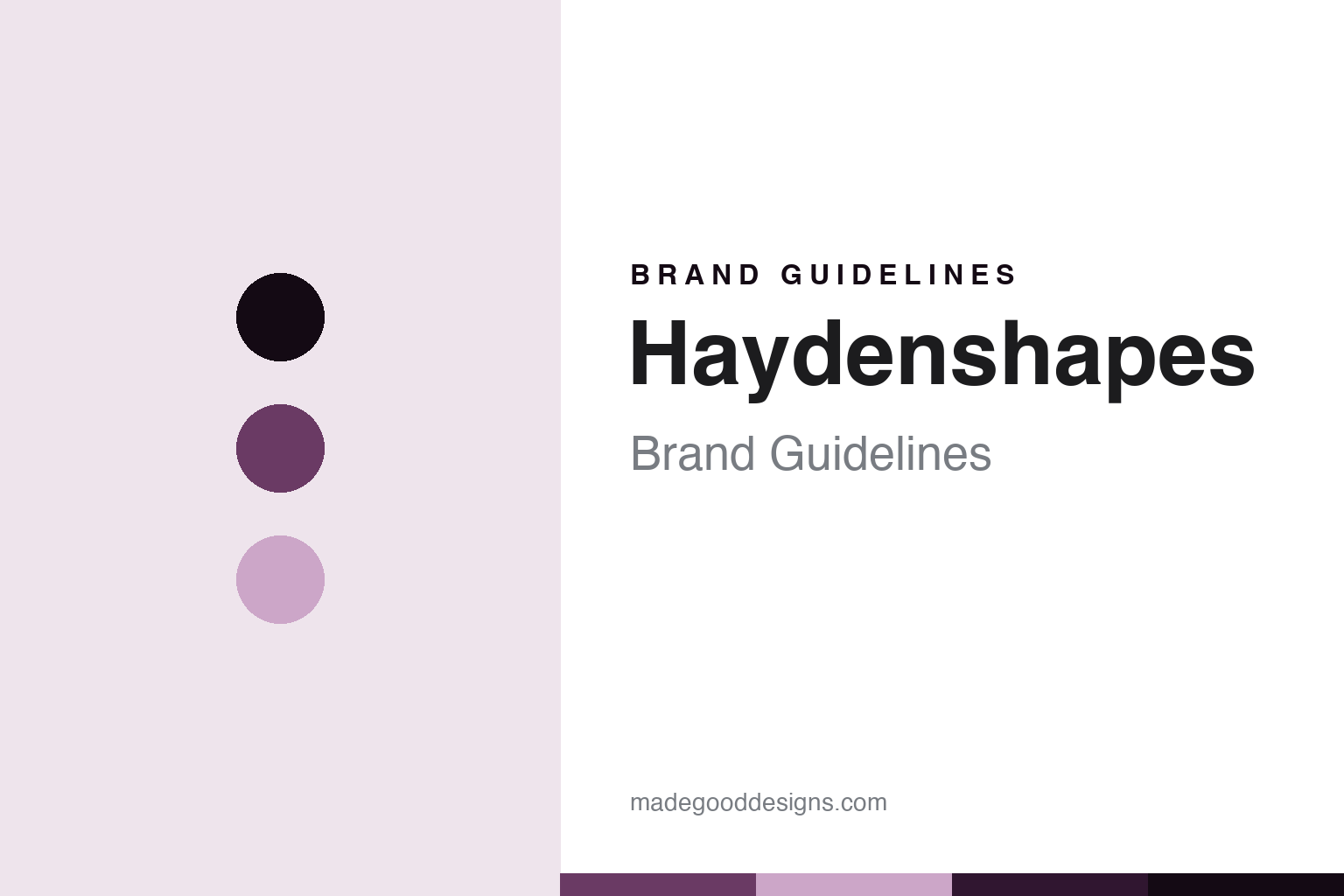
Haydenshapes Brand Guidelines
The design-led shaper.
Aa
Two constants: a plum palette and a design-sans register. Abstract homage — not a Haydenshapes product or mark.
The design-led shaper
Haydenshapes is Hayden Cox’s Australian surfboard house — the FutureFlex carbon-rail tech and the landmark Hypto Krypto.
Haydenshapes brings the round its design-and-technology voice — Hayden Cox’s house, which turned a teenager’s shaping into a patented construction and a design-crossover brand. Haydenshapes makes surfboards, and its answer to a round about shapers is a shaper who is also a designer and engineer: a proprietary construction, a landmark model, and a brand that crosses into fashion and art. A board, by design.
Its identity is the design-led shaper. Haydenshapes’ FutureFlex construction, its Hypto Krypto and its design-crossover identity are the story here. A board, engineered and designed. The design-led shaper.
(Honest notes, so the story stays precise. Haydenshapes — at haydenshapes.com — makes surfboards, wetsuits and apparel, defined by its patented FutureFlex construction: a stringer-less shaped core wrapped with a parabolic carbon-fibre rail frame. Its Hypto Krypto is a landmark best-seller that won surfboard-of-the-year honours. It was founded by Hayden Cox as a teenager in the late 1990s — the brand cites 1997 — at Mona Vale in New South Wales, Australia, with FutureFlex commercialised in 2006. On where it is made — a theme of this round — Haydenshapes is designed in Australia and operates a United States facility in Oceanside, California, with global licensed distribution; it does not publicly itemise every production site, so we frame it as designed in Australia, made across Australian and US operations, with global distribution. On ownership, it is independent and founder-led. Its marks — Haydenshapes, FutureFlex, Hypto Krypto — are IP we describe but do not reproduce, and there is no official brand hex; these tones are an unofficial interpretation. This is design commentary and does not promote any product.)
Colour
Haydenshapes lives in a plum. Click a swatch to copy the hex.
Haydenshapes’ identity is designed, engineered and modern — a plum, an ink, an orchid, a deep plum, and a paper. The palette leans plum and orchid: a design-forward register that nods to the brand’s fashion-and-art crossover rather than a stock surf palette. It signals a design-led shaper. The honest caveat: with no published brand hex, these values are an original, unofficial interpretation, not first-party colours.
The lesson is a plum palette signals a designed, engineered identity. Haydenshapes’ world is a designed, engineered object. For designers, it is a reminder that a rich plum and a soft orchid can carry a surfboard house — the tone of a design brand more than a surf shop. Because these tones can fail as small text, keep type dark and let the colour live in the accents, palette and band. The takeaways: make the tech proprietary; design the whole brand; be honest about where it is made; and treat any single hex as unofficial.
Typography
The register is a design sans — modern, refined, engineered.
Haydenshapes’ identity carries a modern, refined, engineered spirit — a design brand, not a fashion accident. A design sans captures the mood: clean, contemporary and considered, the register of a surfboard house that collaborates with artists and fashion houses. Set in a plum palette, the design sans feels modern and refined — exactly the personality Haydenshapes carries. It is design rather than a logo, mirroring carbon and epoxy. (Haydenshapes’ real wordmark, and the FutureFlex and Hypto Krypto names, are things we describe but do not reproduce, and the exact typeface is not ours to use.) Because it is not ours to use, the honest description is “a design-sans spirit,” shown here in a stand-in. The type behaves like the board: modern, refined and engineered.
Aa
A design-sans spirit — modern and refined. (Specimen set in Manrope, a design-sans STAND-IN; NOT the Haydenshapes logo.)
The surfboard shapers
Haydenshapes stands for the design-led shaper.
Haydenshapes brings the round its design voice. A plum palette, a design sans and the FutureFlex construction make one thing — the design-led shaper — the whole identity: designed, engineered and modern. The patented carbon-rail tech is the differentiator, and the design-crossover brand is the meaning. The point is a shaper who is also a designer, who patented a construction and built a brand that reaches beyond surfing.
Put to work, the identity is a design-and-engineering story told straight, as design. A maker in this spirit would treat construction as invention and the brand as design, while being honest about a global production footprint — a board, engineered in Australia, distributed worldwide. A reader in this spirit would keep the facts right: it was founded by Hayden Cox as a teenager, with the brand citing 1997, at Mona Vale; FutureFlex was commercialised in 2006; the Hypto Krypto is a landmark best-seller; and it is designed in Australia with a US facility and global licensed distribution. Haydenshapes sits in the round’s hand-versus-tech thread at the proprietary-construction end with Firewire, and it ties across to the design world through its collaborations. The honest editorial moves are to cite the brand’s own 1997 date while noting the teenage origin, to credit FutureFlex and the Hypto Krypto, to frame where-made honestly, and to keep the living founder to public facts. The lesson Haydenshapes teaches is that a shaper can compete on design and engineering as much as on hand-craft — and that a patented construction is a different kind of signature.
For designers and brand-builders, Haydenshapes continues the surfboard shapers: make the construction proprietary — and design the whole brand. The lessons: treat construction as invention; build a design identity, not just a surf label; be honest about a global footprint; cite dates carefully; and never reproduce a logo. It is also a reminder to stay precise: Haydenshapes is Hayden Cox’s Australian surfboard house, the FutureFlex carbon-rail tech and the landmark Hypto Krypto — with the palette here an unofficial interpretation. Read that way, Haydenshapes is less a board than a design practice: a shaper who patented how a board flexes and built a brand that art and fashion want to work with. The lesson for a brand is that engineering and design can be a signature as strong as a shaper’s hand, and a proprietary construction — named and owned — is a durable identity. Haydenshapes made the-design-led-shaper the identity — proof that a board can be an invention.
Explore & save
Keep Haydenshapes’s identity on hand — save it to a board in the Made Good inspiration library.
Haydenshapes identity set
Pin the plum palette and the design-sans register to your own board.