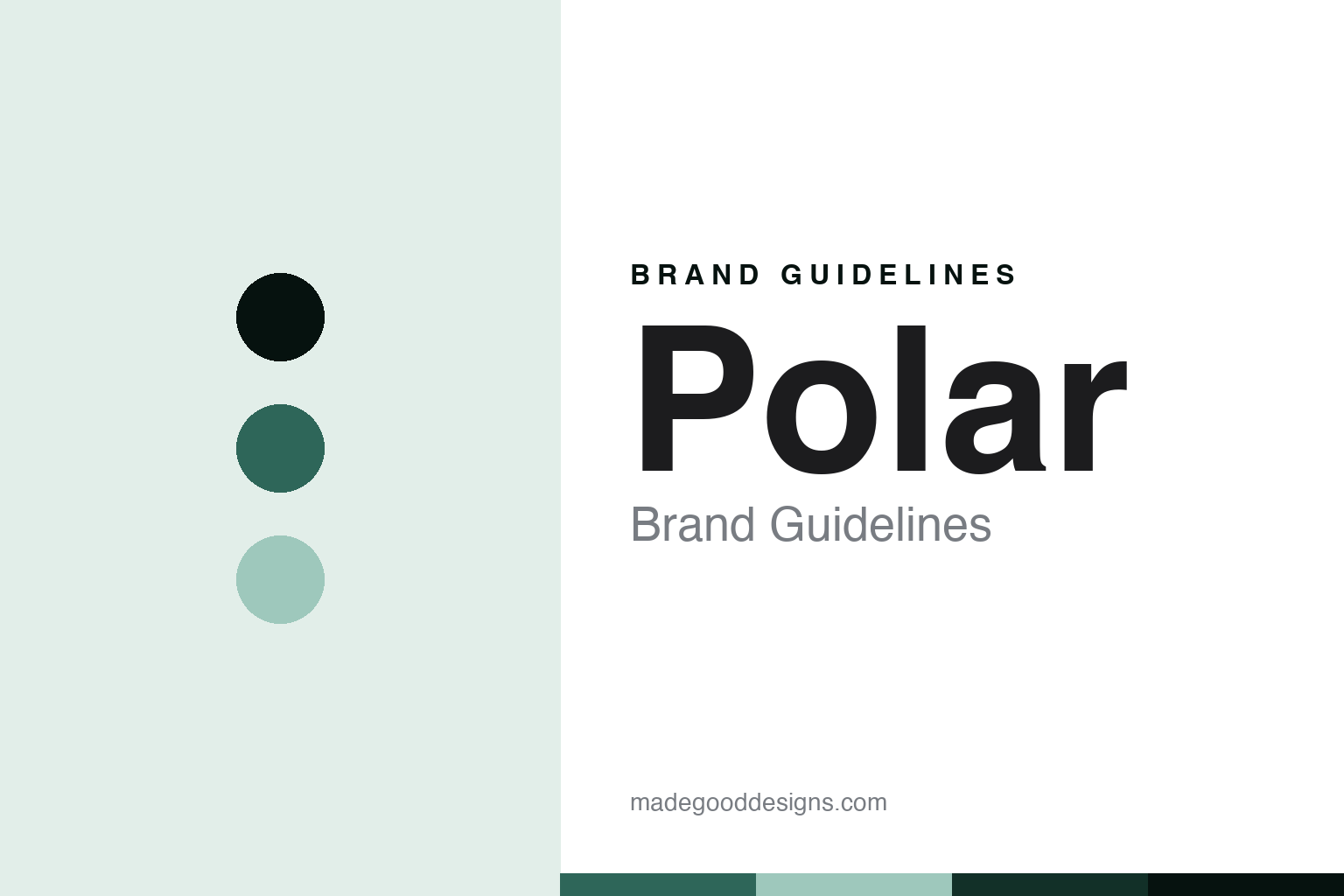
Polar Brand Guidelines
The artist’s deck.
Aa
Two constants: a slate-teal palette and an artist-sans register. Abstract homage — not a Polar product or mark.
The artist’s deck
Polar is the Malmö skate house of 2011 — Pontus Alv’s artist-driven decks from an independent Swedish brand.
Polar closes the round in Sweden — the Malmö house built by a skater, artist and filmmaker, whose hand-drawn graphics and DIY ethos made it one of Europe’s most respected core brands. Polar makes skateboard decks, and its answer to a round about deck builders is the artist’s hand: a brand where the graphics are the founder’s own art. A deck, drawn by hand.
Its identity is the artist’s deck. Polar’s hand-drawn graphics, its Malmö origin and its independence are the story here. A deck, from Sweden. The artist’s deck.
(Honest notes, so the story stays precise. Polar — Polar Skate Co, at polarskateco.com — makes skateboard decks and apparel, marked by founder Pontus Alv’s distinctive hand-drawn art, including the “Happy Sad” face motif. It was founded, as widely reported, in 2011 in Malmö, Sweden by Pontus Alv, a skater, artist and filmmaker whose DIY spot-building films predate the brand; the site carries no official history page, so the 2011 and Malmö specifics rest on reputable reporting. On where it is made — a theme of this round — Polar does not disclose a country of manufacture; its site describes only fulfilment, shipping from an EU warehouse in the Netherlands with regional US and UK distribution, which is not the same as manufacture, so we do not name a country. On ownership, it is reported to be independent and Alv-led, with no acquisition documented; his separate footwear brand, Last Resort, should not be conflated with it. Its marks — and the Happy Sad face — are IP we describe but do not reproduce, and there is no official brand hex; these tones are an unofficial interpretation. This is design commentary and does not promote any product.)
Colour
Polar lives in a slate teal. Click a swatch to copy the hex.
Polar’s identity is artistic, independent and made — a slate teal, an ink, a sea, a deep teal, and a paper. The palette leans slate teal and sea: a cool, Scandinavian register that nods to the brand’s muted, artful graphics rather than a loud skate palette. It signals an artist-driven, independent house. The honest caveat: with no published brand hex, these values are an original, unofficial interpretation, not first-party colours.
The lesson is a slate teal signals an artistic, independent identity. Polar’s world is an artistic, independent object. For designers, it is a reminder that a cool slate teal and a soft sea can carry a skate house — the tone of a hand-drawn, Scandinavian graphic. Because these tones can fail as small text, keep type dark and let the colour live in the accents, palette and band. The takeaways: let the art lead; keep it independent; be honest about undisclosed making; and treat any single hex as unofficial.
Typography
The register is an artist sans — considered, quiet, made.
Polar’s identity carries a considered, quiet, made spirit — an artist’s brand, not a fashion. An artist sans captures the mood: clean, understated and thoughtful, the register of a brand whose graphics are one person’s art. Set in a slate-teal palette, the artist sans feels considered and quiet — exactly the personality Polar carries. It is art rather than a logo, mirroring maple ply and hand-drawn ink. (Polar’s real wordmark, and the Happy Sad face, are things we describe but do not reproduce, and the exact typeface is not ours to use.) Because it is not ours to use, the honest description is “an artist-sans spirit,” shown here in a stand-in. The type behaves like the deck: considered, quiet and made.
Aa
An artist-sans spirit — considered and quiet. (Specimen set in Mulish, an artist-sans STAND-IN; NOT the Polar logo.)
The deck builders
Polar stands for the artist’s deck.
Polar closes the round in Sweden. A slate-teal palette, an artist sans and a hand-drawn deck make one thing — the artist’s deck — the whole identity: artistic, independent and made. The founder’s hand-drawn art is the differentiator, and the DIY ethos is the meaning. The point is a Malmö brand where the graphics are one person’s art, run independently by the skater-artist who draws them.
Put to work, the identity is an artist’s hand told straight, as design. A maker in this spirit would let the founder’s art be the brand and keep it independent, while being honest that manufacture is undisclosed and shipping is not making. A reader in this spirit would keep the facts right: it was founded, as reported, in 2011 in Malmö by Pontus Alv; the Happy Sad face is his motif; it is reported independent; and where the decks are pressed is not disclosed, EU shipping notwithstanding. Polar sits in the round’s where-made thread at the undisclosed end with Palace, and in the ownership thread at the independent end with Powell and Palace — the round’s European, artist-driven close. The honest editorial moves are to frame the founding as reported, to credit Alv’s art, to keep the making undisclosed, and not to conflate his separate footwear brand. The lesson Polar teaches is that in a graphic-led category, the most honest identity can be the founder’s own hand — and that a small independent can lead a global sport on art alone.
For designers and brand-builders, Polar closes the deck builders: let the founder’s art lead — and keep it independent. The lessons: make the art the brand; stay independent; be honest that shipping is not manufacture; keep the founder to public facts; and never reproduce a logo. It is also a reminder to stay precise: Polar is the Malmö skate house of 2011, Pontus Alv’s artist-driven decks from an independent Swedish brand — with the palette here an unofficial interpretation. Read that way, Polar is less a deck than a sketchbook: a skater-artist’s hand, turned into boards that a global sport respects. The lesson for a brand is that a single artistic voice, kept independent, can carry a brand across the world, and that honesty about where the boards are pressed keeps the art credible. Polar made the-artist’s-deck the identity — proof that one hand, drawing, can be a whole brand, and a fitting close to a round about who really builds the deck.
Explore & save
Keep Polar’s identity on hand — save it to a board in the Made Good inspiration library.
Polar identity set
Pin the slate-teal palette and the artist-sans register to your own board.