Jonathan Richardson was three things at once: a busy portrait painter in early Georgian London, a collector of drawings by earlier masters, and a writer who tried to explain in plain English how a picture works and how to judge one. His painted portraits are sober and solid. His drawings, especially the heads he made of himself and his family in his last years, are freer and more direct. Together with his books, they make him a useful figure for designers who want a vocabulary for looking at images and a model of what a few lines can do.
The public-domain images in this guide come from the Art Institute of Chicago and The Metropolitan Museum of Art. Browse more in the MGD museum inspiration collection.
Who was Jonathan Richardson?
Richardson was born in London in the mid-1660s. The Government Art Collection and the Dictionary of Art Historians give 1665, the Dictionary of National Biography gives 1666, and the Art Institute of Chicago gives 1667; the Courtauld Gallery’s records use both 1665 and 1667. According to the Dictionary of National Biography and the 1810 Encyclopaedia Britannica, which draws on Horace Walpole, his stepfather apprenticed him to a scrivener, and at about twenty he became a pupil of the portrait painter John Riley, whose niece he married. The Government Art Collection also names him as Riley’s pupil and heir.
He built a portrait practice in the years when Godfrey Kneller and Michael Dahl dominated London, a rivalry noted by both the Dictionary of National Biography and the Government Art Collection. The Government Art Collection adds that he helped found an academy of painting in London in 1711 and retired from painting in 1740. He died at his house in Queen Square, Bloomsbury, on 28 May 1745, according to the Dictionary of National Biography and the 1810 Britannica.
His pupils included Thomas Hudson, who married one of his daughters: the Dictionary of National Biography and the V&A, citing the antiquary George Vertue, both record this. The Dictionary of National Biography notes that Hudson went on to teach Joshua Reynolds, and both it and the Government Art Collection say Richardson’s writing fired the young Reynolds’s ambition to paint.
Key works and books by Jonathan Richardson
Painted portraits, c. 1710
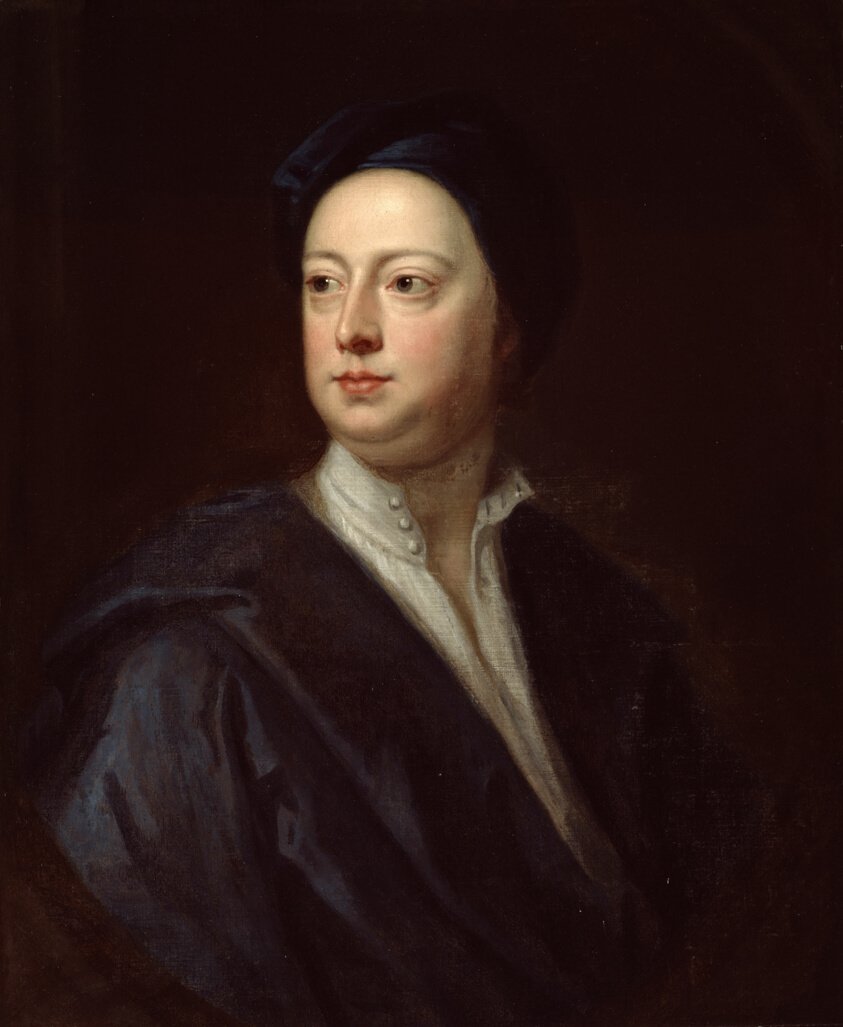
The Art Institute of Chicago holds his oil portrait Sir Andrew Fountaine, dated about 1710. It is a typical half-length of the period: dark ground, soft cap, loose gown and a single light falling from the left on the face and shirt.
The books, 1715–1734
An Essay on the Theory of Painting appeared in 1715, followed in 1719 by two discourses, An Essay on the Whole Art of Criticism as it Relates to Painting and An Argument in Behalf of the Science of a Connoisseur. Those dates are given by the Dictionary of National Biography and the Dictionary of Art Historians, and match early editions held on the Internet Archive. In 1722 father and son published An Account of Some of the Statues, Bas-Reliefs, Drawings and Pictures in Italy, compiled from the younger Richardson’s travel notes, as both dictionaries record. In 1734 came Explanatory Notes and Remarks on Milton’s Paradise Lost, by father and son, dated by the Dictionary of National Biography and by the Internet Archive’s 1734 copies.
Late portrait drawings, 1720s–1730s
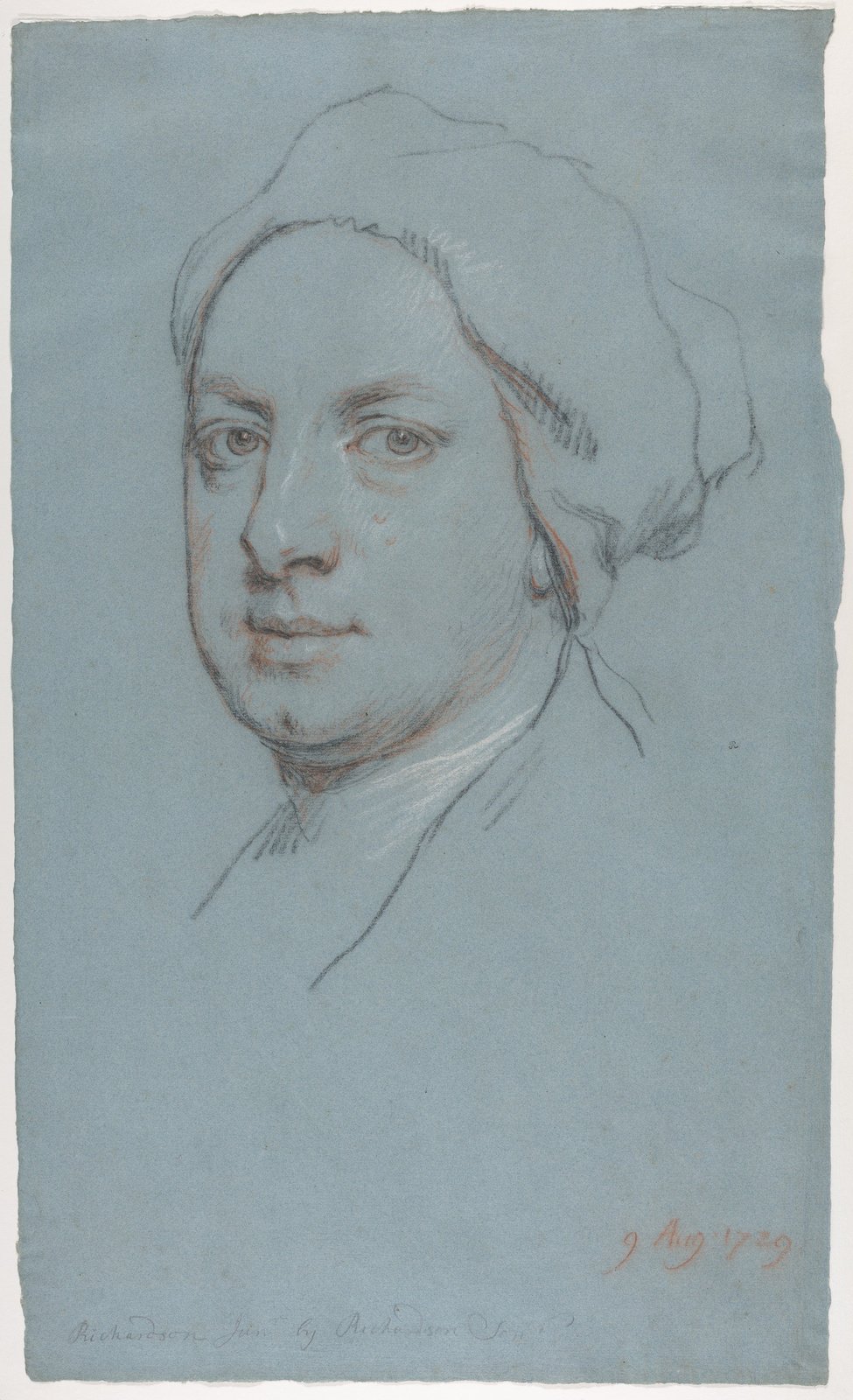
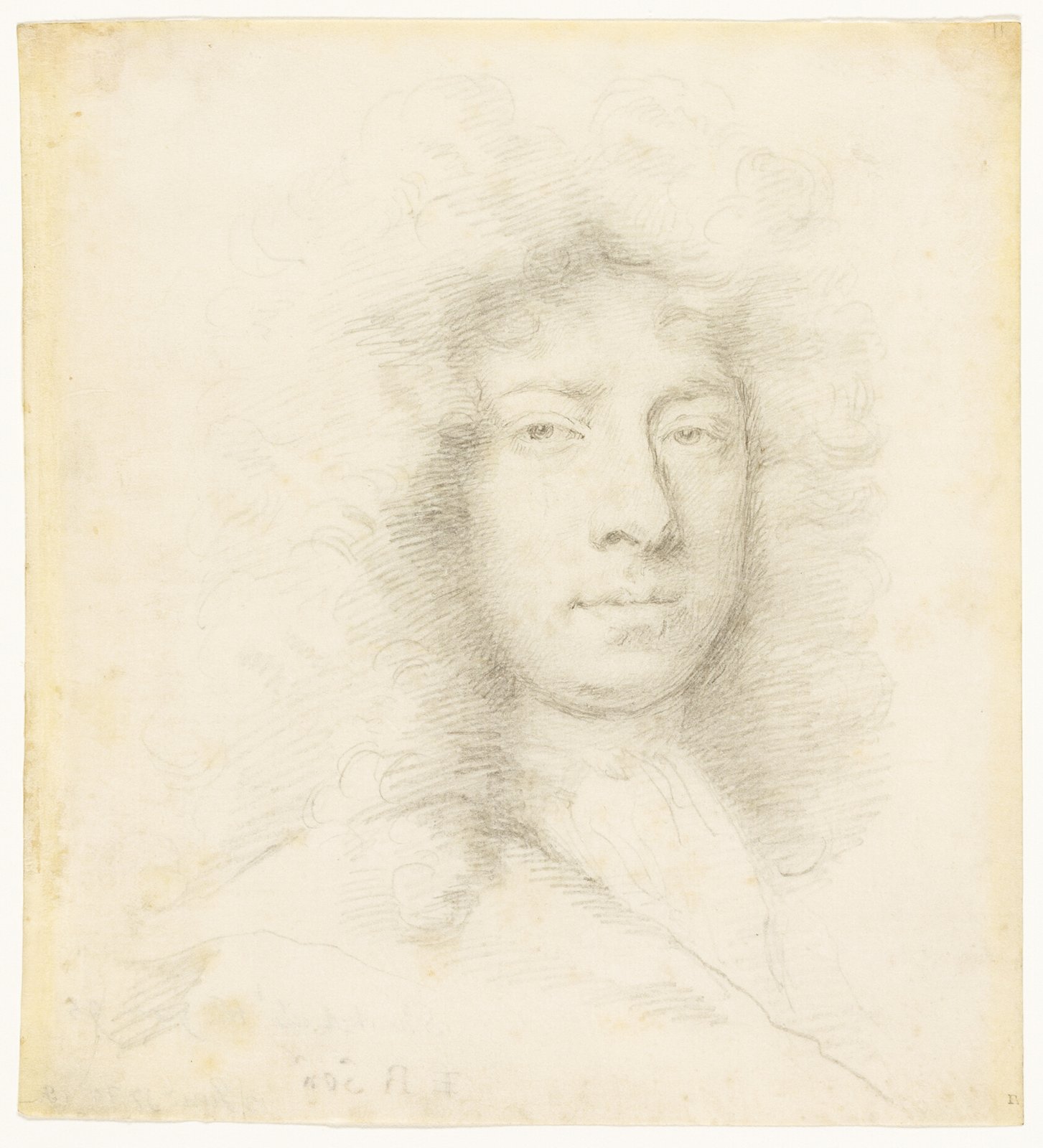
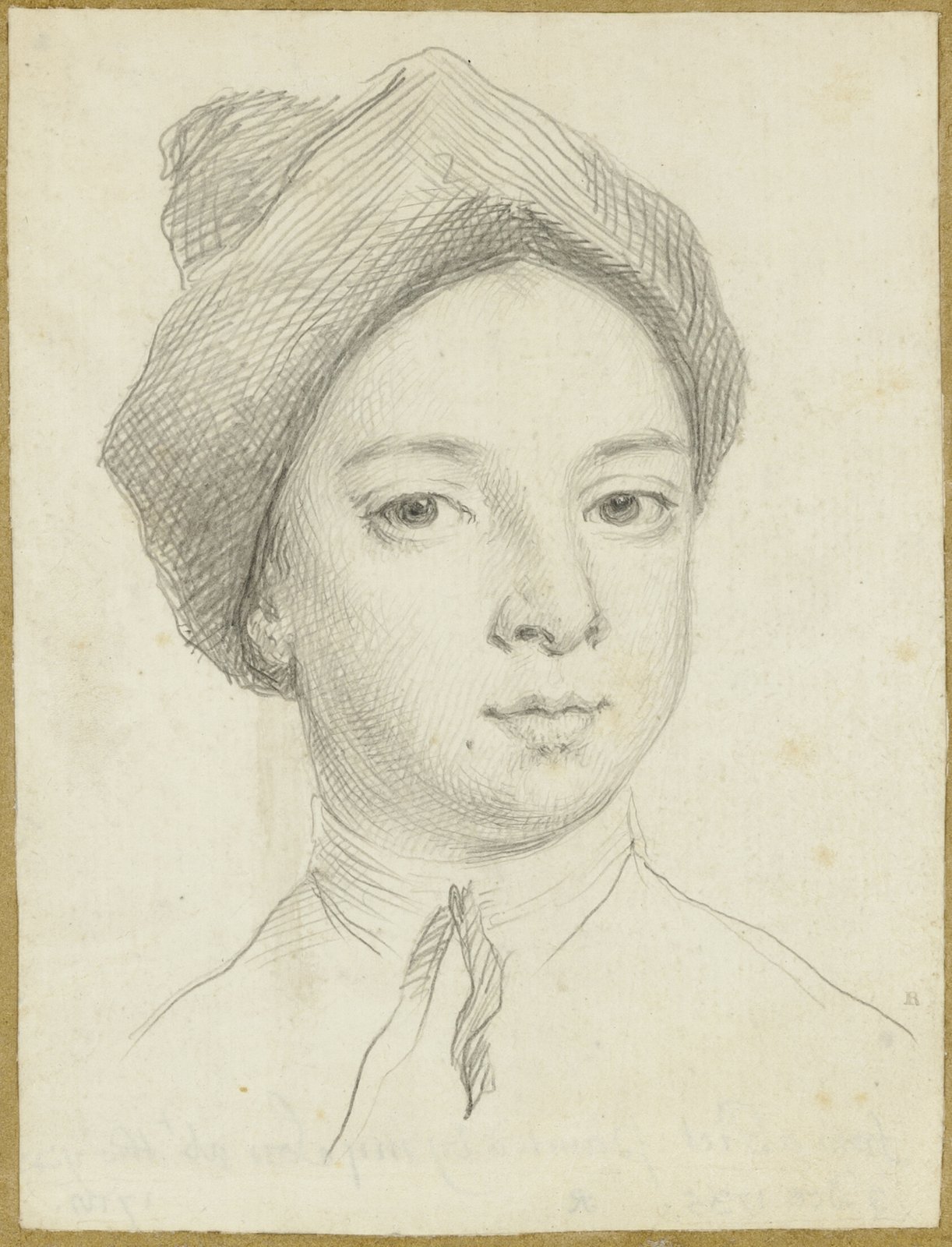
The Dictionary of National Biography says he drew a very large number of portrait heads in chalk and, late in life, many of himself, his son and Alexander Pope. The Courtauld Gallery’s label for one of his self-portraits says he began them in the last twenty-five years of his life as a means of self-examination, never intended for exhibition. The Met’s chalk portrait of his son is dated 1729. The Art Institute’s Self-Portrait (about 1735) and Portrait of Isaac Richardson (1735) are both graphite on vellum; the Art Institute describes the Isaac drawing as one of a group of vellum portraits of those closest to him, based on a painting of 1712.
What to look at: line, paper and light
The head as the whole picture. In the drawings, the face is finished and everything else is a suggestion. In the son’s portrait, cap and shoulders are a few black chalk contours; the modelling is reserved for eyes, nose and jowl. The 1810 Britannica, repeating Walpole, complained that he “drew nothing well below the head”; for a designer, that concentration is the point.
Toned paper as a mid-tone. On blue paper, the sheet does the work of the middle values. Black chalk sets the darks, white chalk the highlights, and red chalk warms the skin. Measured from the museum’s scan of this sheet, the paper reads as a grey-blue around #919fa3, the white chalk near #e9e5e2 and the black chalk lines around #6d6f6e.
Hatching that turns form. In the Isaac portrait, the cap is built from parallel and crossed graphite strokes that follow its folds, while the face is shaded with much finer, closer marks. Two densities of line create two textures without any change of tool.
Profile as format. The Courtauld’s label notes that the austere profile pose in one of his self-portraits is associated with ancient Roman portrait medals and coins. A strict profile reads instantly as a badge or seal.
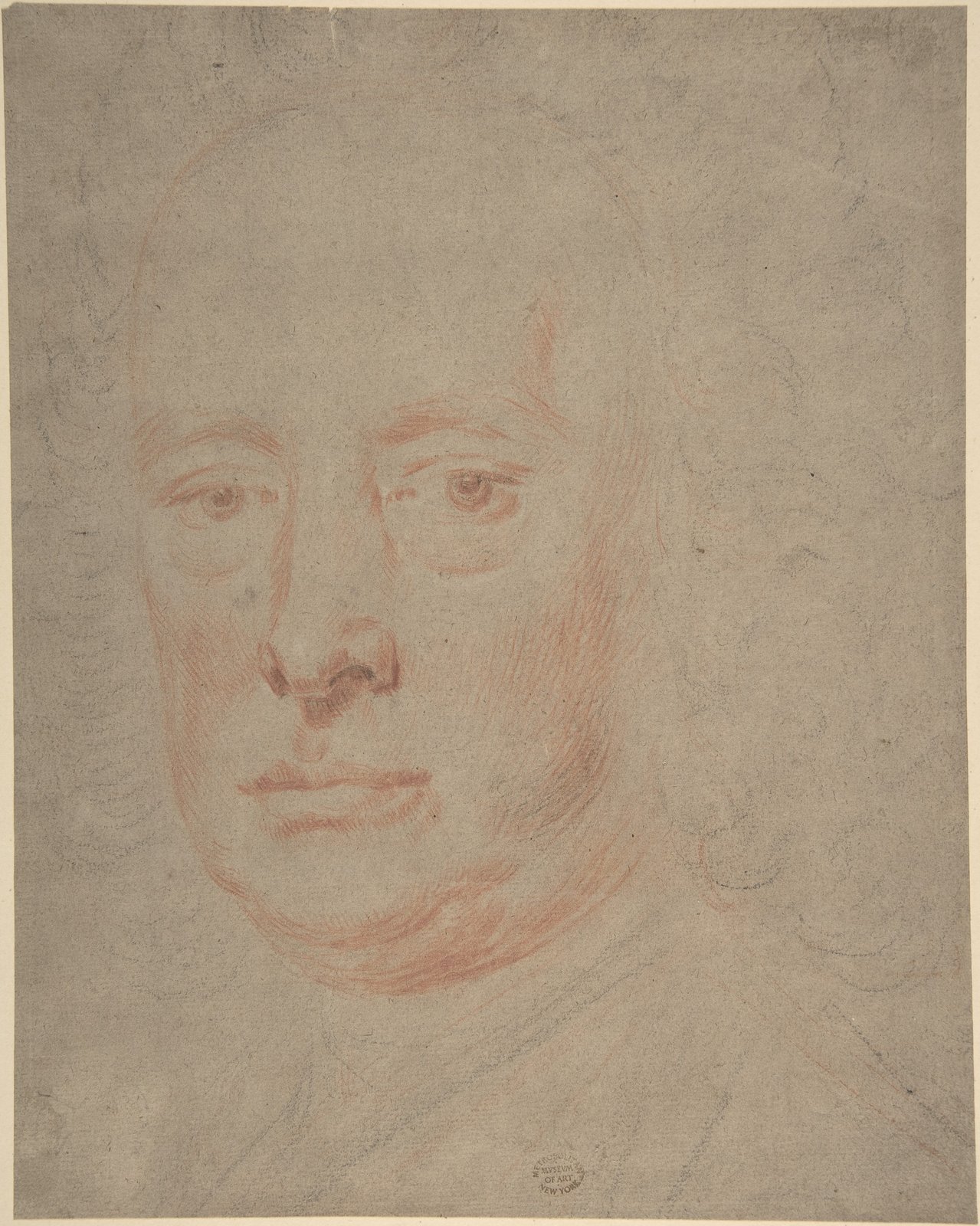
The painted palette. Measured from the museum’s scan of Sir Andrew Fountaine, the ground is a near-black brown, #1e0e0d, with mid browns around #654b34 and a warm flesh-and-linen highlight around #a78c6b. Measured from the museum’s scan of the red-chalk Man’s Head below, the toned sheet reads near #ac9b83 and the chalk around #987965.
Technique and theory
The museum records show his drawing media: black, red and white chalk on blue laid paper (The Met, 1729), red chalk with black chalk indications (The Met), black and white chalk on blue paper (the Courtauld), and graphite on vellum (the Art Institute of Chicago).
His theory is set out in the Essay on the Theory of Painting. In the 1725 edition he writes that the whole art of painting consists of seven parts: invention, expression, composition, drawing, colouring, handling, and grace and greatness. He defines handling as the manner in which colours are left by the brush on the picture, just as the use of pen, chalk or pencil is the handling of a drawing. In the same volume he discusses Roger de Piles’s numerical scale for rating painters, calling it curious and useful but incomplete because it leaves out parts such as invention, greatness and grace.
He was also a collector. The Dictionary of National Biography says his collection of old master drawings, part of it inherited from Riley, was sold after his death in an eighteen-day sale in 1747. The Courtauld records his collector’s stamp, catalogued by Frits Lugt as L.2184, on drawings that passed through his hands.
How designers can borrow from Jonathan Richardson
- Use his seven parts as a design review. Invention (the idea), expression (the feeling), composition (the arrangement), drawing (the structure), colouring, handling (the surface and mark) and grace and greatness (the overall character) map neatly onto a critique of a poster, a cover or a brand illustration.
- Finish the focal point only. Render the face, product or logo fully and leave the surroundings as contour. It speeds production and directs attention.
- Work on a mid-tone. Start a layout or illustration on a toned ground and add only darks and lights. The blue-paper values above make a ready three-colour palette; test them in the colour palette generator or sample your own with the image colour picker.
- Treat a profile as a mark. A strict side view, as on a medal, scales down to an avatar, stamp or seal better than a three-quarter view.
- Design a provenance mark. A collector’s stamp is a tiny identity system. A small, consistent mark on every item in a series does the same job for a studio.
Richardson’s line runs through Hudson to Joshua Reynolds, and from Reynolds’s studio to his assistant James Northcote, whose guide covers how that generation designed paintings for print.
Frequently asked questions
Who was Jonathan Richardson?
An English portrait painter, collector and writer on art, born in London in the mid-1660s and died in 1745. He trained with John Riley and taught Thomas Hudson, whom the Dictionary of National Biography names as Joshua Reynolds’s master.
What did Jonathan Richardson write?
An Essay on the Theory of Painting (1715), two discourses on criticism and connoisseurship (1719), an account of works of art in Italy with his son (1722) and notes on Milton’s Paradise Lost with his son (1734).
What materials did Jonathan Richardson draw with?
Museum records list black, red and white chalk, often on blue paper, and graphite on vellum, which he used for small portrait heads in the 1730s.
Are Jonathan Richardson’s works in the public domain?
His own works are old enough to be public domain in the US. The images here are ones the Art Institute of Chicago and The Met flag as public domain; check each museum’s rights statement for the scan you use.