José Ramírez Brand Guidelines
The Madrid guitar house.
Aa
Two constants: a cedar-amber palette and a Madrid-serif register. Abstract homage — not a José Ramírez guitar, rosette or mark.
The Madrid guitar house
José Ramírez is the Spanish classical-guitar house founded in Madrid in 1882, still family-run, hand-building its concert guitars in Madrid and keeping even its study lines made in Europe.
José Ramírez is the round’s Spanish guitar house. From Madrid, it hand-builds classical and flamenco guitars, and it has carried the family name through five generations since the workshop was founded in 1882. Its answer to how a house becomes a name is craft and lineage: keep the concert guitars hand-made in the Madrid workshop, pass the trade from one generation to the next, and — unusually — keep even the more affordable lines in Europe rather than sending them to Asia. A Spanish guitar, hand-built in Madrid.
Its identity is the Madrid guitar house. José Ramírez’s hand-made concert guitars, its five-generation lineage and its all-European making are the work it is known for. A guitar, from Madrid. A family that never sent the work abroad.
(Honest notes, so the story stays precise. The José Ramírez workshop was founded in 1882 by José Ramírez I in Madrid; the family dates its craft to 1870. Its generations run from José Ramírez I through IV to the current family leader, Amalia Ramírez, a fourth-generation member — described from public facts, and presented as reported rather than pinned to a specific 2026 management structure. On where it is made — a theme of this round — the split is a clean, all-European one: concert and handcrafted guitars are made in the Madrid workshop; the Studio (“Estudio”) line is made in other Spanish factories; and the entry G-Line is “made in Europe” — notably, no Ramírez line is made in Asia. On the history, a careful distinction: the famous 1912 guitar associated with Andrés Segovia and held in a museum was made by Manuel Ramírez, a separate workshop run by José I’s brother; Segovia’s later association with this house is with José Ramírez III concert guitars — the two Ramírez houses are not the same, and we keep them distinct. The 664mm longer scale is José Ramírez III’s innovation. Its name and marks — the Ramírez signature, the headstock and rosette — are IP, described but never reproduced, and there is no official brand hex; these tones are an unofficial interpretation. This is design commentary and does not promote any product.)
Colour
José Ramírez lives in a cedar-amber palette. Click a swatch to copy the hex.
José Ramírez’s identity is craft, Spanish and lineage-led — a cedar amber, an ink, a spruce, a rosewood, and a paper. The palette leans cedar amber and spruce: the register of a soundboard, a cedar top and a rosewood back. It signals hand-craft over manufacture. The honest caveat: with no published brand hex, these values are an original, unofficial interpretation, not first-party colours.
The lesson is a cedar-amber palette signals a hand-made, Madrid-built identity. José Ramírez’s world is a craft, wooden, Spanish object. For designers, it is a reminder that a warm cedar and a pale spruce can carry a house built on tonewood — the amber of a cedar soundboard and the neutral of a spruce top. Because these tones can fail as small text, keep type dark and let the colour live in the accents, palette and band. The takeaways: hand-build the flagship; pass on the trade; keep even the study lines close; and treat any single hex as unofficial.
Typography
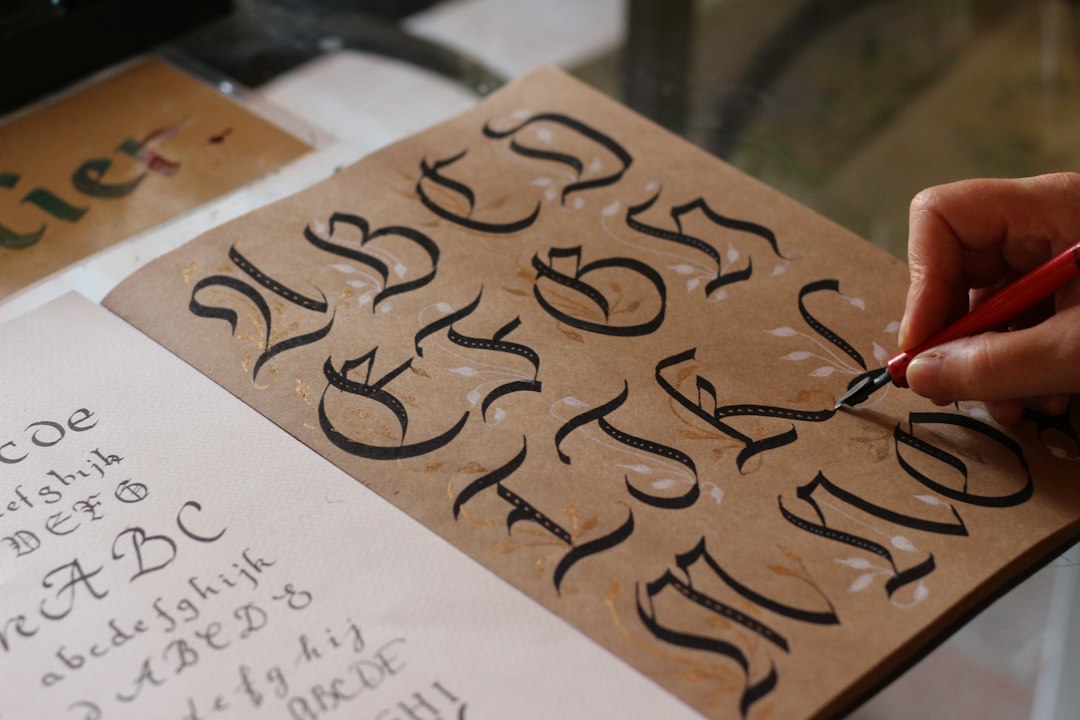
The register is a Madrid serif — refined, classical, made.
José Ramírez’s identity carries a refined, classical, made spirit — a family guitar house, not a factory brand. A Madrid serif captures the mood: elegant, warm and storied, the register of a concert-guitar workshop. Set in a cedar-amber palette, the Madrid serif feels refined and classical — exactly the personality José Ramírez carries. It is a hand-craft lineage rather than a runway, mirroring a concert guitar. (José Ramírez’s real logo, signature, headstock and rosette are things we describe but do not reproduce, and the exact typeface is not ours to use.) Because it is not ours to use, the honest description is “a Madrid-serif spirit,” shown here in a stand-in. The type behaves like the house: refined, classical and made.
Aa
A Madrid-serif spirit — refined and classical. (Specimen set in Playfair Display, a Madrid-serif STAND-IN; NOT the José Ramírez logo, signature or rosette.)
The instrument makers
José Ramírez stands for the guitar hand-built in Madrid.
José Ramírez is a lesson in how lineage and hand-craft can be an identity. A cedar-amber palette, a Madrid serif and a concert guitar make one thing — the Madrid guitar house — the whole identity: craft, Spanish and lineage-led. The five-generation family workshop is the differentiator, and the all-European making is the meaning. The point is a house that has hand-built guitars in Madrid since 1882, passed the trade down through the family, and kept even its study instruments in Europe when almost everyone offshores them.
Put to work, the identity is hand-craft, honestly told, as design. A house in this spirit would hand-build the flagship, keep the lineage, and be candid about the tiers — concert guitars made in Madrid, Studio in Spanish factories, G-Line made in Europe. A brand learning from it would see that a family lineage is a durable identity — that a guitar hand-built by the fourth generation of one family carries a continuity a factory cannot — and that being precise, founded 1882, concert guitars in Madrid, study lines in Europe rather than Asia, keeps the story honest. José Ramírez sits beside Petrof as one of the round’s still-family, still-at-home houses, but it adds a distinction worth marking: its accessible lines never crossed to Asia, a made-in-Europe discipline the round’s bigger names did not all keep. There is care, too, in the history: keeping the José Ramírez house distinct from the separate Manuel Ramírez workshop, and attributing the Segovia link to José III rather than merging the two, is what keeps the lineage honest. The lesson José Ramírez teaches is that lineage can hold an identity: the hand-craft gives it substance, and the all-European making keeps it credible. The lineage is the personality, and the Madrid-built guitar is the proof.
For designers and brand-builders, José Ramírez holds a family pole in the instrument makers, from Spain: hand-build the flagship, and keep the making close. The lessons: build the concert line by hand; pass on the trade; keep the study lines in-region; separate your history from a similarly-named house; and never reproduce a signature or rosette. It is also a reminder to stay precise: José Ramírez is the Spanish classical-guitar house founded in Madrid in 1882, still family-run, hand-building its concert guitars in Madrid and keeping even its study lines made in Europe — with the palette here an unofficial interpretation. José Ramírez made lineage the identity — proof that a guitar hand-built in Madrid, honestly told, can be the difference.
Explore & save
Keep José Ramírez’s identity on hand — save it to a board in the Made Good inspiration library.
José Ramírez identity set
Pin the cedar-amber palette and the Madrid-serif register to your own board.