Katinat Brand Guidelines
A Saigon tea and coffee chain named after an old street.
Aa
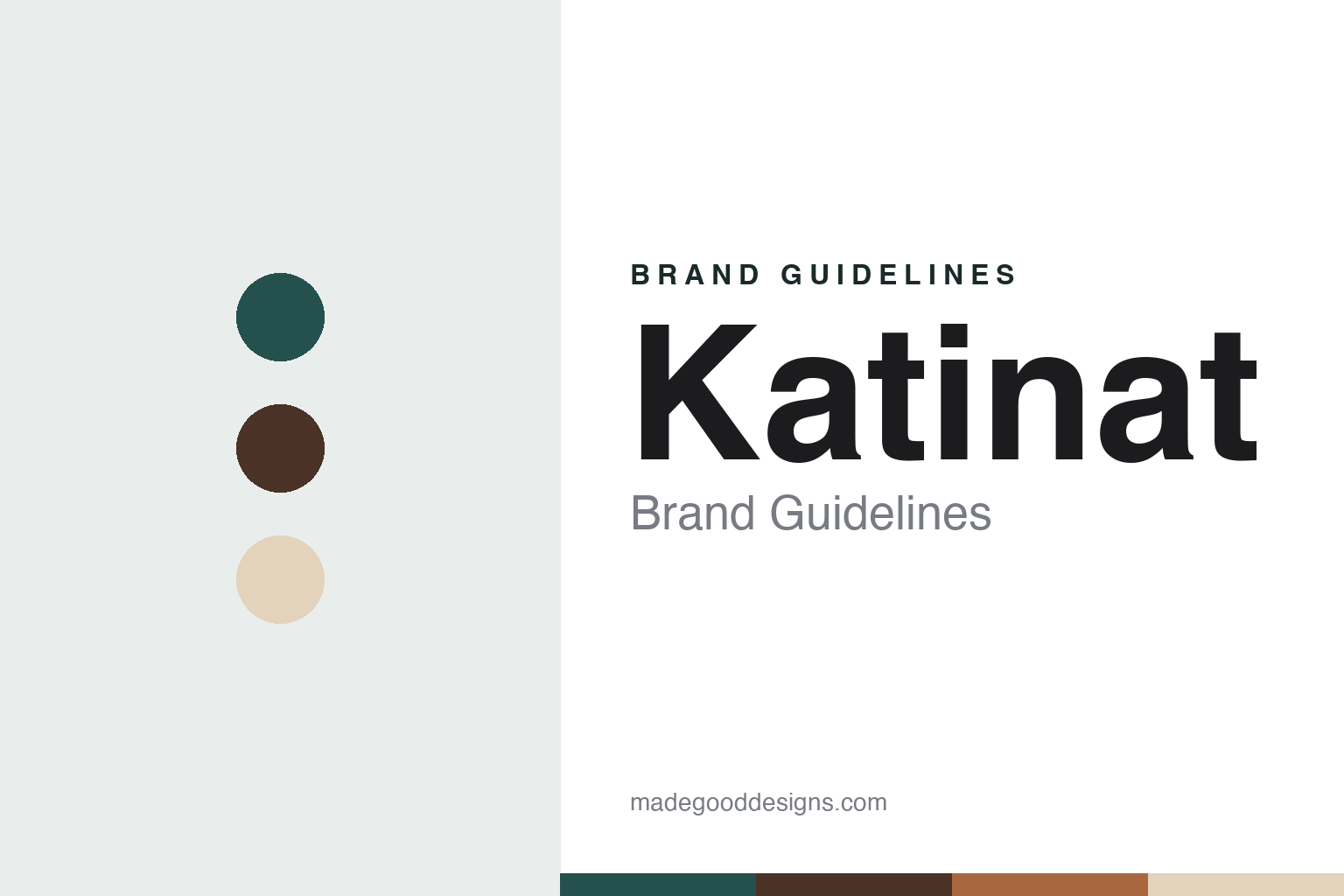
Two constants: a teal, espresso and latte palette and a café serif register. Abstract homage — not a Katinat product or mark; no cup, logo or shopfront is reproduced.
Rue Catinat
A café chain named after a Saigon street.
Katinat is a tea and coffee chain from Ho Chi Minh City. A profile published by the Vietnamese business magazine Mekong ASEAN in April 2023 dates the chain to 2016 and says its cafés belong to Café Katinat Joint Stock Company, which sits within the food and beverage group of D1-Concepts, whose other names include the restaurants San Fu Lou, Dì Mai and the Japanese restaurant Sorae.
The name comes from a street. Design Anthology reported in October 2022 that the chain is named after Rue Catinat, and Metropolis described it that December as a prominent street of colonial-era buildings. English Wikipedia says the street was later called Tự Do Street and is now Đồng Khởi Street, running from Paris Commune Square to the Saigon River waterfront. The company’s website lists its representative store on Đồng Khởi, in District 1.
Growth was slow at first and then fast. According to the Mekong ASEAN piece, an interview with the food and beverage consultant Nguyễn Thái Bình, Katinat had 10 branches in Ho Chi Minh City at the end of 2021, gathered in Districts 1 and 3, plus one in Biên Hoà in Đồng Nai province. He said the chain had run no large advertising campaigns in that period. By the end of July 2022 it had opened 23 more, for 33 stores across Ho Chi Minh City, Đồng Nai, Bình Dương and Tiền Giang, many of them on busy central streets such as Đồng Khởi, Hàm Nghi and Nguyễn Bỉnh Khiêm.
The move north followed. In April 2023 the same magazine reported that Katinat was opening its first store in Hanoi, on Lý Thường Kiệt Street in Hoàn Kiếm district, close to the city’s office quarter.
Colour
Milk tea, phin coffee and a long drinks menu.
Katinat sells tea as much as coffee. Its website groups the menu into four lines: espresso coffee; Cà Phê Phin Mê, a phin-filter range that the company says uses Robusta from Buôn Ma Thuột; milk tea, which it calls the line that made the brand’s name, with tea it says is picked on hills above 1,000 metres; and fruit tea.
The 2023 Mekong ASEAN interview counted more than 40 drinks on the menu, running from traditional iced milk coffee and latte to peach tea and oolong macchiato, and noted that drinks came in two sizes, M and L. The consultant pointed to a seasonal drinks development team as a feature of the business, and said the chain develops traditional Vietnamese coffees such as bạc xỉu alongside espresso drinks such as a hazelnut latte.
The audience is young. In a June 2024 interview with Việt Nam News, brand consultants described Katinat as focused on younger customers, with spaces designed to be photographed and shared on social media, and said coffee is a secondary reason to visit for many of them. The 2023 Mekong ASEAN interview made a similar point, naming office workers of Gen Y and students of Gen Z as the chain’s two main customer groups.
The company has also added a loyalty app: its news page announces a new Katinat application in which customers collect points, move up membership levels and redeem rewards.
Typography
Cafés, chains and their owners.
Vietnam’s café and restaurant chains grew up in a country with a deep street culture of coffee, tea and noodle soup, and most of them present themselves through the shop itself. A chain’s identity is carried by its shopfronts and seating, by the cup a drink is handed over in, and by the bags of ground coffee and boxes of tea sold at the counter or in supermarkets.
Menus are built around named drinks and dishes rather than abstract promises. Coffee chains list house blends, iced coffee with condensed milk and ice-blended drinks; tea chains list fruit teas, milk teas and loose-leaf varieties from Vietnam’s highland growing areas; phở, pizza and hot-pot chains name their broths, toppings and set menus. Store formats vary too, from large flagship cafés to kiosks placed inside supermarkets, and the press has followed which formats the chains keep and which they close.
Ownership is often part of the story. Several of the chains in this set belong to wider groups: Highlands Coffee sits under SuperFoods, in which the Philippine group Jollibee Foods holds a stake, alongside Phở 24; Phúc Long is a subsidiary of the Vietnamese consumer group Masan; others covered here belong to the restaurant group Golden Gate or the retail group Seedcom, as their own guides set out. Store counts change quickly, so each guide gives its figures with the date and the publication that reported them.
Each guide sets out what can be checked about a brand from independent, dated reporting by publications such as VnExpress International, Tuoi Tre News, Viet Nam News and Vietnam Investment Review: who founded it, who owns it, how it trades and what its stores and products look like, with company statements marked as the company’s own word.
Aa
A café serif for a chain named after an old street. (Specimen set in Playfair Display, a serif STAND-IN; NOT the Katinat logo.)
Katinat Coffee & Tea House
Curves, glass block and coffee colours.
Katinat’s look is carried by its interiors. In October 2022 Design Anthology interviewed Jade Nguyễn Ngọc, design director of the Ho Chi Minh City firm Module K, which was brought in to refresh the chain’s master concept and adapt it site by site across more than 20 coffee shops. The firm’s District 6 café occupies a colonial-era building that had been a kindergarten. She described a palette taken from coffee, “from pale latte to warm mocha and dark espresso tones,” with touches of bronze, and French details such as large clocks that refer back to Rue Catinat. The floors are terrazzo, the columns rough concrete and the bar stainless steel, and the street front was rebuilt in custom glass blocks whose pattern references the brand. Seating comes in cocoa-coloured banquettes and cinnamon-coloured chairs at small terrazzo tables, and a circular concrete staircase with lit steel steps leads to a mezzanine.
Metropolis covered the same café in December 2022, calling it part of the “Katinat CoffeeMaster Concept 2022” and saying Module K/Soulroom had completed 15 earlier projects for the brand. The magazine said the chain then operated more than 50 cafés in Vietnam, each with a slightly different interpretation of the brand’s identity, and noted ovoid mirrors in bronze frames that echo the shape of the Katinat logo.
In Hanoi, the 2023 Mekong ASEAN interview described the first café there in teal combined with grey and beige, with glass panes. Then the name shifted. A 2026 report on the business site of Báo Pháp Luật, citing the market research firm Q&Me, said Katinat changed its brand identity in 2024 and had 69 stores that year. The company’s website now heads its pages “KATINAT Coffee & Tea House,” while its footer still carries the Katinat Saigon Kafé name.
For a design guide, Katinat shows how a café chain can hold a brand together through materials, colour and a street name while each shop is drawn a little differently. Compare Highlands Coffee and Phúc Long, two other Vietnamese tea and coffee chains. For this guide we use deep teal, espresso brown, cinnamon and latte with a serif, an unofficial interpretation; no product or logo is reproduced.
Explore & save
Keep Katinat’s identity on hand — save it to a board in the Made Good inspiration library.
Katinat identity set
Pin the Katinat teal, espresso and latte palette and the café serif register to your own board.
Source & notes
Frequently Asked Questions
What font can I use to match the Katinat look?
This guide describes Katinat’s type as “A café serif for a chain named after an old street”. Its type specimen is set in Playfair Display from Google Fonts as a stand-in; Playfair Display is not Katinat’s own lettering.
What colours are in the Katinat palette?
This guide’s Katinat palette is Deep teal #24504E, Espresso brown #4A3226, Cinnamon #A8683F, Latte #E3D2BC and Paper #F8F4EE. The tones are the guide’s own unofficial interpretation, not official Katinat hex codes.
When was Katinat founded?
Katinat was founded in 2016, in Ho Chi Minh City, Vietnam.