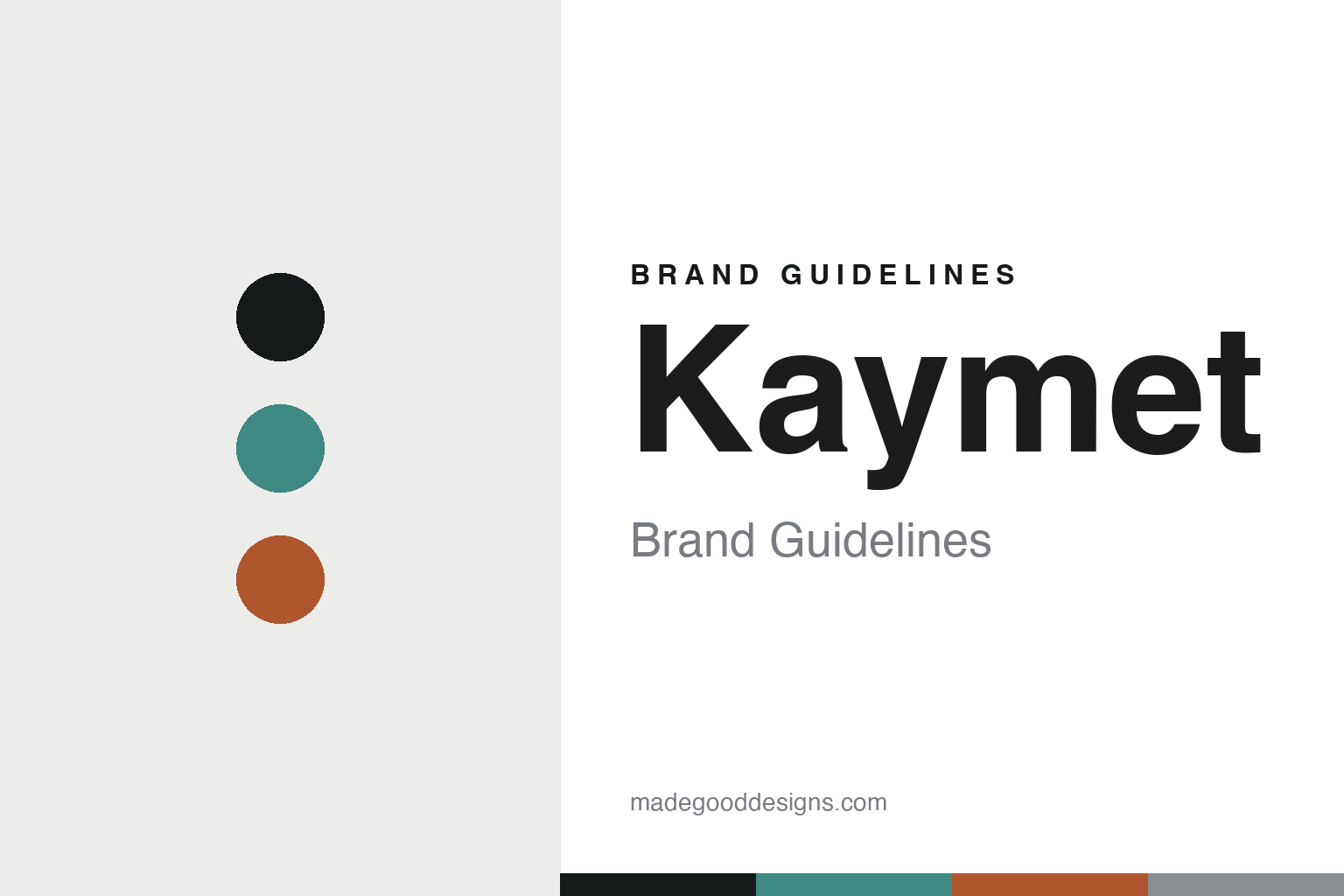
Kaymet Brand Guidelines
The aluminium tray.
Aa
Two constants: an anodised-aluminium palette and a mid-century sans register. Abstract homage — not the Kaymet tray or wordmark.
The aluminium tray
Kaymet has hand-made aluminium trays since 1947.
Kaymet is a lesson in hand-made metalware as the identity. A British maker founded in 1947 in South London, it has hand-made anodised aluminium trays for generations.
Its identity is the aluminium tray. Kaymet’s ribbed, anodised aluminium trays — pressed or assembled, anti-slip, in retro colours — are the objects it is known for, alongside trolleys and hotplates. A tray that doubles as a desk catch-all. Mid-century metal, still hand-made.
(Honest notes: Kaymet is a British metalware maker founded in 1947 by Sydney Schreiber, from a family of German-Jewish metalworkers; the name is “Kaymet” — Kahn (the family) plus metal — and the firm pivoted from wartime aluminium radar parts to trays. It is based in South London — Peckham, off the Old Kent Road, not Bermondsey. Its signature is the hand-made anodised aluminium tray, in pressed (single-sheet) and assembled (ridged edges and handles) forms, with an anti-slip ribbed surface and retro colour finishes, alongside trolleys and hotplates; we don’t assert the range names “Signal” or “Tokyo,” which we couldn’t verify. On production, it is genuinely hand-made in London — a small team hand-finishes and assembles at the Peckham premises — a strong, well-documented made-in-Britain story. It is independent and family-owned, in the same South London operation since 1947, and holds a Royal Warrant (2018) and a Queen’s Award (2020). There’s no official brand hex, and we reproduce no Royal Arms — these tones are an unofficial interpretation. This is design commentary and does not promote any product.)
Colour
Kaymet lives in an anodised-aluminium palette. Click a swatch to copy the hex.
Kaymet’s identity is mid-century, metallic and retro — an anodised teal, an ink, a retro orange, an aluminium, and a chalk. The palette leans anodised aluminium — the register of ribbed, colour-anodised metal. It signals heritage and craft rather than novelty. The honest caveat: with no published brand hex, these tones are an original, unofficial interpretation, not first-party values.
The lesson is an anodised-aluminium palette signals hand-made metalware. Kaymet’s world is a mid-century, metallic, hand-made object. For designers, it is a reminder that a simple object — a tray — can carry decades of craft and a strong made-in-Britain story, and that a ribbed, anodised palette signals that heritage. Because an anodised teal can fail as small text, keep type dark and let the colour live in the accents, palette and band. The takeaways: hand-make it; anodise the metal; keep the heritage; and treat any single hex as unofficial.
Typography
The register is a mid-century sans — clean, honest, retro.
Kaymet’s identity carries a clean, honest, retro spirit — a mid-century, metallic object. A humanist mid-century sans captures the mood: it is warm and functional, the register of post-war British design. Set in an anodised-aluminium palette, the mid-century sans feels clean and honest — exactly the personality Kaymet carries. It is retro rather than trendy, mirroring ribbed metal. (Kaymet’s real tray and wordmark are works we describe but do not reproduce, and the exact typeface is not ours to use.) Because it is not ours to use, the honest description is “a mid-century sans spirit,” shown here in a stand-in. The type behaves like the brand: clean, honest and retro.
Aa
A mid-century sans spirit — clean and honest. (Specimen set in Work Sans, a humanist mid-century sans STAND-IN; NOT the Kaymet wordmark.)
Hand-made metalware as identity
Kaymet stands for the aluminium tray.
Kaymet is a lesson in keeping a craft alive. An anodised-aluminium palette, a mid-century sans and a ribbed tray make hand-made metalware the whole brand — clean, retro, enduring. The craft is the differentiator. The differentiator is still hand-making anodised aluminium trays in London, decades on, when the category long went to mass production.
Put to work, the identity is heritage carried forward. A designer building in this spirit would keep a genuine craft at the centre — hand-finishing, local making — so a simple tray carries the value of a long-lived workshop rather than an anonymous factory. The lesson Kaymet teaches is that longevity is an asset: hand-making the same well-designed tray since 1947, with Royal and design credentials, gives the brand authenticity, and a mid-century, metallic design language keeps that heritage legible.
For designers and brand-builders, Kaymet offers a clear takeaway: protect the craft and the place. The lessons: hand-make it; anodise the metal; keep the heritage; and be honest about the story. It is also a reminder to stay accurate — and to correct a detail: Kaymet is based in Peckham, not Bermondsey, and we don’t assert unverified range names — the palette here is an unofficial interpretation. And it is a reminder that made-where honesty can be the whole point: Kaymet is genuinely hand-made in London, and that is worth stating plainly. It is a reminder, too, that heritage marks must be respected: its Royal Warrant and Royal Arms are protected, so we reference the credential but reproduce no arms. Kaymet made the aluminium tray the brand — proof that a living craft can be the difference.
Explore & save
Keep Kaymet’s identity on hand — save it to a board in the Made Good inspiration library.
Kaymet identity set
Pin the anodised-aluminium palette and the mid-century-sans register to your own board.