Lane Bryant Brand Guidelines
The 1904 New York dress shop that became a US mall chain.
Aa
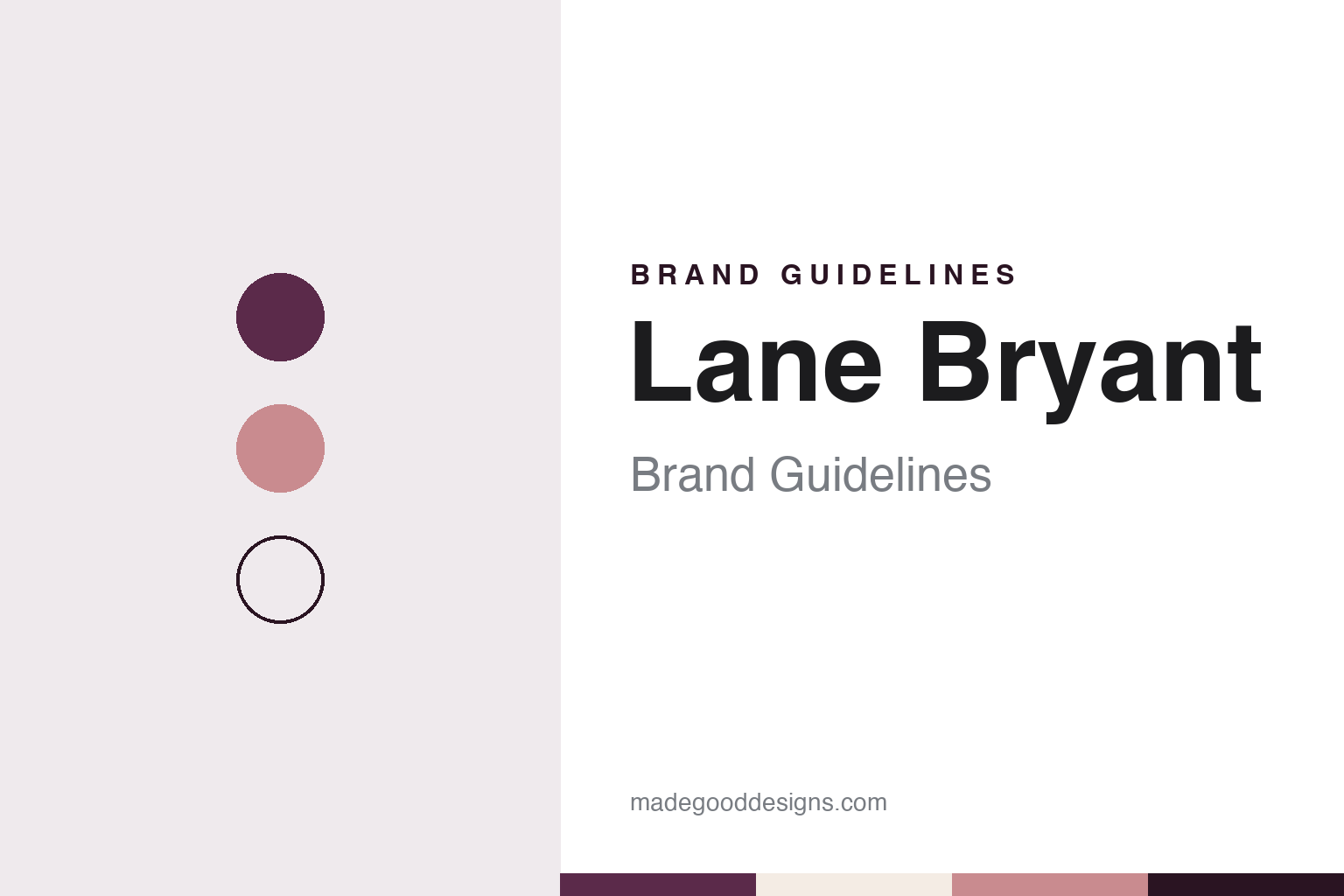
Two constants: a plum, rosewood and ivory palette and a display serif register. Abstract homage — not a Lane Bryant product or mark; no shop sign, logo or garment is reproduced.
A shop in New York
A dressmaker, a bank form and a misspelt name.
Lane Bryant began as one woman’s dressmaking business in New York. According to a profile published by My Jewish Learning in May 2009 as one of the American Jewish Historical Society’s “Chapters in American Jewish History,” Lena Himmelstein arrived in New York from Lithuania in 1895, aged 16, and supported herself as a seamstress. By 1904 her business had grown enough for her to open a shop with living quarters at the back; English Wikipedia places that storefront on Fifth Avenue.
The company’s name came from a clerical slip. Both accounts say that when she opened a business account, a bank officer wrote her first name as “Lane” instead of “Lena,” and the name stuck. The business has traded as Lane Bryant ever since.
Its earliest success was in maternity clothes. The 2009 profile, citing the historian Louise Klaber, says a pregnant customer asked for something “presentable but comfortable” to wear in the street, and Bryant made a dress with an elasticized waistband and an accordion-pleated skirt. The maternity dress soon became the shop’s main seller.
In 1909 she married Albert Malsin, who became her business partner and ran the firm’s operations while she remained chief designer, the profile says. English Wikipedia adds that he had dresses cut mechanically in quantity and began financing outside contractors. Advertising was the next hurdle: New York newspapers would not take advertisements for maternity clothes, and it took until 1911 for the New York Herald to accept one, after which, both sources say, the shop’s stock sold out the next day.
Colour
Catalogues, larger sizes and a national chain.
Mail order shaped the business early. The 2009 profile says the Malsins turned to a catalogue because newspapers had shut them out, and English Wikipedia records that by 1919 the company was producing a 52-page catalogue of larger sizes alongside a 76-page maternity catalogue.
Clothing in larger sizes then overtook maternity wear. Before the First World War, the profile says, no mass manufacturer of women’s clothing served that market; Lane Bryant Malsin measured some 4,500 women in her store, studied figures gathered on about 200,000 others, and designed ranges from that data. By 1923, it says, sales of the larger-size range had outstripped maternity wear.
The shop became a chain. Lane Bryant opened its earliest branch outside New York in Chicago in 1915, and by 1969 it had more than 100 stores, the profile says. English Wikipedia notes that in 1961 the company bought Town & Country, a Pennsylvania discount department store, a division it closed in 1977. The company later went public, and the 2009 profile says a quarter of the stock was reserved for employee subscription.
Ownership then changed several times. English Wikipedia says the Lane Bryant operations were bought in May 1982 by The Limited, the retail group founded by Leslie Wexner. In 1993 the catalogue business was licensed to Brylane, and Wikipedia stresses that Lane Bryant, Inc. is not affiliated with the Lane Bryant catalogue that Brylane ran as a separate business. The store chain moved to Charming Shoppes of Bensalem, Pennsylvania, owner of Fashion Bug and Catherines, in 2001, according to Wikipedia’s article on that company, which also dates the launch of Lane Bryant Outlet to July 2006. English Wikipedia records a flagship store opening near Fifth Avenue in 2004 and Charming Shoppes regaining the catalogue licence in October 2007.
Slogans and collaborations have carried the brand’s voice. English Wikipedia lists “What Real Women Wear” from 1995 to 2004 and “Bold. Modern. You.” from 2004 to 2010. In 2013 Lane Bryant announced a collaboration with the designer Isabel Toledo and the artist Ruben Toledo: a holiday 2013 capsule with a logo tee and a tote bag carrying Ruben Toledo’s sketches, then a full spring 2014 collection shown on a New York runway on 20 March 2014. That autumn the designer Sophie Theallet produced lingerie and sleepwear for Cacique, the chain’s lingerie label.
Typography
Shop signs, catalogues and size ranges.
Plus-size fashion chains in Britain, North America and Australia present themselves through the same tools as any other clothing retailer: a shop sign, a logo, a website, a loyalty scheme and, for some, a printed catalogue. Their size ranges are part of how they describe themselves: Penningtons gives its range as 12 to 32 on its website, and a 2025 trade directory listed Yours Clothing at 14 to 40, up from 16 to 36 in 2018.
The formats vary widely. Some chains grew from a single trading pitch: Yours Clothing began as a market stall in England in 1994 and moved online in 2007, according to the Lincolnshire Free Press. Others are long-established store chains in shopping centres and on high streets, and the category also includes brands that grew out of mail-order catalogues before moving online. Yours Clothing, for example, now sells through its own stores and websites, and also stocks a menswear label from the same owner.
Ownership is just as varied, and it often explains the identity a shopper sees. Some chains are run by their founders, some belong to listed retail groups, and others have passed between owners after administrations or creditor-protection filings. Reitmans, the Montreal group that bought Penningtons in 1995, closed its second plus-size chain, Addition Elle, in 2020 and later revived the name as a range inside its Penningtons stores. The Evans brand moved from Britain’s Arcadia Group to Australia’s City Chic Collective in 2020 and on to the owner of Yours Clothing in 2023, according to TheIndustry.fashion.
Names and logos also change: Penningtons announced a shortened PENN. logo in September 2022, and its website now uses both forms together. This guide sets out what can be checked about each brand, from founders and owners to the ranges they name, and treats every palette and typeface shown here as an unofficial interpretation.
Aa
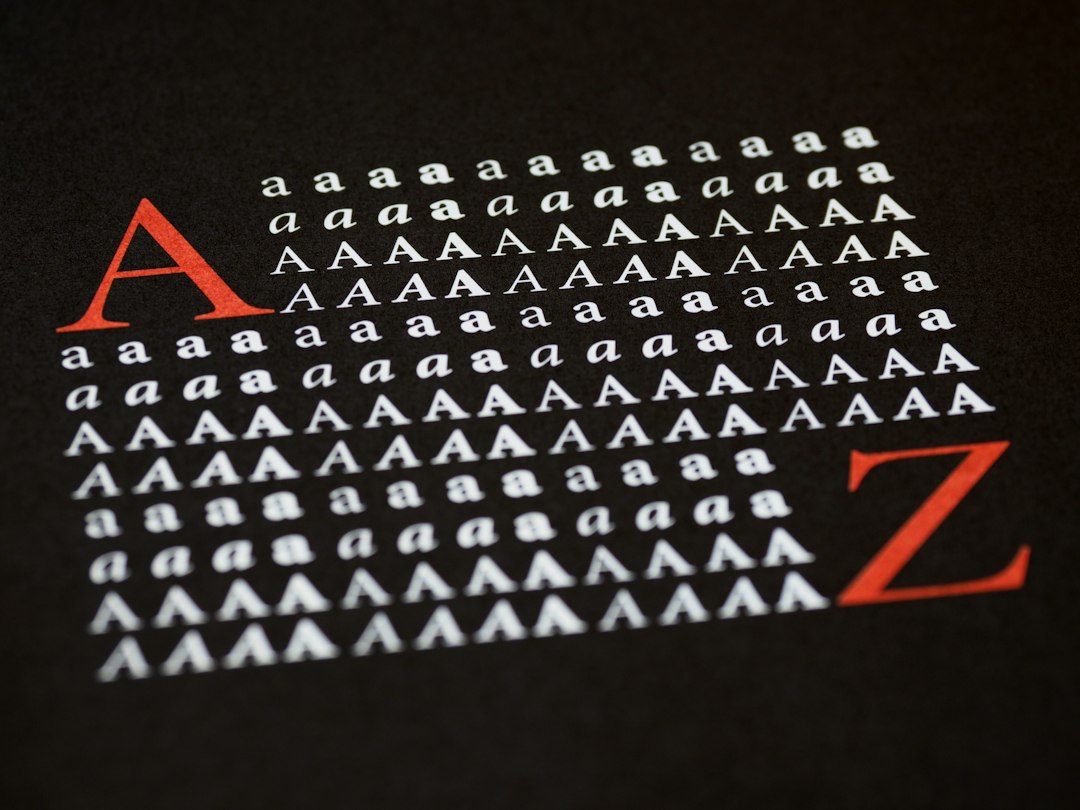
A high-contrast display serif for a Fifth Avenue shop name. (Specimen set in DM Serif Display, a serif STAND-IN; NOT the Lane Bryant logo.)
Lane Bryant
From Ascena’s bankruptcy to Sycamore Partners.
In June 2012 Charming Shoppes, and with it Lane Bryant, was bought by Ascena Retail Group, the parent of Dressbarn, English Wikipedia says. Ascena added Ann Taylor and Loft in 2015, and Lane Bryant became one of several women’s fashion chains under the same holding company.
Ascena filed for Chapter 11 bankruptcy protection on 23 July 2020. At the same time, Wikipedia records, it announced the closing of all Catherines and Lou & Grey stores and a select number of Ann Taylor, Loft and Lane Bryant stores. In December 2020 Retail Dive reported that a judge in the US Bankruptcy Court for the Eastern District of Virginia, in Richmond, had approved Ascena’s sale of the Ann Taylor, Loft, Lane Bryant and Lou & Grey brands to an affiliate of the private equity firm Sycamore Partners. Ascena announced on 23 December 2020 that the sale to Premium Apparel LLC, the Sycamore affiliate, had been completed.
Sycamore reorganised its women’s fashion holdings in 2023. FashionUnited reported on 31 August 2023 that the firm had formed KnitWell Group, a holding company for Ann Taylor, Loft and Talbots, and that Sycamore would continue to oversee Lane Bryant alongside it. English Wikipedia counted 448 Lane Bryant stores in 46 US states as of 2022.
For a design guide, Lane Bryant shows how a founder’s name, altered by a bank clerk in 1904, can outlast every change of owner and carry a chain through catalogues, malls and bankruptcy. Compare Catherines, a plus-size chain that shared its Charming Shoppes and Ascena owners, and Torrid, another US plus-size chain. For this guide we use a plum, a rosewood and a warm ivory with a serif, an unofficial interpretation; no product or logo is reproduced.
Explore & save
Keep Lane Bryant’s identity on hand — save it to a board in the Made Good inspiration library.
Lane Bryant identity set
Pin the Lane Bryant plum, rosewood and ivory palette and the display serif register to your own board.
Source & notes
Frequently Asked Questions
What font can I use to match the Lane Bryant look?
This guide describes Lane Bryant’s type as “A high-contrast display serif for a Fifth Avenue shop name”. Its type specimen is set in DM Serif Display from Google Fonts as a stand-in; DM Serif Display is not Lane Bryant’s own lettering.
What colours are in the Lane Bryant palette?
This guide’s Lane Bryant palette is Plum ink #5B2A4A, Night aubergine #2A1422, Rosewood #C98B8F, Warm ivory #F4ECE4 and Paper #FAF7F3. The tones are the guide’s own unofficial interpretation, not official Lane Bryant hex codes.
When was Lane Bryant founded?
Lane Bryant was founded in 1904, in New York, United States.
Who founded Lane Bryant?
Lane Bryant was founded by Lena Himmelstein Bryant Malsin in 1904.
Who owns Lane Bryant?
Lane Bryant is owned by Premium Apparel LLC, a Sycamore Partners affiliate, since December 2020.