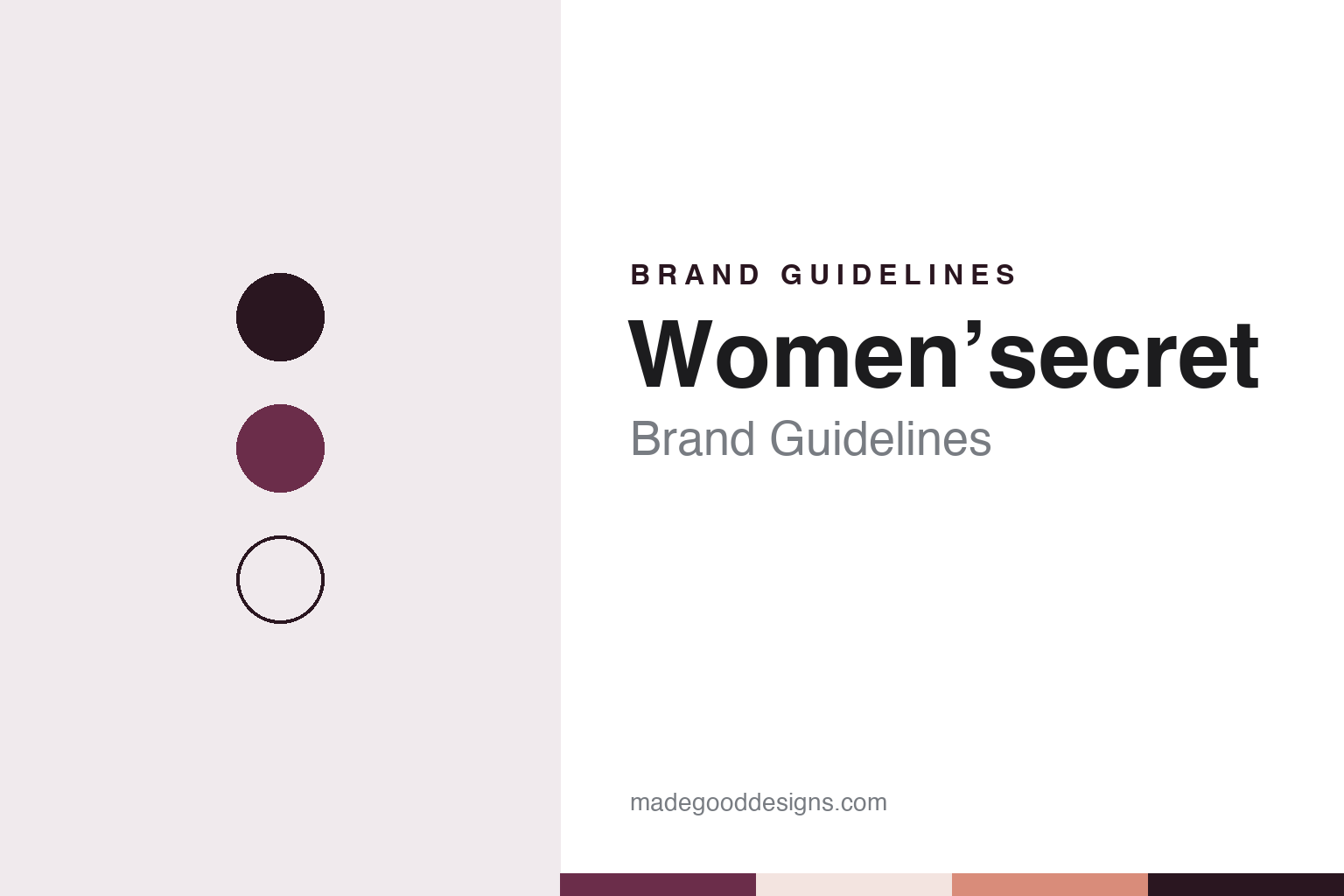
Women’secret Brand Guidelines
The Madrid lingerie chain Cortefiel launched in 1993.
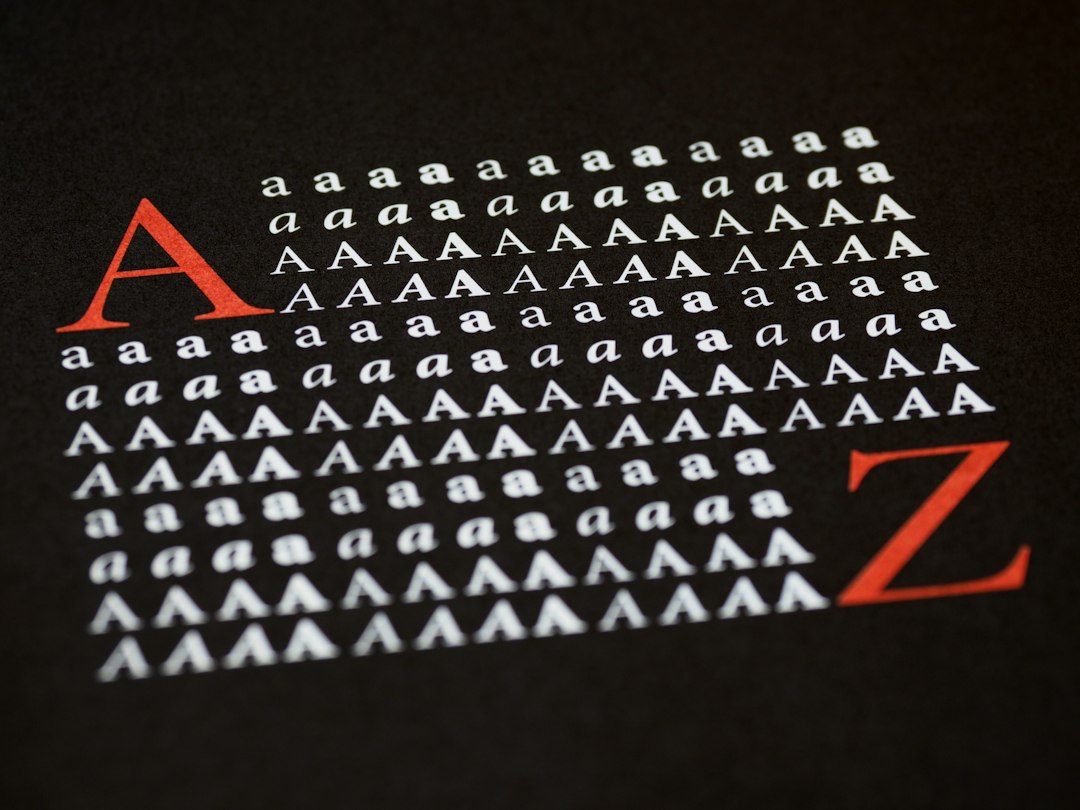
Aa
Two constants: a plum, blush and coral palette and a display serif register. Abstract homage — not a Women’secret product or mark; no garment, logo or shop sign is reproduced.
A Cortefiel launch
A Madrid clothing group moves into lingerie.
Women’secret began in Madrid in 1993. Spanish Wikipedia describes it as a new brand of what was then Grupo Cortefiel, created to take the group into corsetry and women’s lingerie, and says its first shop opened in the centre of Madrid. English Wikipedia, in its history of the group, gives the same year for the launch of the underwear and swimwear brand. The company writes its name with a curly apostrophe and a lower-case s, as Women’secret, and that spelling is used throughout this guide.
The parent was much older. Spanish Wikipedia traces it to a small haberdashery opened in 1880 on Calle Romanones in Madrid by the brothers Felipe and Rufino García-Quirós. The business moved from haberdashery into shirt-making and tailoring, and the first men’s suits under the Cortefiel name followed in the mid-1940s; Spanish Wikipedia dates them to 1945 and English Wikipedia to 1946. In the 1980s the group added the tailoring brand Milano in 1984 and the casual label Springfield in 1988, and the designer name Pedro del Hierro joined it from 1989, becoming group property in 1992, according to Spanish Wikipedia. Women’secret was therefore launched inside a group that already ran several chains of its own shops.
The brand moved online early. Both Wikipedia editions date the Women’secret online shop to 2000; English Wikipedia notes that the group only consolidated its wider e-commerce operation in 2010, when the Springfield online store followed. Spanish Wikipedia dates the start of the brand’s international expansion to 2001 and says it has grown through its own shops, franchises and online sales, with a particular presence in Portugal, Mexico and countries of the Middle East and Latin America. Over the years the range widened from corsetry and lingerie into swimwear, accessories and homewear, and Spanish Wikipedia lists lingerie, corsetry, swimwear, sleepwear and accessories as its categories today. The same source records a repositioning from 2012 that brought new collections, advertising campaigns and a revision of the brand’s commercial identity.
Colour
From private equity to Abu Dhabi.
Ownership of the parent has changed twice since the brand was launched. In May 2005, Spanish Wikipedia says, the private-equity firms CVC Capital Partners, PAI and Permira bought 86.82 percent of the group; English Wikipedia describes 2005 as the year MEP Retail acquired a stake, bringing a change in the shareholders and the management team. After a period of reorganisation, the group took the corporate name Tendam on 17 April 2018, according to Spanish Wikipedia.
The second change came in 2025. FashionUnited reported in April 2025 that the purchase of 67.91 percent of Tendam by Multiply Group had been announced at the end of February, describing Multiply as controlled by the Emirati company IHC. FashionUnited then reported on 24 July 2025 that Multiply Group, an investment holding company based in Abu Dhabi, had completed the acquisition of the 67.91 percent stake on 23 July 2025, with the purchase of Tendam’s business in Bosnia and Herzegovina still awaiting competition approval at that date. Tendam remains headquartered in Madrid.
Inside Tendam, Women’secret is one brand among several. English Wikipedia says each Tendam brand has its own design team and sales structure, while administration, finance, technology, expansion, sourcing and human resources are shared at the central offices in Madrid, and distribution runs from a logistics platform in Madrid. FashionUnited listed twelve brands in July 2025, among them Cortefiel, Springfield, Pedro del Hierro and Women’secret. Two newer labels sit close to the lingerie chain: Dash and Stars, a women’s sportswear brand launched at the start of March 2022, and Hi&Bye, an intimates label for teenagers launched at the end of March 2023, both described by FashionUnited in May 2024 as part of a wider family of intimate and sports brands built around Women’secret. Spanish Wikipedia describes Hi&Bye as an underwear and swimwear brand created for Generation Z. Women’secret garments are also sold through Fifty, the group’s multi-brand outlet chain, Spanish Wikipedia says.
Typography
Lingerie and underwear chains.
Lingerie and underwear chains in Europe and North America present themselves first through their shops. A short name on the fascia, often set in a simple serif or sans, is repeated on bags, boxes, tissue and labels, so the sign on the street and the parcel on the doorstep carry the same mark. Many chains keep their colour schemes to a few soft or dark tones, and when they renew a shop concept they publish the change in terms of lighting, furniture and a new range of colours.
The formats vary widely. Some chains trade from small boutiques in shopping centres and on high streets; others run larger stores built around fitting rooms and a fitting service, and some began as catalogue or online retailers before opening shops of their own, or never opened any. Shop-in-shop areas inside department stores and fashion retailers carry a brand’s fixtures and signs into someone else’s floor, and franchise partners take the same format to markets the owner does not run directly.
Ownership is just as mixed. Some chains are still run by their founders or founding families, some belong to listed retail groups that operate several chains side by side, and others have passed through private-equity owners, administrations and rescue deals. The companies usually describe these changes on corporate pages about their history, founders and owners, while trade and business press record the dates.
Collections are presented by name rather than by number: named lines that return season after season, sleepwear and loungewear ranges, swimwear, sub-brands aimed at younger customers, and services such as loyalty clubs and online shops. For a designer, these chains show how a consistent name, a narrow palette and a recognisable shop format can hold a brand together across many countries and channels.
Aa
A display serif for a Madrid lingerie chain. (Specimen set in DM Serif Display, a serif STAND-IN; NOT the Women’secret logo.)
Cabinet
A shop concept with a new range of colours.
The brand’s most recent visual change came in its shops. FashionUnited reported on 29 May 2024 that Women’secret had introduced a new store concept called Cabinet, designed to present the chain as a meeting point for several brands rather than a single-label lingerie shop. The first shop in the new format opened on 23 May 2024 in the Plaza Río 2 shopping centre in Madrid, where Dash and Stars was given its own area and a separate entrance. In a company note quoted by FashionUnited, Women’secret said that lighting, decoration and furniture would shape the new personality of its shops, that the layout would order and harmonise the fixtures, and that the brand would be represented in a new range of colours. The concept adds dedicated corners for Dash and Stars and Hi&Bye, following a model Tendam already used in Cortefiel shops for Pedro del Hierro, Hoss Intropia and OOTO. Spanish Wikipedia also dates Cabinet to 2024 and links it to closer ties between the online shop and the physical network.
The chain keeps opening in new countries. On 2 April 2025 FashionUnited reported the first Women’secret shop in Turkey, a space of about 100 square metres in the Emaar Square Mall in Istanbul, which was also the first Tendam shop in the country. In the same report Tendam put the Women’secret network at 692 physical shops in 80 countries across Europe, the Americas, Africa and Asia, more than 90 of them in the region spanning Asia Minor and the Near East. FashionUnited noted that Tendam often chooses Women’secret, like Springfield, to test a new market before weighing the entry of its other brands.
For a design guide, Women’secret shows how a lingerie chain launched inside a menswear group built its own name, spelling and shop format, and later turned its shops into a home for sister brands. Compare Oysho, another Spanish lingerie and sleepwear chain, and Intimissimi. For this guide we use a deep plum, blush and a soft coral with a serif, an unofficial interpretation; no product or logo is reproduced.
Explore & save
Keep Women’secret’s identity on hand — save it to a board in the Made Good inspiration library.
Women’secret identity set
Pin the Women’secret plum, blush and coral palette and the display serif register to your own board.
Source & notes
Frequently Asked Questions
What font can I use to match the Women’secret look?
This guide describes Women’secret’s type as “A display serif for a Madrid lingerie chain”. Its type specimen is set in DM Serif Display from Google Fonts as a stand-in; DM Serif Display is not Women’secret’s own lettering.
What colours are in the Women’secret palette?
This guide’s Women’secret palette is Deep plum #6B2D4A, Aubergine ink #2A1620, Blush #F3E4E0, Soft coral #D98C7A and Warm ivory #FAF5F0. The tones are the guide’s own unofficial interpretation, not official Women’secret hex codes.
When was Women’secret founded?
Women’secret was founded in 1993, in Madrid, Spain. Women’secret is known for Lingerie, sleepwear, swimwear.