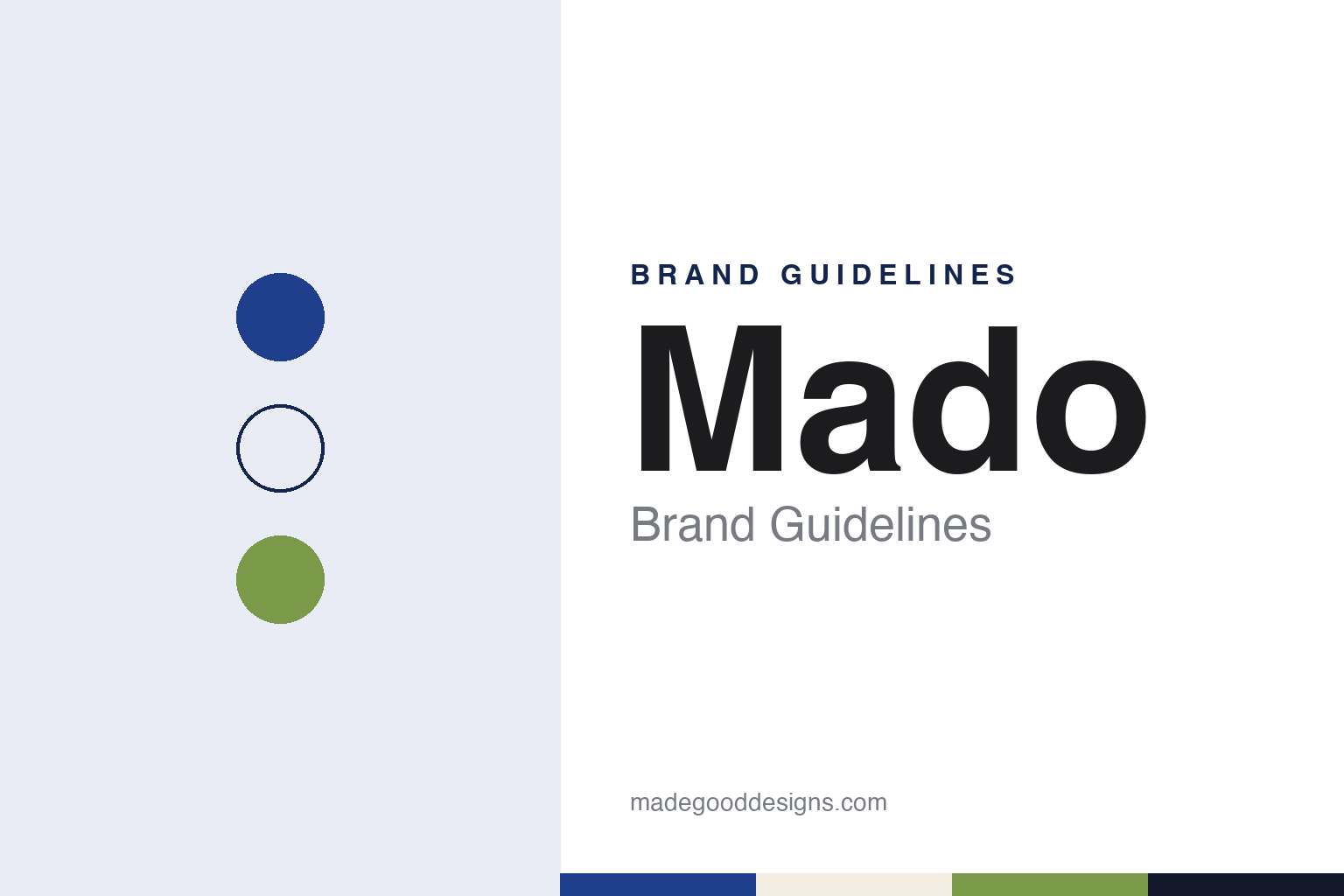
Mado Brand Guidelines
The Kahramanmaraş ice cream that became a café chain.
Aa
Two constants: a blue, cream and pistachio palette and a café serif register. Abstract homage — not a Mado product or mark; no logo, sign or package is reproduced.
Maraş and dondurma
A family trade from a city in south-eastern Türkiye.
Mado’s name joins two words: Maraş, the older name of the city of Kahramanmaraş in south-eastern Türkiye, and dondurma, the Turkish word for ice cream, according to English Wikipedia and a June 2025 profile in the Turkish daily İstiklal. The brand belongs to the Kanbur family, who, the business magazine Ekonomist wrote in July 2016, had been making and selling ice cream in Kahramanmaraş for four full generations, with a fifth starting to join.
The company tells its own history as a long line. Its website says the trade began with an ancestor it calls Osman Ağa and dates the tradition to 1850; it describes snow gathered from the caves of the Ahır Dağı mountain, mixed with pekmez molasses and fruit extracts into a cold sweet called karsambaç, which over time took on milk, honey and salep. Street sellers carried ice cream in barrels on their shoulders, the company says, before painted carts and then shops took over.
The dated steps are less settled. İstiklal reported in 2025 that Yaşar Kanbur and his sons Mehmet Sait, Atila and Erdal opened the Yaşar Pastanesi pastry shop on Trabzon Caddesi in Kahramanmaraş in 1962. The company’s own timeline places Yaşar Kanbur first in a small shop near the city’s Aras bus garage, links its move to year-round production to an ice factory that opened in the city in 1965, and dates the Trabzon Caddesi shop to 1980. Both accounts agree that the Yaşar Pastanesi is where the brand took shape, and Ekonomist reported in 2016 that it was still trading.
Colour
From a pastry shop to a café chain.
Factory production came in the 1980s. The company says it switched to machine-made ice cream in 1983 and put Mardo packaged ice creams on sale in 1984, making about 200 kilos a day with a dozen people and selling first to towns and villages around Kahramanmaraş. İstiklal reported that in 1989 the family bought a former dairy plant in the city through a privatisation, which marked the start of modern production.
The café chain followed. The company says MADO was set up in 1991 by Yaşar Dondurma ve Gıda to serve ice cream in sit-down cafés, and that the first was MADO Cafe in Caddebostan, in Istanbul; İstiklal dates that first Istanbul branch to 1992. Today the website describes MADO as the flagship of Yaşar Dondurma ve Gıda Maddeleri A.Ş., a group of companies and brands, and İstiklal named Mehmet Sait Kanbur as its chairman.
Production has stayed in the home city. Mehmet Kanbur told Ekonomist in July 2016 that the company’s plants were in Kahramanmaraş, that it kept its own goat farm and also bought milk from contract farmers, and that semi-finished products from Maraş were finished at facilities in Istanbul, Ankara and İzmir. In the same interview he said MADO had 328 stores, 304 of them in 52 Turkish cities and 24 in 12 other countries, and that about 9,500 people worked in its plants and shops.
By June 2025 İstiklal counted more than 350 MADO branches in 55 Turkish provinces and more than 75 in 25 countries, from the Netherlands to South Korea. The group has also built other names, including Mardo, Icemar, Marpop and Künefeci, which the company says it set up in 2017 to sell künefe made with wheat and goat’s milk from the Kahramanmaraş area.
Typography
Shopfronts, menus and franchises.
Turkish café, bakery, kebab and casual-dining chains tend to build their names around a single dish or a single place. Some carry a city in the name, as Mado does with Maraş, the older name of Kahramanmaraş; others carry the food itself, as Simit Sarayı does with the sesame-covered simit. On their own websites the companies present the dish first and the shop second, with menus organised by named dishes such as künefe, baklava, simit or döner rather than by abstract product lines.
Many of these chains grew by moving street food indoors. Hürriyet Daily News wrote in 2013 that simit, once sold from carts, had become a large business run by chain restaurants, and the companies themselves describe their shopfronts as cafés, bakeries or restaurants with seating, counters and displays that make the food the main sight.
Franchising carries the brands abroad. Turkish chains publish franchise pages and lists of foreign branches, and some work through master franchisees that run a whole region; Daily Sabah reported in 2017 that a Saudi retail group had held such a franchise for Simit Sarayı across the Middle East and North Africa since 2014. Shops abroad often sit in malls and on main shopping streets, according to the companies’ own branch lists.
Ownership is usually described plainly on corporate pages: a family company, a holding company behind several brands, or a founding partnership that later sold a minority stake. This guide sets out who founded each brand, who owns it now and where its food is made, using dated press reports where they exist and marking what rests only on the company’s own word.
Aa
A warm café serif for a family brand. (Specimen set in DM Serif Display, a serif STAND-IN; NOT the Mado logo.)
Mado
Ice cream you cut with a knife.
The product is the brand’s anchor. Time Out described MADO’s Maraş-style ice cream in September 2026 as made with goat’s milk and salep, with a dense, stretchy texture firm enough to be sliced, and counted 30 flavours at a single counter, from pistachio and strawberry to chocolate and caramel. The menu reaches well beyond ice cream: Turkish breakfasts, coffee, savoury dishes, pastries and desserts such as baklava and künefe, according to the same report.
That report covered MADO’s arrival in South Africa. The restaurant on Florida Road in Durban, which opened in September 2026, was the brand’s first in the country, Time Out said, and its lounge was “dressed in MADO blue,” with an elaborate interior, bakery and dessert displays and a children’s area. The franchisees, the magazine reported, first met the brand years earlier and found it again on a trip to China. The company’s own list of foreign branches now runs from Germany and the Netherlands to the Gulf, Central Asia and a mall in Florida in the United States.
The company has added smaller formats as well. It says Mado Dondurma is a compact version of the cafés, with a narrower range of ice cream, künefe, waffles and lemonades, offered to younger franchise investors. Back in Kahramanmaraş, it says, the Yaşar Pastanesi still shows traditional local kitchen tools and handicrafts alongside its counters, and draws visitors to the city.
For a design guide, Mado shows how a regional food tradition can carry a national chain: a city’s name built into the brand name, a product with a story people can see being served, and a colour that a Time Out reporter could name in print. Compare Simit Sarayı, which took another Turkish street food into cafés, and Kahve Dünyası. For this guide we use a deep blue, salep cream and pistachio green with a serif, an unofficial interpretation; no product or logo is reproduced.
Explore & save
Keep Mado’s identity on hand — save it to a board in the Made Good inspiration library.
Mado identity set
Pin the Mado blue, cream and pistachio palette and the café serif register to your own board.
Source & notes
Frequently Asked Questions
What font can I use to match the Mado look?
This guide describes Mado’s type as “A warm café serif for a family brand”. Its type specimen is set in DM Serif Display from Google Fonts as a stand-in; DM Serif Display is not Mado’s own lettering.
What colours are in the Mado palette?
This guide’s Mado palette is Maraş blue #1F3F8C, Salep cream #F3EEE1, Pistachio green #7A9A4A, Ink #14182B and Paper #FAF8F3. The tones are the guide’s own unofficial interpretation, not official Mado hex codes.
When was Mado founded?
Mado was founded in family ice-cream trade; company dates it to 1850, in Kahramanmaraş, Türkiye.
Who owns Mado?
Mado is owned by Yaşar Dondurma ve Gıda Maddeleri A.Ş.