Mammotion Brand Guidelines
The crowdfunded wire-free challenger.
Aa
Two constants: a tech-berry palette and a challenger-sans register. Abstract homage — not a Mammotion product or mark; no mower, blade or logo is reproduced.
The crowdfunded wire-free challenger
Mammotion is the crowdfunding-born Shenzhen challenger whose wire-free Luba and Yuka mowers navigate by RTK and vision.
Mammotion brings the robot-mower round its startup node — a young Shenzhen robotics company that launched on crowdfunding and pushed hard on wire-free, satellite-and-vision navigation. It is a private, venture-backed company, and it makes and sells the mowers. Its answer to a round about where robot mowers are made and who owns them is direct: made in China, by an independent startup, sold direct to enthusiasts.
Its identity is the crowdfunded wire-free challenger. The Kickstarter origin, the wire-free Luba and Yuka lines and the RTK-plus-vision navigation are the story here. A challenger, crowdfunded. The crowdfunded wire-free challenger.
(Honest notes, so the founding, the ownership and the reputation are framed carefully. Mammotion sells the mowers as its heroes — the four-wheel-drive Luba, the vision-equipped Luba 2 AWD, and the Yuka with its 3D vision and self-emptying sweeper — and we report its performance language as the brand’s own. On founding, which is genuinely murky: the entity and its robotics lineage trace to about 2016, through work inherited from AgileX Robotics, while Mammotion launched as a consumer brand in 2022, so we frame it as founded as a consumer brand in 2022, building on robotics work to about 2016, rather than a single year, and we credit the founding to the AgileX and XbotPark ecosystem rather than a single named person. On ownership: it is a private, venture-backed startup, with reported backers and funding we attribute rather than assert. On the technology: its flagships launched on Kickstarter and delivered, navigating wire-free by RTK, with newer models adding vision. On where it is made: China, in Shenzhen. On a key trap: Mammotion is not a DJI subsidiary — it is a DJI cousin, from the same XbotPark network that produced DJI and others, and we keep that distinction. On reputation, honestly: its software has a mixed, actively patched reliability record, which we note in balance rather than as a scandal, and its “world’s number one wire-free” and user-count lines are company claims we attribute. Its designs and the Mammotion, Luba and Yuka names are IP we describe but do not reproduce; the wordmark is black and white, so green is a product accent, not a trademarked logo colour; these tones are an unofficial interpretation.)
Colour
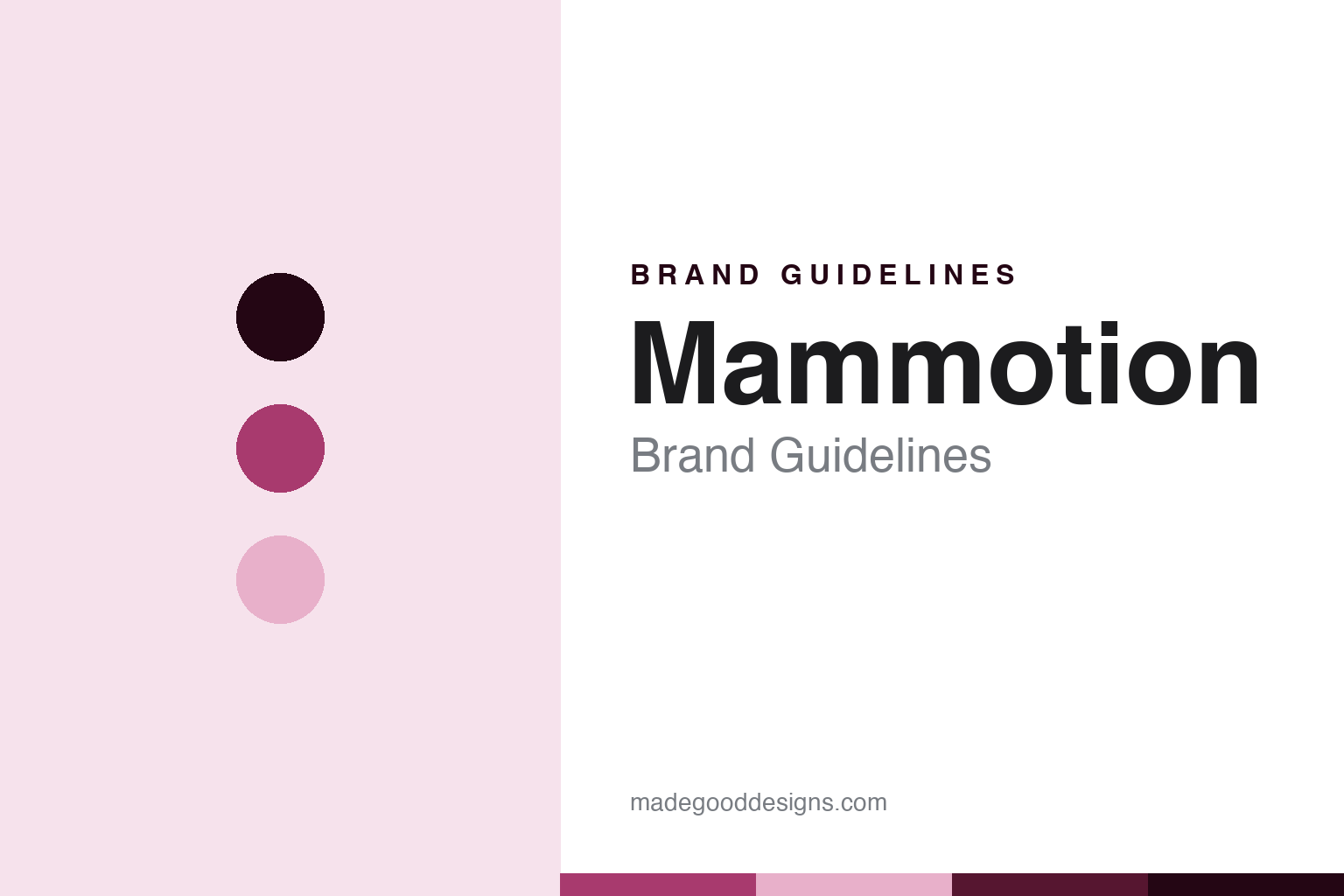
Mammotion lives in a tech berry. Click a swatch to copy the hex.
Mammotion’s identity is bold, wire-free and challenging — a tech berry, an ink, a pale rose, a deep plum, and a paper. The palette leans tech berry and pale rose: a bold, modern register that nods to a tech-forward startup rather than a loud logo colour, and deliberately not to a generic mower green. It signals the crowdfunded wire-free challenger — bold, tech-forward and direct. The honest caveat: with a black-and-white wordmark and green only as a product accent, these values are an original, unofficial interpretation, not first-party colours.
The lesson is a tech berry signals a bold, challenging identity. Mammotion’s world is a wire-free robot bought on Kickstarter and updated over the air. For designers, it is a reminder that a bold tech berry and a soft pale rose can carry a maker brand — a modern tone held as colour, not a product shot, and not the category’s default green. Because these tones can fail as small text, keep type dark and let the colour live in the accents, palette and band. The takeaways: hedge the founding across 2016 and 2022; credit the AgileX and XbotPark ecosystem; keep it distinct from DJI; attribute the “number one” claim; and note the mixed, patched reliability honestly.
Typography
The register is a challenger sans — bold, tech-forward, direct.
Mammotion’s identity carries a bold, tech-forward, direct spirit — a crowdfunding-born challenger, not a legacy brand. A challenger sans captures the mood: clean, modern and confident, the register of a startup selling straight to enthusiasts. Set in a tech-berry palette, the challenger sans feels bold and tech-forward — exactly the personality Mammotion carries. It behaves like a made, engineered thing rather than a loud logo, mirroring a satellite signal and a camera lens. (Mammotion’s real mowers and the Luba and Yuka names are things we describe but do not reproduce, and the exact typeface is not ours to use.) Because it is not ours to use, the honest description is “a challenger-sans brand,” shown here in a stand-in. The type behaves like the brand: bold, tech-forward and direct.
Aa
A challenger-sans brand — bold and tech-forward. (Specimen set in Manrope, a challenger-sans STAND-IN; NOT the Mammotion logo or any product.)
The robot mower
Mammotion stands for the crowdfunded wire-free challenger.
Mammotion brings the round its startup node. A tech-berry palette, a challenger sans and a 2022 brand launch make one thing — the crowdfunded wire-free challenger — the whole identity: bold, wire-free and challenging. The Kickstarter origin is the pitch, and the wire-free Luba and Yuka are the proof. The point is a young startup that pushed wire-free navigation hard and sold it direct, in a round about where these machines are made and who owns them.
Put to work, the identity is the brand told straight, founding hedged and reputation balanced. A maker in this spirit would hedge the founding across 2016 and 2022, credit the AgileX and XbotPark ecosystem, and keep it distinct from DJI. A reader in this spirit would keep the facts right: Mammotion sells the mowers as its heroes, led by the Luba and the Yuka; it is a private, venture-backed Shenzhen startup, launched as a consumer brand in 2022 with robotics roots to about 2016; it navigates wire-free by RTK and vision; it is made in China; and its reliability record is mixed but actively patched. Mammotion sits sixth in the round, after Segway Navimow. The honest editorial moves are to hedge the founding, to credit the ecosystem, to keep it separate from DJI, to attribute the “number one” claim, and to note the reliability honestly.
For designers and brand-builders, Mammotion continues the robot mower: let a crowdfunded, wire-free challenge be the identity — and hedge the founding, credit the ecosystem and balance the reputation. The lessons: launch a hardware brand on crowdfunding and actually deliver; hedge a founding you cannot pin to a year; credit an incubation network rather than invent a founder; keep a brand distinct from a famous cousin; attribute bold market claims and note reliability in balance; and never reproduce a logo. It is also a reminder to stay precise: Mammotion is the crowdfunding-born Shenzhen challenger whose wire-free Luba and Yuka mowers navigate by RTK and vision — with the palette here an unofficial interpretation. The hook is that path: out of the same Shenzhen hardware ecosystem that produced DJI, a young team spun a robot mower onto Kickstarter, delivered it, and made wire-free, satellite-and-vision navigation its whole pitch — a DJI cousin, not a DJI company, patching its software as it grew. Read that way, Mammotion is less a mower than a crowdfunded bet: bold, tech-forward, direct. The lesson for a brand is that a crowdfunded challenge and honest hedging reinforce each other, and balancing the reputation keeps the story earned. Mammotion made the-crowdfunded-wire-free-challenger the identity — proof that a challenger can carry a round.
Explore & save
Keep Mammotion’s identity on hand — save it to a board in the Made Good inspiration library.
Mammotion identity set
Pin the tech-berry palette and the challenger-sans register to your own board.