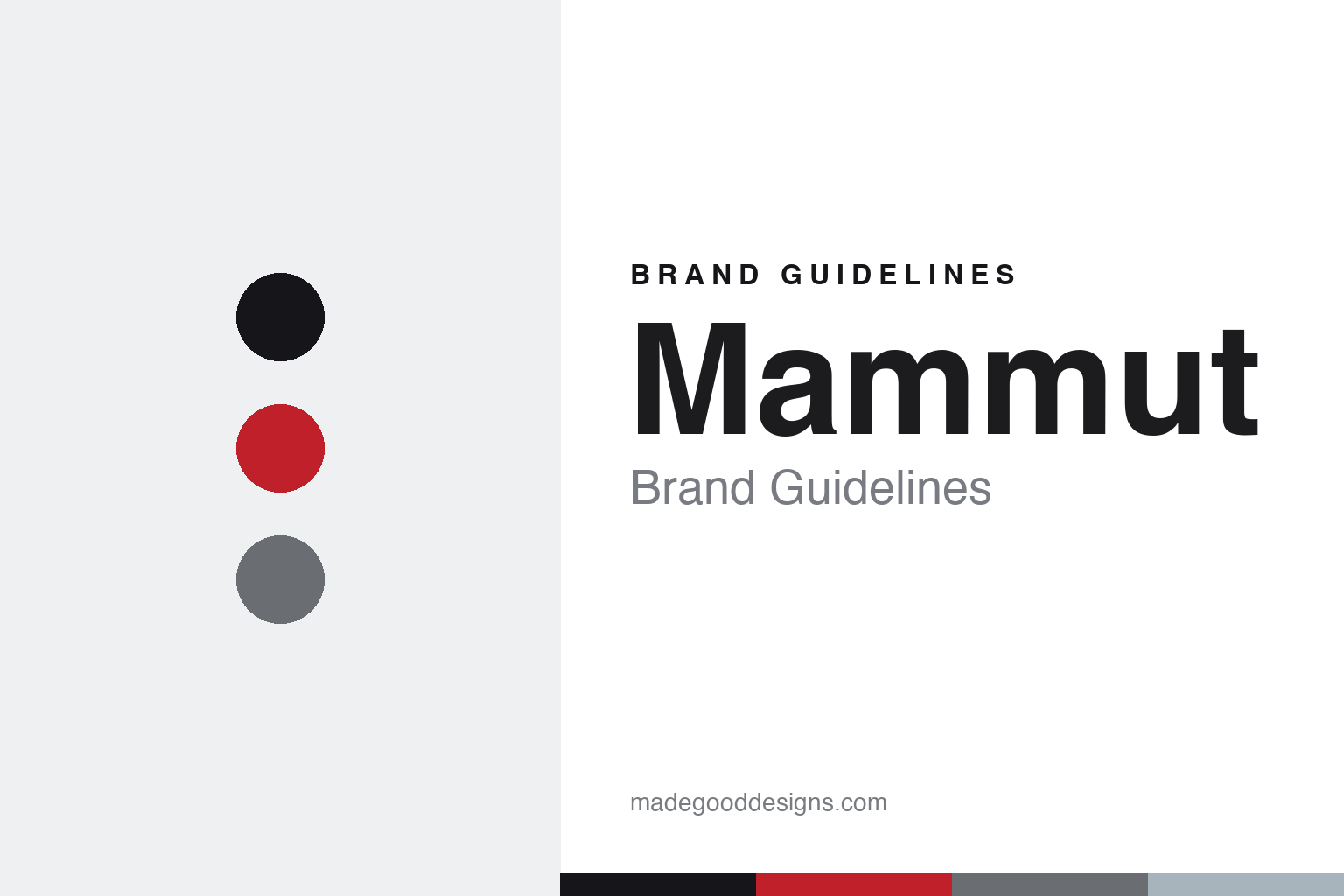
Mammut Brand Guidelines
Alpine since 1862.
Aa
Two constants: an alpine-red palette and an alpine condensed register. Abstract homage — not the Mammut wordmark or mammoth mark.
Absolutely alpine
Mammut is a Swiss alpine brand born making rope.
Mammut is a lesson in heritage that runs deep. Founded in 1862 by Kaspar Tanner as a rope maker in Dintikon, Switzerland, it moved into mountaineering in the twentieth century — and the “Mammut” brand name and its mammoth logo arrived in 1943.
Its brand identity is premium, alpine and Swiss-engineered — technical mountain gear, explicitly not streetwear. Its pillars are apparel, ropes and climbing hardware (its founding category), and the iconic Barryvox avalanche transceiver (developed with the Swiss Army in 1969). The mammoth stands for strength and endurance in the mountains.
(Honest notes: Mammut isn’t independent — it was private-equity-owned from 2021 (by Jacobs Capital, formerly Telemos), and in 2026 a sale to a Chinese firm was agreed. Its Swiss rope production actually ended in 2016. And there’s no official brand hex, so the tones here are an unofficial interpretation.)
Colour
Mammut lives in an alpine-red palette. Click a swatch to copy the hex.
Mammut’s identity is alpine, Swiss and engineered — an ink, an alpine red, a steel, an ice, and a snow. The palette pairs a strong red with black and ice tones — the register of Swiss mountaineering, avalanche safety and technical gear. It signals engineering, the high mountains and safety rather than lifestyle. The honest caveat: with no published brand hex, these tones are an original, unofficial interpretation, not first-party values.
The lesson is alpine red plus ice tones signal Swiss mountaineering. Mammut’s world is a glacier and a climbing rope. For designers, it is a reminder that a strong red with black and ice reads as alpine and engineered — right for a brand built on the mountains. The takeaways: anchor with ink; use a strong alpine red; add ice tones; and treat any single hex as unofficial — using ink for small text so the red stays a signal.
Typography
The register is an alpine condensed sans — strong and engineered.
Mammut’s identity carries a strong, engineered, alpine spirit — Swiss mountains and technical gear. An alpine condensed sans captures the mood: it is strong and engineered, the register of a mountaineering brand. Set in an alpine-red palette, the condensed sans feels strong and engineered — exactly the personality Mammut carries. It is sturdy rather than delicate, mirroring expedition gear. (Mammut’s real wordmark and mammoth mark are trademarks we describe but do not reproduce, and the exact brand typeface is not ours to use.) Because the marks are not ours to use, the honest description is “an alpine condensed spirit,” shown here in a stand-in. The type behaves like the brand: strong, engineered and alpine.
Aa
An alpine condensed spirit — strong and engineered. (Specimen set in Oswald, an alpine condensed STAND-IN; NOT the Mammut wordmark or mammoth mark, which are trademarks.)
Alpine engineering as identity
Mammut stands for Swiss alpine engineering.
Mammut is a lesson in making alpine engineering the identity. An alpine-red palette, a rope-making origin and category-defining safety gear make Swiss mountaineering the whole brand — strong, engineered, alpine. The engineering is the differentiator. The differentiator is a premium, alpine, Swiss-engineered identity.
For designers and brand-builders, Mammut offers a clear takeaway: a deep origin can anchor a brand. The lessons: own a real beginning (rope, 1862); build safety credibility (Barryvox); and carry a distinctive mark (the mammoth). It is also a reminder to stay accurate: it’s PE-owned (not independent), its Swiss rope production ended in 2016, and the palette here is an unofficial interpretation. Mammut made alpine engineering the brand — proof that heritage can be the difference.
Explore & save
Keep Mammut’s identity on hand — save it to a board in the Made Good inspiration library.
Mammut identity set
Pin the alpine-red palette and the alpine-condensed register to your own board.