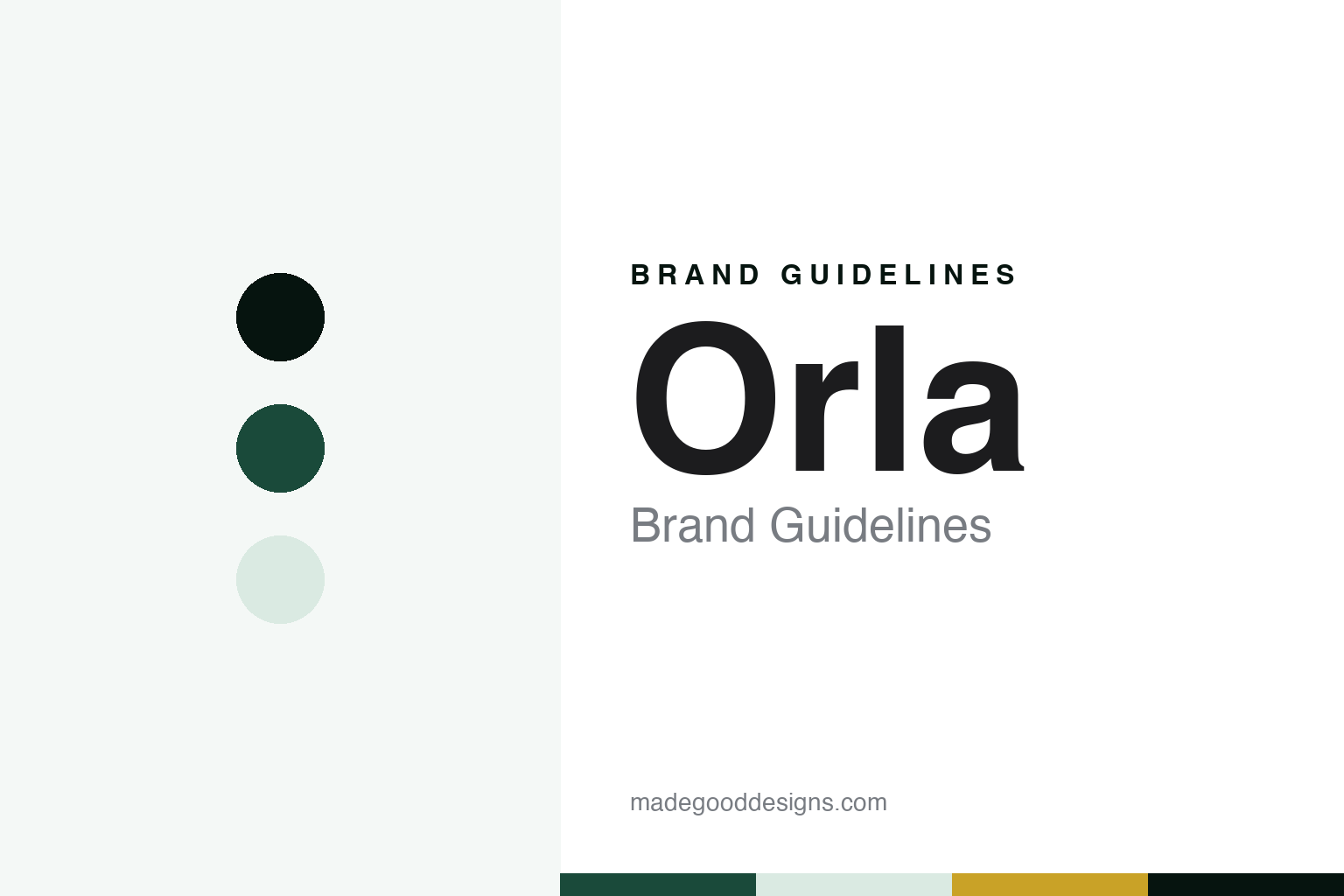
Orla Brand Guidelines
The Castelfidardo home-organ maker that began with accordion parts.
Aa
Two constants: a Orla console green and gold palette and a Console sans register. Abstract homage — not a Orla product or mark; no instrument, logo or nameplate is reproduced.
Mimmo Orlandoni
From accordion parts to organs.
Orla describes its own start plainly. Its English website, archived in 2006, said the company was “established in 1965 in Castelfidardo” by Nazzareno Orlandoni, “known as Mimmo,” “to manufacture parts for accordions and reed organs.” His brother-in-law, Alfio Monaci, joined later, and the firm moved into electronic organs. Monaci’s exact role after he joined is not described in detail in the sources we checked. Italian Wikipedia spells the founder’s first name “Nazareno,” in an entry that relies on a single source; we use the company’s own spelling.
Orlandoni had been part of another district story first. According to the Castelfidardo collector Claudio Capponi, Orlandoni, born in 1925, was one of the partners in Elka, also founded in 1965 by members of the Crucianelli accordion family. Elka’s other partners, Capponi says, were Piero Crucianelli, who held 60 per cent of the shares, Mario Crucianelli and the heirs of Filippo Crucianelli. Orla and Elka were separate companies. Both later had premises in the Squartabue industrial zone of Recanati, which Capponi says Elka was the first to settle.
The name appears to be a shortening of Orlandoni; we have not found the company explaining it, and we say so.
Orla entered a crowded field. Farfisa, the district’s largest organ maker, had about 1,800 workers in 1963, according to Capponi, and Elka’s first product was a portable organ built to compete with Farfisa’s Compact. Orla’s own early work, by its account, was supplying parts.
Colour
Home organs and a family firm.
By the 2000s Orla made a full line of instruments. Its archived product pages list the GT1600, GT2600, GT8000 and GT9000 home organs, CH200 and CH201 church organs, CDP digital pianos, KX portable keyboards, XM sound modules, an Orlavox accordion — the instrument whose parts the firm began by making — the TD90 digital drums and a range of stage pianos sold as the Artist, Ensemble, Performer and Player. That range — organs for homes and churches, pianos, portable keyboards and modules — was a long way from the parts business the company says it began with.
The company made strong claims about its position. In 2005 and 2006 it described itself as “the last remaining Italian company producing Home Organs,” as “one of the leading suppliers of home organs” in the United States, and as a family-run firm that also built instruments for American, Japanese and European companies and had exhibited at the Frankfurt Musikmesse for 30 years and at the NAMM show. We give all of those as the company’s own claims.
Orla later moved to Recanati. An archived page from 2016 gives the company as ORLA srl, in the Squartabue industrial zone of Recanati, and lists a stand at that year’s Musikmesse, in Hall 9.0; it gives the company’s share capital as €118,000. We found no record of an “Orla SpA”; the company called itself an srl.
Typography
The keyboard district.
In the 1960s and 1970s the accordion towns of the Marche became a centre for electronic keyboards. Farfisa, formed in 1946 from three accordion firms, made its Compact organs from 1964; Elka was founded in 1965 by members of the Crucianelli accordion family, and Orla the same year by Nazzareno Orlandoni; Crumar followed around 1970–71. Several older accordion houses, such as Welson, also turned to organs.
Orla’s own history shows the link: it says it began in 1965 by making parts for accordions and reed organs, and moved into electronic organs after Alfio Monaci joined. The district’s products ranged from home organs and portable combo organs to string machines, synthesizers and, later, arranger keyboards.
Some of the district’s instruments reached a wide audience. Farfisa launched its FAST organs at the 1968 NAMM show in the United States, English Wikipedia records; Elka’s Synthex was used by Jean-Michel Jarre on Rendez-Vous, according to Sound On Sound; and Crumar’s DS-2 of 1978 was, English Wikipedia says, one of the earliest synthesizers with digitally controlled oscillators.
The boom did not last. The industrial district of Recanati, Osimo and Castelfidardo went into crisis at the end of the 1970s, Italian Wikipedia says, under Asian competition. Crumar stopped trading in 1986 or 1987, and Welson ceased activity in 1981, according to the guitar historian Jack Marchal. Some names survive as revived brands or distributors’ labels; and Ketron, founded in Ancona in 1981, says it still designs and makes electronic instruments there.
Orla is that story told by a parts maker: a firm that began with accordion and reed-organ parts and ended as one of the last Italian home-organ makers.
Aa
A console sans — a founder’s surname, shortened. (Specimen set in Inter Tight, a sans STAND-IN; NOT the Orla logo.)
Orla
A founder’s surname, shortened.
What happened to ORLA srl is not clear from the sources we could reach. The archived company site was still running in 2017; by 2019 it was blank; and since 2021 the orla.it address has forwarded to 2L Distribuzioni, a separate company on Via Recanatese in Castelfidardo that describes itself as a new distribution business. Its 2024 catalogue lists Orla alongside EFNOTE, Kurzweil, Artesia, TUGA, CLX and Ringway, and sells Orla PF200, PF300 and PF400 digital pianos, with a tagline promising to make sure “the tradition of Italian electronic musical instruments” continues. It does not say where they are made.
We also found no figures for Orla’s staff or output at any point in its history, and no documented logo, colours or typeface. The archived site carried only the notice “Copyright © ORLA srl 2005.” The palette in this guide is therefore entirely our own.
We therefore say only that the Orla name is now sold through 2L Distribuzioni. We could not confirm who owns the trademark or whether the original company was wound up, and we do not guess. The Italian company registers that would settle the question were not reachable when we checked.
For a design guide, Orla shows a brand that moved from components to finished instruments, and then from maker to label. Compare Elka, founded the same year with Orlandoni as a partner, and Farfisa, the district’s first great organ maker. For this guide we use a console green and a gold with a sans, an unofficial interpretation; no instrument or logo is reproduced.
Explore & save
Keep Orla’s identity on hand — save it to a board in the Made Good inspiration library.
Orla identity set
Pin the Orla console green and gold palette and the Console sans register to your own board.