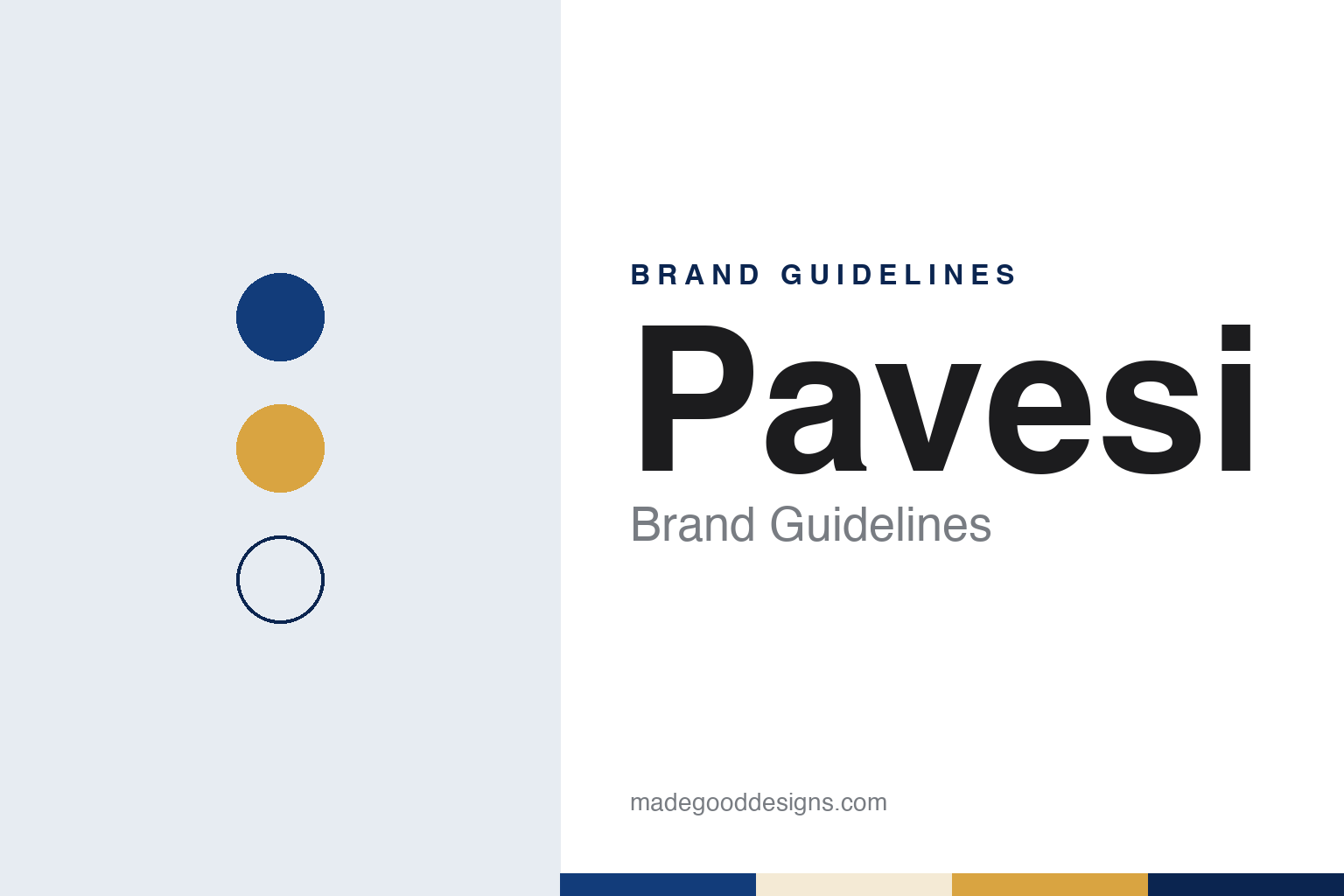
Pavesi Brand Guidelines
Mario Pavesi’s Novara biscuits and the bridge-restaurant autogrills.
Aa
Two constants: a Pavesi blue, gold and cream palette and a bold grotesque sans register. Abstract homage — not a Pavesi product or mark; no pack, logo or biscuit is reproduced.
Biscottini di Novara
A pastry-maker from the Lomellina and a local speciality.
Pavesi began in Novara, in Piedmont, in 1937. Italian Wikipedia, citing the Italian business-archives portal SAN and the Treccani biographical dictionary, says it was founded by Mario Pavesi, a pastry-maker from a family of bakers at Cilavegna, in the Lomellina. He moved to Novara with his brothers in 1934 and took over a pastry shop on Corso Cavour, while also trading in groceries, baked goods, sweets and coffee. A new oven near the station followed in 1936, and a larger third plant, with about ten workers, on the eve of the Second World War.
His lead product was a local speciality, the biscottini di Novara. After the war, Italian Wikipedia says, a trip to the United States gave Mario Pavesi the idea for a cheaper, lighter version of them: the Pavesini. Italian Wikipedia dates the Pavesini to 1948, renamed from “Biscottini di Novara” in 1952; the company itself dates the brand to 1937, the year it says Mario Pavesi perfected the Pavesini recipe, and says the biscuits, “born in Novara,” are still baked on baking paper.
The business grew quickly. In 1953 it became a joint-stock company, Pavesi Biscottini di Novara S.p.A., and in 1954 it opened a new plant and began making crackers. In 1957 it set up a snacks business, Pai, for crisps and salted snacks, which was later sold to San Carlo of Milan, Italian Wikipedia says.
Colour
Advertising, Topo Gigio and bridges over the motorway.
Pavesi is remembered as much for selling as for baking. In the 1950s, with the advertising man Mario Bellavista, Mario Pavesi ran a national campaign across the press, radio, cinema and later television, Italian Wikipedia says, and built a network of regional branches and depots, with single-brand displays in shops. The slogan “È sempre l’ora dei Pavesini” — “it’s always Pavesini time” — is dated to 1958 in one Italian Wikipedia article and credited to the designer Erberto Carboni in 1960 in another; the company says it was usually shown with a clock whose hands were Pavesini. From 1963 the puppet Topo Gigio sang for them on the television showcase Carosello.
The American trip, Italian Wikipedia says, also inspired Pavesi’s roadside restaurants. A kiosk at Veveri, on the Milan–Turin motorway outside Novara, opened in the late 1940s — English Wikipedia gives 1947 — to sell Pavesi products to drivers. It was rebuilt in 1952 by the architect Angelo Bianchetti and became the first autogrill. Bianchetti went on to design Pavesi service areas with circular forms, large windows and “bridge” restaurants spanning both carriageways; the first, at Fiorenzuola d’Arda, opened in 1959, and in 1962 the Novara site on the A4 was rebuilt as a bridge.
The range multiplied. A snack cake called Duetto came out in 1965; when Alfa Romeo used the same name for its new Spider the following year, Pavesi won the legal dispute, Italian Wikipedia says. A collaboration with the American company Sunshine Biscuits produced the filled Ringo biscuits in 1967 and the chocolate-covered Togo in 1970. Later came the Gocciole breakfast biscuits, part of a range called “Gli Amici del Mattino,” which Italian Wikipedia says became one of Pavesi’s leading products.
Typography
Design and documentation.
The seven brands in this group all make biscuits, and all of them come from Italy: Pavesi, Doria, Galbusera, Gentilini, Colussi, Misura and Saiwa. Italian biscuit brands in general sit at many different points in the trade, from family firms that still carry a founder’s surname to names that now belong to much larger food groups, and a single brand can be sold everywhere from a corner bar to a supermarket shelf.
A biscuit brand’s identity is usually carried less by a single product than by a pack, a name and the breakfast or snack it promises, because the company behind the name may have changed hands, moved its factory or grown far beyond the town where it started. That makes the questions behind each name worth asking plainly: who started it, who owns it now, and where its biscuits are actually baked and packed.
Each guide separates what independent sources record from what the company says about itself — its founding story, its owners over time, where its biscuits are made and how its packaging has changed — and marks plainly what rests only on the company’s own word.
Aa
A bold grotesque sans for a brand built on advertising. (Specimen set in Archivo, a sans STAND-IN; NOT the Pavesi logo.)
Pavesi
From Edison and the state to Barilla.
Mario Pavesi did not keep control. In the late 1960s Italpi, a finance company controlled by Edison, bought 50% of Pavesi, Italian Wikipedia says; after Edison merged with Montecatini to form Montedison, Mario Pavesi sold the rest of his shares to the group — in 1971 according to the company article, 1972 according to his biography — taking the Rabarbaro Zucca liqueur business in exchange. Montedison folded Pavesi into its food arm, Alimont, half of which passed in 1974 to SME, the state food holding company, and was renamed Alivar.
The restaurants and the biscuits then went separate ways. In 1977 Pavesi’s motorway catering company, which ran more than a hundred Pavesi autogrills, was merged with the Motta and Alemagna restaurant businesses into Autogrill S.p.A., also controlled by SME. The bakery passed in stages to Barilla: in 1990 SME and Barilla formed a joint venture, Pavesi S.p.A., owned 51% and 49%, which also took in Motta’s crackers; in May 1992 Barilla rose to 59%, la Repubblica reported, and in January 1993 it bought SME’s remaining 41%, Italian Wikipedia says. Barilla says Pavesi has been part of the group since 1992, and the company’s papers are kept at the Barilla Historical Archive, which in 1997 published a history of Pavesi advertising, L’Italia dei Pavesini. Mario Pavesi died in Milan in 1990; la Repubblica’s headline called him the inventor of Autogrill and of the Pavesini.
Today the Pavesi website describes the brand as a member of the Barilla group, with a range including Pavesini, Gocciole, Ringo and Gran Pavesi. It does not say which plant makes them, and the sources we checked do not document it.
For a design guide, Pavesi shows how a biscuit maker built a brand through advertising and roadside architecture as well as its packs. Compare Mulino Bianco, Barilla’s own biscuit brand, and Balocco, another Piedmontese baker. For this guide we use a deep blue, a biscuit gold and a warm cream with a sans, an unofficial interpretation; no product or logo is reproduced.
Explore & save
Keep Pavesi’s identity on hand — save it to a board in the Made Good inspiration library.
Pavesi identity set
Pin the Pavesi blue, gold and cream palette and the bold grotesque sans register to your own board.