Questacon Brand Guidelines
Canberra’s National Science and Technology Centre since 1988.
Aa
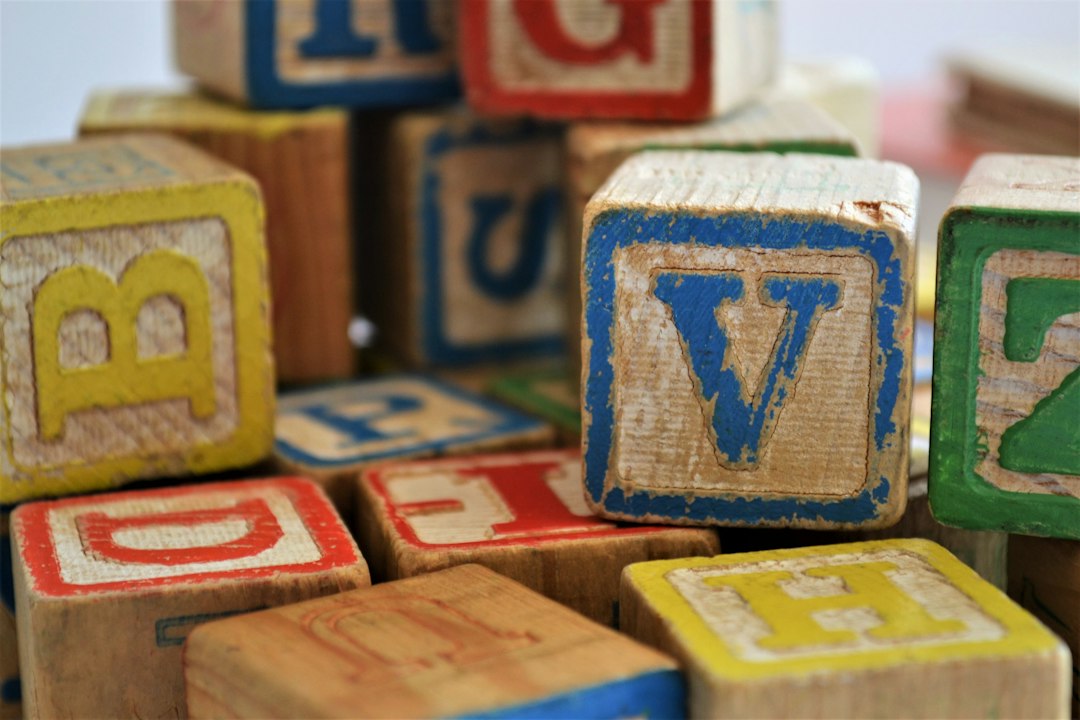
Two constants: a lake blue, spark orange and circus yellow palette and a friendly rounded sans register. Abstract homage — not a Questacon asset; no logo, building image or exhibit is reproduced.
Ainslie
A university project in spare classrooms.
Questacon began in 1980 as a project of the Australian National University, set up in spare space at the Ainslie Public School in Canberra under the guidance of its founder, the ANU physicist Mike Gore, The Canberra Times reported in November 2023. English Wikipedia says it opened there with 15 exhibits, staffed by volunteers and by Gore, and that his model was the Exploratorium in San Francisco. Gore became its founding director.
The name is a compound. English Wikipedia, citing the centre’s own history fact sheet, says “Questacon” joins “quest,” to discover, and “con,” to study. Its full title today is Questacon – The National Science and Technology Centre.
Gore described the idea in plain terms when he was appointed an Officer of the Order of Australia for service to science in January 2015. Speaking to ABC News, he said Australians had seen museums, but that Questacon was not a museum: it was a place to come and “fiddle,” and to “mess about,” in the words of The Wind in the Willows.
The national centre grew out of the Bicentenary. In 1982, The Canberra Times wrote, the Australian Bicentennial Authority proposed that a national science centre be established as a lasting memorial to the 1988 Australian Bicentenary. The first sod was turned on the site in 1986 and the building was completed in 1988. It was built as a joint Australia–Japan Bicentennial Project, with the Japanese Government and business community contributing half the cost of the building, the paper reported; English Wikipedia describes the building as given to Australia by Japan for the Bicentenary.
The prime minister opened the centre on 23 November 1988. The Canberra Times put the number of visitors through the building since then at more than 12 million by 2023.
Colour
“Let the children play.”
The building stands in Canberra’s Parliamentary Zone, on the shore of Lake Burley Griffin, as ABC News described it in 2025. Its architect was Lawrence Nield. During the discussions about what the national centre should look like, Gore gave Nield one piece of advice, The Canberra Times recalled in 2023: “let the children play,” and see where that led. The result, the paper wrote, was a building about fun as much as innovation: a spiral staircase that lets visitors go up or down, in or out of the exhibits, and a glass foyer through which passers-by can watch people discover the building.
Inside are themed galleries. English Wikipedia, citing the centre, lists eight as of 2026, among them Awesome Earth, on geology and natural hazards, with a Tesla coil and an earthquake simulator; Fundamentals, with classic science exhibits; MiniQ, for children from birth to six, with water play and a construction zone; and ZAP! CLANK! POW!, on magnets, machines, electricity and motion. A trade report in Lab Online marking the 25th anniversary in 2013 counted eight galleries with more than 200 interactive exhibits.
ZAP! CLANK! POW! shows how the centre works. ABC News reported in June 2025 that it links 17 interactive displays with a colourful comic-book theme, from flying machines to pulleys that let children lift their own weight. It was designed and made in Canberra at the Ian Potter Foundation Technology Learning Centre, Questacon’s workshop and outreach base, by a team of about 20 scientists, writers, designers, engineers, welders and joiners over two years, and it is built from modular displays designed to be packed up and shown in other places. English Wikipedia places that centre in the former administration building of the Royal Australian Mint in Deakin.
Outside, the Science Garden holds outdoor exhibits, including NKRYPT, eight laser-etched stainless-steel poles carrying encoded messages, installed in 2013 for the centenary of Canberra.
Typography
The category.
Science centres in Europe, Asia and Oceania tend to introduce themselves first through the body that runs them. Some are foundations, such as Experimentarium in Denmark, which its own website describes as governed by a foundation board; some belong to a bank’s foundation, as CosmoCaixa in Barcelona belongs to the “la Caixa” Foundation; others are run by a city, a national agency or a charity. That name usually sits close to the centre’s own on signs and in print.
The building is often the second introduction. Several centres occupy reused sites: Experimentarium has used a former Tuborg bottling hall in Hellerup since 1991, and CosmoCaixa keeps part of an early twentieth-century modernist asylum in Barcelona. Some stand in new buildings on rivers, harbours or former industrial land, and their architects are part of the story they tell about themselves.
Inside, the vocabulary is shared. Hands-on galleries invite visitors to touch and try exhibits; some add a planetarium, a dome or a giant-screen theatre; and some keep living collections, such as the indoor Amazon forest at CosmoCaixa or rainforest and aquarium zones elsewhere. Programmes for schools and families sit beside the galleries: the Catalan government’s heritage pages say CosmoCaixa runs activities for state schools and families, and Experimentarium lists teaching rooms in its rebuilt house.
Names change too. CosmoCaixa took its present name when the Museu de la Ciència reopened in 2004, and Experimentarium ran a temporary branch, Experimentarium City, while its Hellerup building was rebuilt before reopening in 2017. This guide sets out, for each centre, who runs it, where it stands, what is inside and how its name has changed, using dated sources, and treats its colours and type as an unofficial interpretation.
Aa
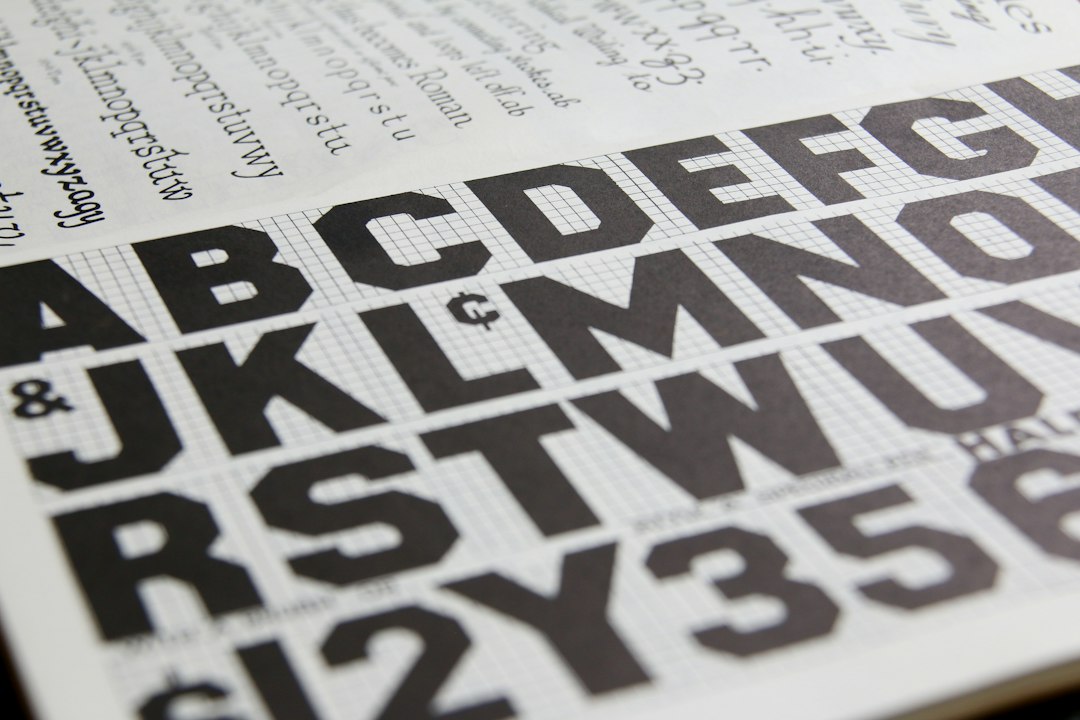
A friendly rounded sans for a centre built on play. (Specimen set in Lexend, a sans STAND-IN; NOT the Questacon logo.)
Questacon
A science circus on the road.
Much of Questacon’s work happens away from the lake. English Wikipedia describes the Questacon Science Circus as an outreach programme run in partnership with the Australian National University: teams of science graduates travel to towns, schools and remote Indigenous communities, run workshops for teachers and, while on the road, complete a master’s degree in science communication outreach at the ANU. The first team graduated in 1988, the article says. Other national and regional programmes include Engineering is Elementary and Q2U.
In the centre itself, an in-house theatre troupe, the Excited Particles, presents science shows to the public and to school groups, and puppet shows for young children, English Wikipedia says; The Canberra Times described the troupe on the centre stage at the 35th-anniversary weekend in November 2023.
Schools are a core audience. ABC News reported in 2017 that school groups travelling to Canberra from as far as Darwin and remote Western Australia count Questacon among the highlights of their trip, and in 2025 it put the number of visitors at some 500,000 a year. The centre’s director since November 2022 is Jo White.
Questacon is part of government. The Questacon Shop describes the centre as a division of the Department of Industry, Science and Resources, and English Wikipedia lists it among the Commonwealth Government agencies of Australia.
For a design guide, Questacon shows how a national institution can lead with play: a spiral stair, a glass foyer and comic-book panels rather than vitrines. Compare Exploratorium, the San Francisco centre Gore took as his model, and Miraikan, a science museum in Tokyo. For this guide we use a lake blue, a spark orange and a circus yellow with a sans, an unofficial interpretation; no product or logo is reproduced.
Explore & save
Keep Questacon’s identity on hand — save it to a board in the Made Good inspiration library.
Questacon identity set
Pin the Questacon lake blue, spark orange and circus yellow palette and the friendly rounded sans register to your own board.
Source & notes
Frequently Asked Questions
What font can I use to match the Questacon look?
This guide describes Questacon’s type as “A friendly rounded sans for a centre built on play”. Its type specimen is set in Lexend from Google Fonts as a stand-in; Lexend is not Questacon’s own lettering.
What colours are in the Questacon palette?
This guide’s Questacon palette is Lake blue #1E4F8C, Spark orange #E8792F, Circus yellow #F2C744, Night ink #101B2D and Foyer white #F5F4F0. The tones are the guide’s own unofficial interpretation, not official Questacon hex codes.
When was Questacon founded?
Questacon was founded in 1980, in Ainslie Public School, Canberra.
Who owns Questacon?
Questacon today: Division of the Department of Industry, Science and Resources.